
The Tennessee Walking Horse, celebrated for its remarkably smooth gait and gentle nature, is a jewel of the American equestrian world. When you see one glide across a field, it looks effortless, with a characteristic head nod accompanying a four-beat running walk that feels more like a float than a trot. But the question of “How Do They Train Tennessee Walking Horses?” opens a door to one of the most contentious debates in the horse industry. The answer isn’t a single technique but a story of two fundamentally different paths: one that honors the horse’s natural ability and another that descends into a world of abuse for the sake of an exaggerated spectacle.
At Equine Excellence, we believe in training that builds a partnership based on trust and respect, enhancing the horse’s innate talents without pain or fear. The journey to understanding this breed begins with appreciating its natural gifts. Unlike other breeds that trot, the Tennessee Walker is born with the ability to perform the flat walk and the running walk. These are not gaits that need to be forced; they are the heart and soul of the horse, waiting to be refined. A sound trainer focuses on developing the horse’s balance, strength, and willingness to perform, much like a coach nurtures an athlete. This involves years of patient work, focusing on core strength, correct posture, and subtle cues from the rider. The resulting performance is a beautiful, natural, and sustainable gait that showcases the breed’s true elegance. Finding the right tennessee walking horse trainer is paramount to ensuring the horse’s well-being and natural talent are nurtured correctly.
Understanding the Natural Gaits of the Breed
Before diving into the “how,” we must understand the “what.” The Tennessee Walking Horse (TWH) possesses two unique, inherited gaits that set it apart. These are not tricks taught in an arena; they are encoded in the breed’s DNA.
The Flat Walk
The flat walk is the foundational gait. It’s a brisk, long-reaching four-beat walk where each foot hits the ground independently. You’ll notice the horse’s head nodding in rhythm with the hoofbeats. A key characteristic is the overstride, where the hind foot steps over the track left by the front foot on the same side. This gait is comfortable, efficient, and covers ground at a pace of about 4 to 8 miles per hour. A good trainer starts here, encouraging the horse to relax, stretch, and find its natural rhythm without tension.
The Running Walk
This is the famous “money gait” of the breed. The running walk is essentially a faster, more amplified version of the flat walk. It maintains the same four-beat sequence and head nod, but with a significant increase in speed and overstride. A TWH performing a proper running walk can reach speeds of 10 to 20 miles per hour, all while providing a virtually bounce-free ride for the rider. The magic of this gait is that the horse remains completely relaxed, with its back absorbing all the motion. The goal of ethical training is to build the horse’s fitness and engagement to the point where it can perform this gait with power, grace, and enthusiasm.
The Ethical Path: Training the “Sound” Horse
Training a “sound” Tennessee Walking Horse—one that performs naturally and pain-free—is an art form that respects the animal. This approach is all about enhancing what’s already there.
The process begins with groundwork, teaching the horse to be responsive and confident. From there, the focus is on under-saddle training that develops the horse’s physique. To achieve a brilliant running walk, the horse needs a strong back, powerful hindquarters, and excellent balance. Trainers use a variety of exercises, from hill work to long, relaxed trail rides, to build this athletic foundation. The right equipment is also crucial, and that includes everything down to the footwear, as proper horse trainer shoes can make a difference in a long day of training.
“A great Tennessee Walking Horse is not made in a few weeks with shortcuts,” notes Dr. Sarah Miller, an equine behavior specialist. “It is developed over years, through a partnership that fosters the horse’s physical and mental well-being. The goal is to ask the horse to give you its best, not to force it into a caricature of its natural movement.”
In this training philosophy, shoes are simple and light (“keg shoes”), and the rider’s aids are subtle. The objective is to create a happy, willing partner that loves its job and can perform for years to come.
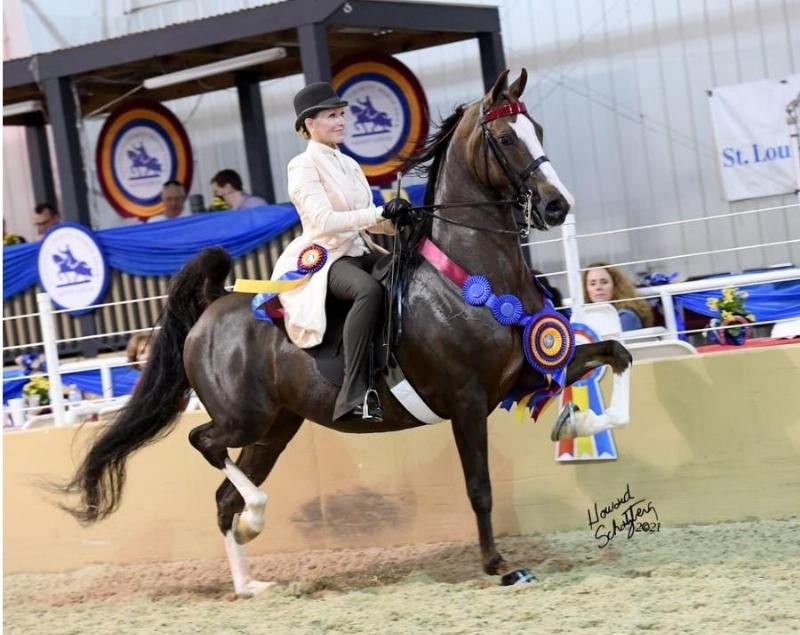 A beautiful bay Tennessee Walking Horse performing a natural, smooth running walk in a grassy field with a happy and relaxed expression.
The Dark Side: The “Big Lick” and Soring
Unfortunately, a segment of the TWH show world has strayed far from the breed’s natural elegance. This faction prizes an artificially exaggerated, high-stepping gait known as the “Big Lick.” This unnatural movement is not the result of skillful training but is achieved through the intentional infliction of pain, a practice known as “soring.”
Soring is the illegal and inhumane act of using chemical or mechanical irritants on a horse’s lower legs. The pain causes the horse to snatch its feet up violently with each step, creating the high-stepping action desired in “Big Lick” competitions.
How is Soring Done?
The methods are cruel and varied, but they generally fall into two categories:
- Chemical Soring: Trainers apply caustic substances like mustard oil, diesel fuel, or kerosene to the horse’s pasterns. The area is then wrapped in plastic to “cook” the chemicals into the skin, causing severe burns and irritation.
- Pressure Soring: This involves cutting the horse’s hoof down to the sensitive tissue and then shoeing it in a way that applies intense pressure, or inserting hard objects between the shoe and the sole.
To amplify the pain, these horses are forced to wear “stacks” and “chains.”
- Stacks: These are tall, heavy pads, sometimes made of wood or plastic, that are attached to the horse’s front hooves. They add weight and change the angle of the foot, forcing the horse to stand in an unnatural, painful position, similar to a person wearing extreme platform heels. This increases strain on tendons and ligaments.
- Action Devices (Chains): Chains weighing six ounces or more are fastened around the sored pasterns. As the horse moves, these chains slide up and down, striking the already sensitized, painful area and causing the horse to jerk its leg up in an exaggerated response.
This entire practice is designed to create a spectacle, but it comes at the cost of the horse’s welfare. Horses subjected to soring live in chronic pain, and their careers are often short and agonizing.
Legislation and the Fight for Change
The immense cruelty of soring led to the passage of the Horse Protection Act (HPA) in 1970. This federal law prohibits the showing, sale, or transportation of sored horses. The United States Department of Agriculture (USDA) is tasked with enforcing this law, often by inspecting horses at shows.
However, enforcement has been a significant challenge. Trainers have developed methods to mask the pain, such as using numbing agents, so horses can pass inspections. The industry has been plagued by a cycle of abuse, weak penalties, and a system of self-regulation that has often failed to protect the animals.
Efforts to strengthen the law, such as the Prevent All Soring Tactics (PAST) Act, have been ongoing for years. The PAST Act aims to ban the use of stacks and chains, increase penalties for violators, and eliminate the industry’s self-policing system. The fight to protect these magnificent horses continues, driven by animal welfare organizations, ethical trainers, and the public.
How to Choose an Ethical TWH Trainer
For anyone looking to own or ride a Tennessee Walking Horse, supporting ethical training is the most important responsibility. How can you ensure you’re part of the solution, not the problem?
Questions to Ask a Potential Trainer:
- What are your training methods? Listen for words like “patience,” “natural ability,” “strengthening,” and “partnership.” Be wary of anyone promising quick results or using secretive techniques.
- What kind of shoes do your horses wear? A trainer focused on sound horses will use light, simple keg shoes. The presence of tall stacks is a major red flag.
- Do you use action devices like chains? Ethical trainers have no need for chains to create a pain-based gait.
- Can I watch you train? Transparency is key. A reputable trainer will be proud to show you their process and their happy, healthy horses.
- What is your opinion on the Horse Protection Act? Their answer will tell you everything you need to know about their position on soring.
Red Flags to Watch For:
- Horses that seem fearful, anxious, or resentful.
- A barn where horses are kept in their stalls for unusually long periods; sored horses are often in too much pain to be turned out.
- Any mention of “stewards” or getting a horse “through inspection” as part of the training conversation.
- An unwillingness to discuss the topic of soring or dismissing it as “a thing of the past.”
The Future is Sound
The Tennessee Walking Horse is at a crossroads. The breed’s future depends on owners, breeders, and trainers choosing the path of ethical horsemanship. By celebrating the natural, smooth, and beautiful running walk, we can move the entire industry away from the abusive practices of the “Big Lick.” This horse was bred to be a comfortable, dependable companion for the trail, the plantation, and the family farm.
When you witness the effortless glide of a sound TWH, you’re seeing the result of a deep connection between horse and rider. It is a testament to the fact that true excellence in horsemanship is never achieved through force or fear. By understanding how they train Tennessee Walking Horses, we can make informed choices to protect this incredible American breed and ensure its legacy is one of grace, not greed.
