
Taking your puppy for regular walks is crucial for both their physical exercise and crucial socialization, helping them become well-adjusted adults. However, many puppies aren’t naturally inclined to walk politely on a leash. While some might excitedly pull you along, others might freeze, refusing to budge the moment a leash is clipped on. Understanding why your puppy might be hesitant and how to overcome these challenges is key to enjoyable outdoor adventures. Often, puppies are simply frightened—either by the unfamiliar sensation of the collar and leash or by the overwhelming stimuli of the great outdoors. This guide will walk you through effective strategies to help your puppy embrace walks with confidence and enthusiasm.
Teach Your Puppy to Love the Leash
For many puppies, a leash represents restraint, a feeling that can be quite intimidating. When leashed, a puppy can’t freely explore or escape from things that scare them, which can make the leash seem frightening rather than a predictor of exciting adventures. Some puppies even find the collar unsettling due to its strange feel. If a collar has been used to pull them around, they may associate it with negative experiences. The goal is for your puppy to enjoy wearing their collar and feel comfortable with you gently holding it.
Ideally, your puppy’s breeder would have introduced them to a collar and leash. If not, it falls to you to build their confidence with these items. Start indoors with very short sessions. During these times, praise and play with your puppy while they wear the collar and leash, offering delicious treats as rewards. You can also play the “Gotcha” game: gently grab your puppy’s collar, then immediately follow with a favorite treat. Soon, your puppy will begin to associate the collar and leash with wonderful things.
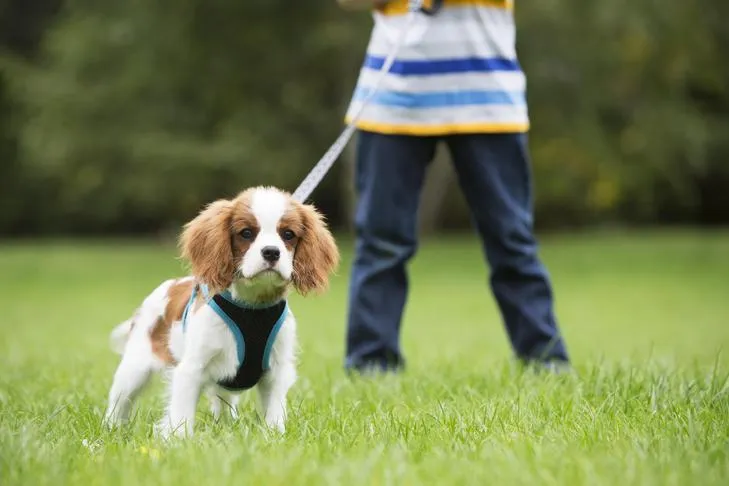 Boy walking a King Charles Cavalier Spaniel in a field, teaching him to love the leash.
Once your puppy is comfortable with the collar and leash, you’re ready to start teaching them to walk on a leash. Continue this training indoors. Use treats to lure your puppy towards you while they are clipped to the leash, offering praise and rewards when they respond. Gradually, begin walking a few steps with your puppy. If they are hesitant, keep luring them with treats and maintain a positive, encouraging tone. When your puppy is confidently walking with you inside, try moving the training to a secure backyard before venturing onto the sidewalk. Remember to keep sessions short, positive, and full of frequent praise and rewards. Investing in the best leash for training a dog to walk can also make a significant difference in comfort and control for both you and your puppy.
Socialize Your Puppy to the Outdoors
Moving your training outside introduces a whole new level of sensory input that can overwhelm some puppies. The myriad sights, sounds, and smells of the great outdoors can be incredibly intense. Proper socialization is a critical step in conquering your puppy’s anxiety and building their confidence in new environments. A well-socialized puppy is more likely to be a happy walker.
Introduce your puppy to a diverse range of people of all shapes, sizes, and ethnicities. Remember to expose them to various appearances that might look different to a dog, such as people wearing glasses, using wheelchairs, or wearing hats. It’s also important to expose your puppy to many different dogs and environments. However, avoid forcing any encounters. Allow your puppy to initiate contact and progress at their own pace. Always keep these new outdoor experiences positive by pairing them with play, praise, and treats. This approach helps your dog become comfortable with the world and learn to see other people and dogs as friends rather than potential threats.
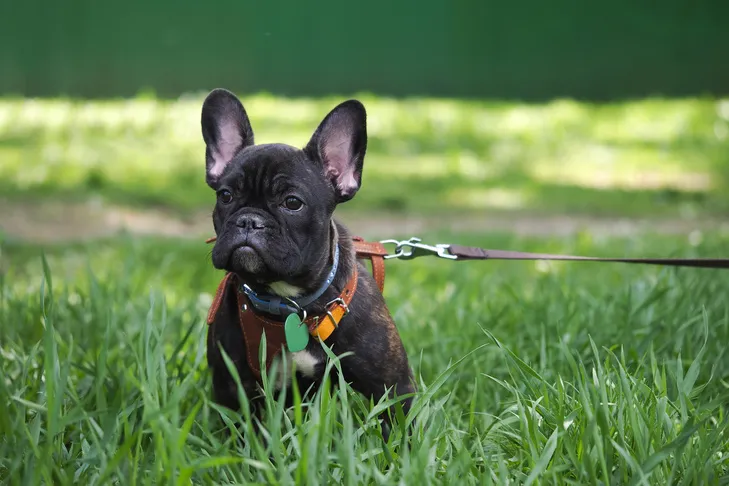 French bulldog puppy in a harness sitting in tall green grass on a leash, ready for a walk.
Teach Your Puppy to Love Walks
Your initial outdoor walks should focus entirely on making the experience enjoyable and fun. Don’t worry about perfect heel training at this stage. Instead, encourage your puppy to explore and sniff their surroundings. Strive to how to get a puppy to go on a walk by allowing them to investigate scents and not rushing their bathroom breaks or pulling on the leash. It’s crucial to remember that a leash is primarily a safety tool, not a control device to drag your puppy around. Your puppy won’t learn to love walks if the leash is associated with negative force.
Initially, your puppy might drag their heels or pull backward rather than eagerly moving forward. This is normal. Focus on fostering a positive association with the walk itself before you introduce formal loose-leash training. If you maintain a positive and fun atmosphere, your puppy will quickly become excited about walks. Once they are happy and moving forward willingly, you can then begin to focus on teaching polite walking behavior, such as not pulling and walking by your side. You might even want to practice basic obedience commands like how to get your dog to lay down at various points during your walk to reinforce focus.
Tips to Get Your Puppy Walking
If you’re still encountering difficulties getting your puppy to move on the leash, consider trying some of these practical tricks:
- Short Hops Away from Home: Carry your puppy 20 or 30 feet away from your home, then gently place them down and let them walk back on their own. The knowledge that they are returning to the safety and familiarity of home will often encourage them to keep moving, allowing them to experience the sights and sounds of the outdoors without the anxiety of moving away from safety.
- Drive and Walk Back: Drive a block or two from your house, then walk your puppy back home. This offers a similar psychological advantage, as the destination is known and comforting.
- Explore New Locations: Drive to a completely new location. A quiet park, a pet-friendly store, or even a friend’s backyard can provide novel experiences. Without the house in sight, your puppy might be more inclined to explore their new surroundings rather than retreat.
- Enticing Targets: Have a favorite person or another well-behaved, vaccinated dog stand on the sidewalk a short distance away from your home. This gives your puppy an exciting, motivating target to walk towards.
- High-Value Rewards: Reserve a truly high-value treat or a special toy that your puppy only gets during walks. This exclusive goodie will provide a powerful incentive, tempting them to walk to earn their unique reward.
- Enroll in Training Classes: Consider enrolling in a positive reinforcement dog training class. These classes are excellent for puppy socialization, and you’ll receive hands-on assistance and tailored advice from professional trainers for your puppy’s specific needs.
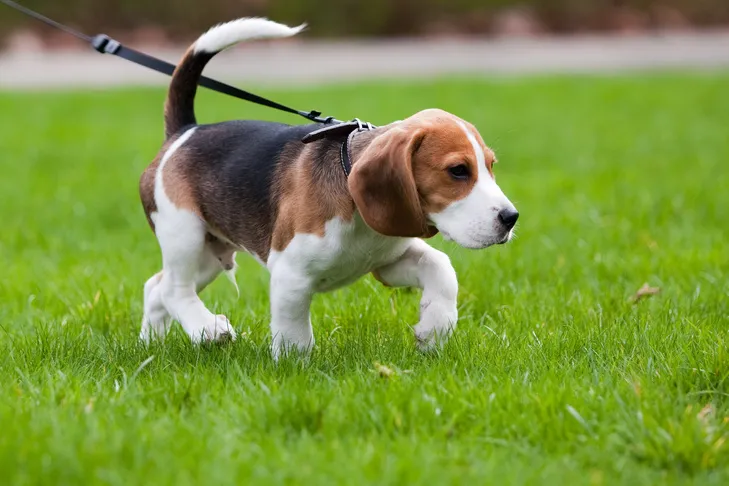 Beagle puppy on leash walking happily in the grass, exploring its surroundings.
Regardless of the techniques you try, maintaining an upbeat and positive attitude during your walks is paramount. Your puppy is highly attuned to your emotions; if you become worried or frustrated, it will undoubtedly influence their perception of the experience. Keep your walks short, fun, and always end them on a positive note. It might take several weeks, but every step you take together brings you closer to your goal. With consistent effort and patience, your puppy will soon be walking with enthusiasm, confidence, and joy.
