
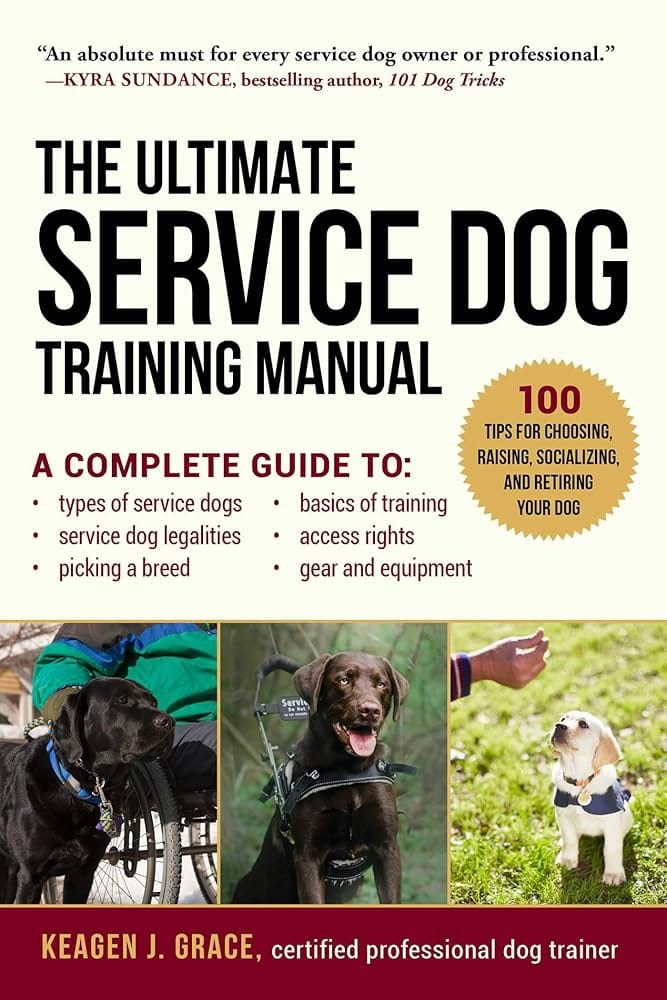
Training a service dog is a rewarding journey that requires dedication, patience, and a solid understanding of canine behavior and specific task training. Service dogs are highly trained to perform tasks that assist individuals with disabilities, significantly improving their quality of life. This guide will walk you through the essential steps and considerations involved in training a service dog, from initial selection to advanced task training.
Understanding Service Dogs and Their Training Needs
Before embarking on the training process, it’s crucial to understand what distinguishes a service dog from a therapy dog or an emotional support animal. Service dogs are specifically trained to perform tasks for individuals with disabilities, as defined by the Americans with Disabilities Act (ADA). These tasks can range from retrieving dropped items for someone with mobility impairments to alerting a deaf individual to sounds or providing balance support. The training is intensive and focuses on both public access manners and task-specific skills.
The Role of a Service Dog
Service dogs are working animals, not pets. Their primary role is to mitigate a handler’s disability. This means their actions are directly related to assisting their handler. For example, a service dog for a visually impaired person might be trained to navigate obstacles or find doors. A psychiatric service dog might be trained to detect and interrupt escalating anxiety or to retrieve medication.
Legal Protections and Access Rights
In many countries, including the United States, service dogs have specific rights to accompany their handlers in public places where pets are typically not allowed. Understanding these rights and responsibilities is a vital part of preparing to train and handle a service dog. This often includes rigorous obedience training and specialized task training to ensure the dog is well-behaved and reliable in all environments. For those considering training their own, resources on can I train my own service dog can provide a foundational understanding of the process and legalities.
Selecting the Right Canine Candidate
Not every dog is suited for service work. The ideal candidate possesses a combination of temperament, health, and trainability.
Temperament Traits to Look For
A good service dog candidate is typically confident, calm, and eager to please. They should not be overly fearful, aggressive, or easily distracted. Key temperament traits include:
- Biddability: A willingness to work with and follow commands from their handler.
- Sociability: Comfort around people, other animals, and in various environments.
- Calmness: The ability to remain composed in distracting situations.
- Resilience: The capacity to bounce back from setbacks or startling experiences.
- Focus: The ability to concentrate on tasks despite environmental stimuli.
Health and Physical Considerations
Service dogs must be physically sound to perform their demanding tasks. This includes:
- Orthopedic Health: Freedom from conditions like hip dysplasia or elbow dysplasia, especially for dogs performing tasks involving physical exertion.
- General Health: Good overall health, free from chronic illnesses that could interfere with work or shorten their working life.
- Stamina: Sufficient energy and endurance for long workdays.
Breed Considerations
While many breeds can be trained as service dogs, some breeds are more commonly chosen due to their inherent traits:
- Labrador Retrievers: Known for their intelligence, eagerness to please, and versatility.
- Golden Retrievers: Similar to Labs, they are intelligent, friendly, and highly trainable.
- German Shepherds: Possess strong work ethic, intelligence, and protective instincts, suitable for certain tasks.
- Poodles: Highly intelligent and hypoallergenic, making them a good choice for individuals with allergies.
However, mixed breeds and other breeds can also excel as service dogs if they possess the right temperament and health.
Foundational Obedience Training
Solid obedience is the bedrock of service dog training. Without it, specialized task training is impossible and unsafe.
Basic Commands
Start with essential commands:
- Sit, Stay, Down: Building a strong foundation of control.
- Come/Recall: Crucial for safety, ensuring the dog returns when called.
- Heel: Teaching the dog to walk politely by your side, without pulling.
- Leave It: Essential for preventing the dog from picking up inappropriate items.
- Place/Go to Mat: Training the dog to go to a designated spot and remain there.
Advanced Obedience and Impulse Control
Once basic commands are mastered, focus on advanced obedience and impulse control, especially in distracting environments. This includes:
- Proofing: Practicing commands in various locations with increasing distractions (e.g., busy parks, stores).
- Duration Stays: Holding commands for extended periods.
- Distance Commands: Responding to commands from a distance.
- Self-Control: Teaching the dog to ignore distractions like dropped food or other animals.
Public Access Training
Public access training ensures the service dog is a well-behaved and unobtrusive partner in public settings. This is critical for the dog to be legally recognized and accepted.
Key Public Access Skills
- Loose-leash walking: Walking calmly beside the handler without pulling, even in crowded areas.
- Ignoring distractions: Not reacting to people, other animals, food, or loud noises.
- Appropriate greetings: Not jumping on people or demanding attention.
- Settling under a table or chair: Remaining calm and out of the way in restaurants or other public venues.
- Potty training: Maintaining impeccable house manners and being reliably house-trained.
- Veterinary visits: Remaining calm and cooperative during examinations and treatments.
Simulating Public Environments
Practice these skills in progressively challenging environments. Start with quiet places and gradually move to busier locations like shopping malls, restaurants, and public transportation. This builds the dog’s confidence and ensures reliability.
Task-Specific Training
This is where the service dog learns to perform specific tasks that directly assist their handler’s disability. The tasks must be directly related to mitigating the disability.
Identifying Necessary Tasks
Work with a professional trainer or disability advocate to identify tasks that would be most beneficial. Tasks can be broadly categorized:
- Mobility Support: Retrieving dropped items, opening doors, providing balance support.
- Medical Alert: Alerting to medical episodes like seizures, low blood sugar, or allergic reactions.
- Psychiatric Support: Intervening in panic attacks, providing deep pressure therapy, or reminding of medications.
- Hearing Assistance: Alerting to sounds like doorbells, alarms, or a handler’s name.
- Visual Assistance: Guiding the handler around obstacles.
Training Methods for Tasks
Task training often involves shaping, luring, and capturing behaviors. The process is broken down into small, achievable steps, with positive reinforcement used consistently. For example, training a dog to retrieve an item might involve:
- Teaching the dog to pick up a specific object.
- Teaching the dog to bring the object to the handler.
- Gradually increasing the distance between the handler and the object.
- Introducing the cue word for retrieval.
For more complex tasks like medical alerts, the training involves teaching the dog to recognize physiological changes and then perform a specific action (e.g., pawing, barking, or retrieving medication). This often requires close collaboration with healthcare professionals. If you’re looking into specialized roles, understanding topics like service dog training st louis mo or service dog training brooklyn can reveal nuances in regional approaches and training facilities.
Ongoing Training and Maintenance
Service dog training is not a one-time event; it’s an ongoing commitment.
Continuous Skill Reinforcement
Regularly practice obedience and task commands to keep them sharp. Dogs can become rusty, especially if not regularly engaged.
Adapting to Changing Needs
As a handler’s needs evolve, the dog’s training may need to be adapted or new tasks introduced. This might involve cross-training or continuing education. Understanding the broader context of professional roles can also be enlightening, such as researching the service dog trainer salary to appreciate the expertise involved.
Handling and Partnership
The handler’s role is as crucial as the dog’s. A strong partnership built on trust and clear communication is essential for successful service dog work. This includes understanding the dog’s signals, managing the dog’s well-being, and advocating for your rights as a team. For those interested in specific types of service work, exploring resources about renowned sellers of family protection dogs comprehensive training services can offer insights into advanced training methodologies.
Training a service dog is a significant undertaking, but the profound impact a well-trained canine partner can have on an individual’s life makes it an incredibly worthwhile endeavor. By focusing on the right candidate, solid foundational training, public access skills, and specialized task work, you can equip your canine companion to provide invaluable assistance and companionship.
