
Puppies often jump up as a natural way to greet people, but this behavior can quickly become a nuisance and even a safety concern, especially for larger breeds. Your puppy isn’t trying to be disobedient; they’re simply seeking your attention and expressing excitement. The good news is that with consistent training and positive reinforcement, you can teach your puppy to greet people politely. This guide provides practical, actionable steps to curb jumping behavior and foster better communication between you and your canine companion.
Understanding Why Puppies Jump
Jumping is a deeply ingrained canine behavior, a way for dogs to get closer to a person’s face to initiate interaction. For puppies, it’s also an effective method to capture your attention. They quickly learn that a jump often results in a reaction, whether it’s a pet, a verbal correction, or even being pushed away – all forms of attention. This is why consistency is key when addressing the issue. You need to teach your puppy an alternative behavior that earns them the attention they crave, such as keeping all four paws on the ground, sitting, or lying down.
The Power of Incompatible Behaviors
The most effective approach to stopping unwanted behaviors is to teach your dog what to do instead. This is known as teaching an “incompatible behavior” – something they cannot do at the same time as the unwanted behavior. For jumping, this means teaching them to keep their feet on the floor or to sit when greeting. The crucial element is to only provide attention and rewards when your puppy is exhibiting the desired behavior. This positive reinforcement system helps your puppy learn faster and more effectively.
1. Reward Four Paws on the Floor
The simplest and most effective greeting rule is to keep all four paws on the ground. Your puppy cannot jump and maintain all four paws on the floor simultaneously. Whether you choose “four on the floor,” “sit,” or “down,” be absolutely consistent. Do not allow your puppy to jump on you when you’re in casual clothes but then expect them not to jump when you’re dressed up. Consistency signals to your puppy that the rule applies at all times, regardless of your attire or mood.
2. Reinforce Proper Greetings Instantly
Dogs are more likely to repeat behaviors that lead to positive outcomes. Therefore, as soon as your puppy’s front paws touch the floor during a greeting, offer immediate praise and gentle petting. This direct association between their good behavior and your positive attention is vital for their learning. Don’t delay this reward by attending to other tasks like taking off your coat or shoes, as your puppy might interpret the wait as a sign that their jumping was more effective in getting your notice. Dogs repeat behaviors that get them what they want.
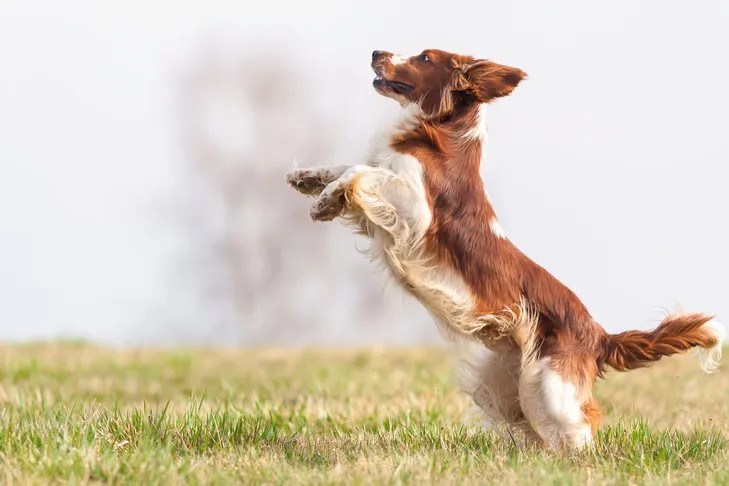 A young Golden Retriever puppy playfully jumping towards its owner's hand. dexter_cz/Shutterstock
3. Withdraw Attention When Jumping Occurs
To eliminate jumping, you must stop reinforcing it. When your puppy jumps, the most effective response is to immediately remove what they are seeking: your attention. Calmly turn your back or walk away. This teaches your puppy that jumping has the opposite effect of what they intend. The moment their paws are back on the floor, turn back and offer quiet praise and affection. This creates a clear cause-and-effect relationship, teaching your puppy to control the flow of your attention.
4. Set Your Puppy Up for Success
While ignoring jumping and rewarding good behavior is effective, it can be a trial-and-error process for your puppy. To accelerate their learning, proactively set them up for success. For example, if you’re teaching a “sit” for greetings, cue them to sit as soon as you enter the house. If your rule is “four on the floor,” encourage them to stand calmly. A highly effective method is to scatter a handful of treats on the floor as you enter. Most puppies will be delighted to sniff out these treats, and they cannot jump and sniff the ground simultaneously. This allows you to reward them for having their feet on the floor with both attention and delicious treats, quickly teaching them your greeting preference. You can gradually phase out the treats as they master the behavior.
5. Consistently Reward Proper Greetings
Your puppy’s understanding of proper greeting behavior will be significantly faster if their actions have an immediate and predictable impact on your attention. When their feet are on the floor, they gain your attention; when they jump, attention is withdrawn. Therefore, always reward your puppy when they follow your greeting rule. Even if it takes a while for them to stop jumping, never withhold your attention once their paws are on the ground. Consistency is crucial; a wavering response will only confuse your puppy.
6. Avoid Physical Corrections
Grabbing your puppy’s paws or physically pushing them away, while seemingly a direct response to jumping, is still a form of attention. This can inadvertently reward the jumping behavior, leading to more persistent jumping in the long run. For some enthusiastic puppies, these physical interactions might even be misinterpreted as an invitation to roughhousing, causing them to return with even more vigorous jumps, thinking it’s part of a game.
7. Do Not Use Your Knee as a Barrier
The advice to put your knee up to block your puppy’s chest when they jump can be counterproductive. As mentioned, some dogs might interpret this as play or even a challenge, leading to increased jumping. More importantly, for many dogs, this physical action can erode trust and damage the human-canine bond. Your puppy is simply trying to greet you, and responding with a physical block can feel like a punishment, potentially leading to other behavioral issues if they no longer trust you, such as a reluctance to come when called.
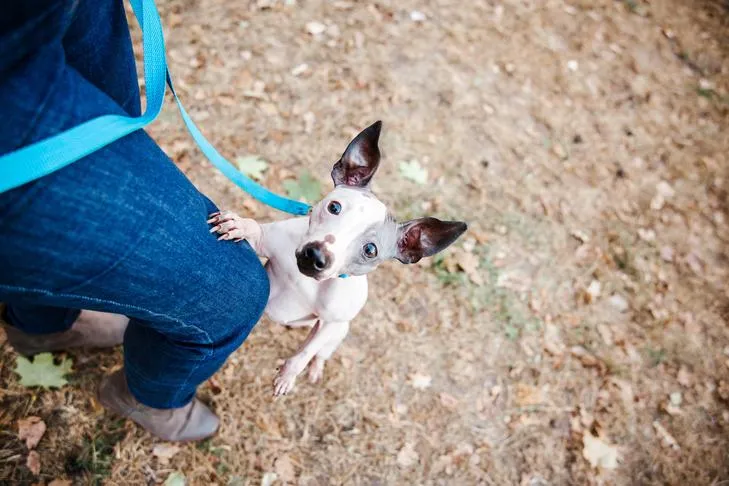 An energetic Jack Russell Terrier leaping upwards towards its owner's hand. ©OlgaOvcharenko – stock.adobe.com
8. Maintain Calm Greetings During Training
Puppies can get overwhelmed by excitement when they see you, making it challenging for them to control their urge to jump. Teaching them emotional self-control takes time. To facilitate this, keep your initial greetings low-key. Dogs are sensitive to our emotions; if you are overly excited, they will mirror that energy. Remain calm and quiet, even when offering praise. As your puppy begins to grasp the new greeting rules, you can gradually increase your enthusiasm until you can match their excitement while still maintaining polite behavior.
9. Manage Greetings with Visitors and Strangers
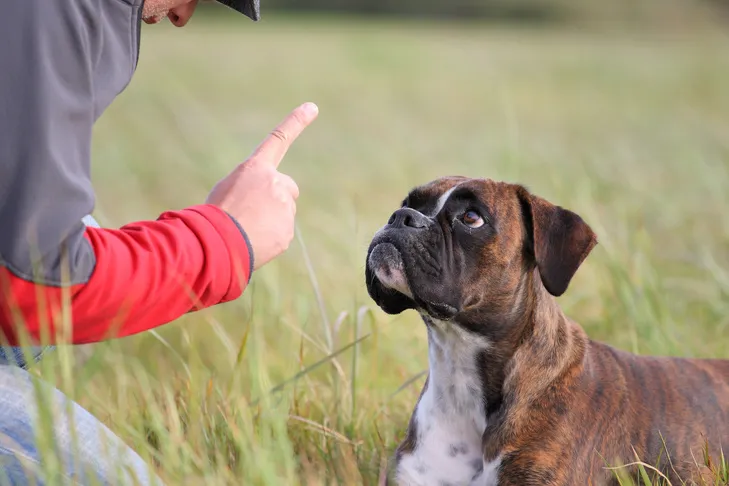
Your puppy’s jumping behavior can be reinforced by anyone who interacts with them. Family members, guests, and even strangers can inadvertently encourage this habit if you’re not vigilant. Employ management strategies to prevent jumping on others. This can include keeping your puppy on a leash so they cannot reach visitors, sending them to a designated “place” like a mat or bed, or securing them in their crate away from the door. Using a baby gate to create a barrier in the hallway can also be effective.
 ©Jana Behr – stock.adobe.com
10. Brief Guests on Greeting Rules
Don’t hesitate to communicate your puppy’s training needs to guests and strangers. Before anyone greets your puppy, clearly explain the desired behavior and ask them to cooperate. While your puppy is still learning, request that people completely ignore your puppy unless you signal it’s okay. It’s also wise to avoid interactions with unfamiliar people until your puppy has mastered greetings with friends and family who are willing to follow your instructions. Alternatively, you can use a “watch me” cue or distract your puppy with a toy or a hand target while the stranger passes. For younger puppies just starting out, learning how old to walk puppy on leash and practicing how to train a puppy for a leash are foundational steps that can also help manage energy and focus.
For personalized advice and support from experienced trainers, explore the AKC GoodDog! Helpline for online chats or to enroll in their consultation services.
Conclusion: Cultivating a Polite Puppy
Teaching your puppy to greet people politely takes patience, consistency, and positive reinforcement. By understanding the root of the jumping behavior and implementing strategies that reward desired actions while withholding attention for jumping, you can effectively train your puppy to abandon this habit. Remember to always set your puppy up for success, involve everyone in your household and any visitors in the training process, and celebrate every small victory. With dedication, your puppy will grow into a well-mannered companion who knows how to say “hello” appropriately, strengthening your bond and ensuring pleasant interactions for everyone. If you’re also tackling other behavioral challenges, resources on how to stop your puppy jumping on the sofa or dealing with issues like how to stop dog aggression towards other dogs can offer further guidance.
