
It’s a common scenario for many dog owners: a visitor arrives, and your beloved canine companion, full of excitement, launches themselves upwards in greeting. While this exuberance is often a sign of affection, a dog jumping up on strangers or guests can be an unwelcome and potentially problematic behavior. It can be startling, unhygienic, and even dangerous, especially for children or the elderly. As a dog owner, understanding how to stop my dog jumping up at strangers is key to ensuring pleasant interactions for everyone and fostering a well-mannered pet. This guide will walk you through effective, positive reinforcement techniques to help your dog learn appropriate greeting behaviors.
Understanding Why Dogs Jump
Dogs jump on people for a variety of reasons, often rooted in natural canine communication and a desire for attention. In the canine world, a dog jumping up can be part of an enthusiastic greeting or an attempt to get closer to a peer’s face. However, what’s natural for dogs isn’t always appropriate in human interactions. When a dog jumps on a person, they might be seeking attention, trying to initiate play, or simply expressing overwhelming excitement. Often, owners inadvertently reinforce this behavior by giving attention (even negative attention like pushing them away) when the dog jumps, which the dog interprets as a reward. Teaching an alternative, more desirable behavior is crucial for effective training.
Foundational Training: Setting the Stage for Success
Effective training to curb jumping begins with establishing clear communication and consistent reinforcement of desired behaviors.
The Power of Marker Words and Rewards
A marker word, such as “yes” or “good,” is a powerful tool in dog training. It precisely communicates to your dog the exact moment they performed a desired action correctly, followed immediately by a reward. This clarity helps your dog understand what you want them to do and builds their confidence. Consistent use of a marker word and a high-value treat when your dog offers a polite behavior (like sitting calmly) helps them form positive habits. This foundational understanding is vital for teaching them alternative ways to interact with people. Just as we might teach a dog to master a simple command, applying consistent training can also help your dog learn how to train a dog to only pee outside and exhibit excellent impulse control in various situations.
Celebrating Desired Behaviors
Beyond marking correct actions, actively “celebrating” desired behaviors is paramount, especially when addressing jumping. Many owners mistakenly focus only on punishing unwanted actions, rather than teaching and rewarding the behaviors they do want. Instead of waiting for your dog to jump and then reacting, proactively reward them when they choose behaviors like sitting, coming when called, lying down, or making eye contact. This communicates to your dog which actions earn your approval and rewards. By consistently petting, praising, and treating your dog when they offer these polite alternatives, you reinforce that calm behavior is much more rewarding than jumping.
Managing Energy Levels Through Enrichment
A dog with excess energy is often more prone to exhibiting unwanted behaviors, including jumping. High-energy dogs, in particular, benefit from creative forms of exercise and mental stimulation that go beyond just physical activity. Incorporating enrichment games into their daily routine can significantly help deplete this energy. Consider feeding meals out of snuffle mats or puzzle feeders, playing scent games like “Cookie in the Corner,” or hiding treats in boxes or paper towel rolls for them to find. These activities engage their minds and bodies, leading to a calmer, more well-behaved dog. A mentally and physically satisfied dog is far less likely to resort to jumping out of boredom or over-excitement, making your training efforts more effective. Similarly, engaging a puppy’s mind can be crucial for development, just like when teaching how to potty train a puppy on pads early on.
Practical Steps to Stop Jumping at Strangers
With a solid foundation in place, you can now implement specific strategies to address the jumping behavior directly.
Teaching Incompatible Behaviors
The most effective way to stop a dog from jumping is to teach them an “incompatible behavior”—an action they cannot perform simultaneously with jumping. A common incompatible behavior is sitting. When a dog is sitting, they cannot jump. Start by practicing basic obedience commands like “sit” in a calm, low-distraction environment. Once your dog reliably sits on cue, you can incorporate “hand targeting” (touching your hand with their nose) as a polite greeting alternative. This gives them a specific, desirable action to offer instead of jumping. Practice these behaviors frequently, rewarding success every time.
Strategizing Door Greetings
The arrival of guests at the door is often a prime trigger for jumping. To address this, it’s essential to have a plan. Before guests even arrive, ask your dog to sit or lie down a short distance from the door. When the doorbell rings or a knock sounds, cue them to perform their incompatible behavior (e.g., sit and stay). Reward them for remaining calm. For direct interaction, instead of letting your dog jump, encourage guests to ask your dog for a “sit” or to offer their hand for a “target” before engaging with them. This sets the expectation that calm behavior earns attention.
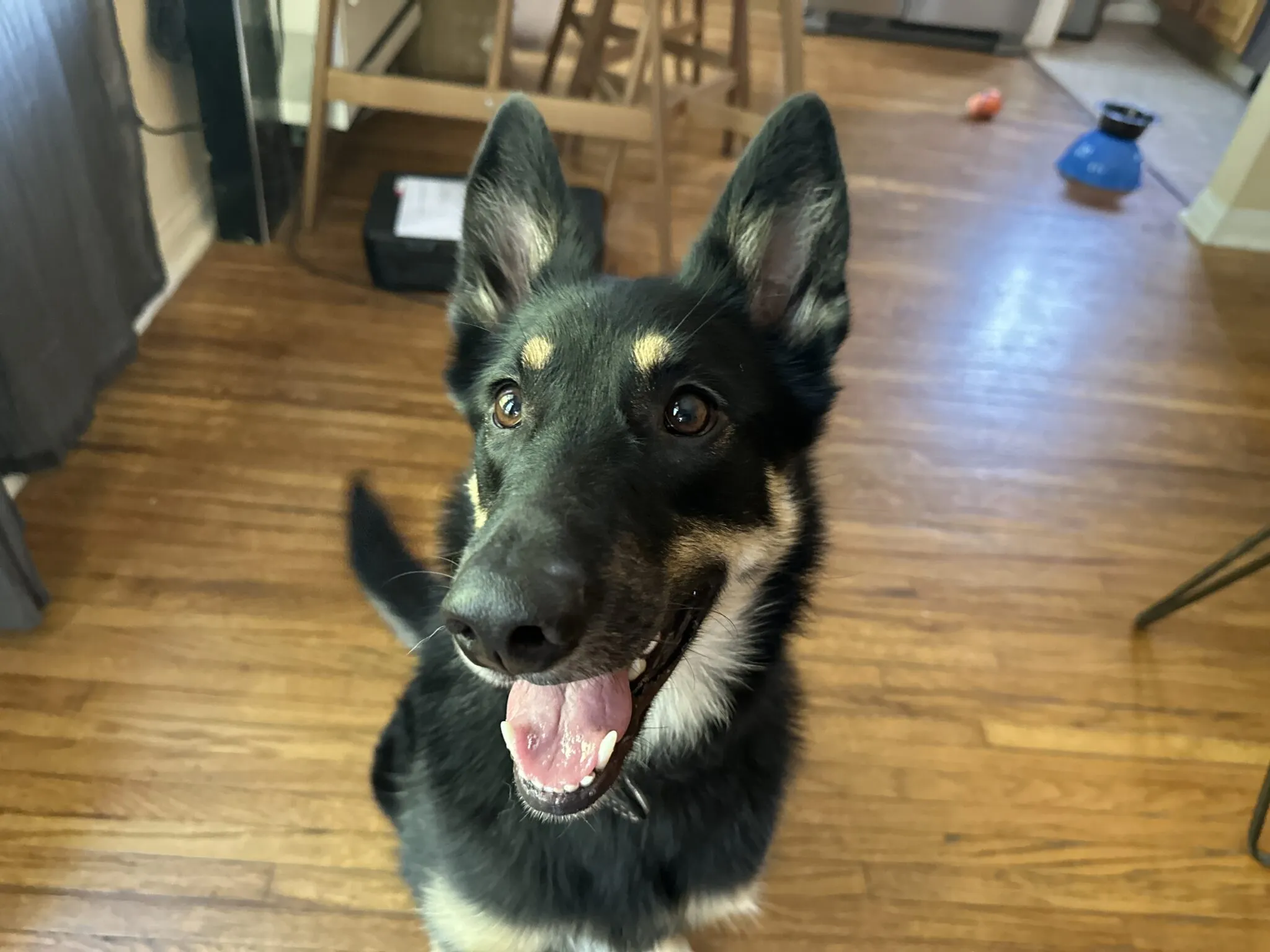 A German Shepherd / Border Collie mix dog named Moody looking calm and attentive during a training session
This method empowers both you and your guests to reinforce appropriate greetings. Practicing this approach repeatedly when you yourself arrive home can significantly help, as your dog will associate your arrival with calm, desired behaviors rather than uncontrolled excitement. Establishing consistent manners, much like teaching how to train a pug to walk on a leash for controlled outdoor excursions, is key to success.
Consistent Practice Makes Perfect
Changing established behaviors takes time and repetition. For a new behavior pattern to truly stick, experts suggest it takes about three months of consistent practice. This means engaging your dog in short, frequent training sessions throughout the day. Aim for 5 to 10 repetitions, lasting only one to two minutes, three to six times a day. Practice in various environments, starting with low-distraction settings and gradually introducing more stimulating ones. The more consistently you practice, especially in the actual locations where jumping typically occurs (like near the front door), the faster your dog will develop the new, desired habit. This diligent approach is also fundamental when teaching a puppy, much like the steps involved when you are wondering how to puppy pad train a puppy effectively.
Enlisting Cooperative Guests
Once your dog has a good grasp of the desired greeting behavior in practice sessions, it’s time to introduce real-world scenarios with guests. However, it’s crucial to enlist the help of cooperative friends or family members who understand and will follow your instructions. Explain your training plan to them, emphasizing the importance of only giving attention to your dog when all four paws are on the floor. Ask them to ignore jumping attempts and only interact once your dog offers the desired behavior (e.g., a sit or hand target). This consistent reinforcement from everyone your dog meets is vital to solidify their new greeting manners. This collaborative effort helps prevent regression and reinforces that calm greetings are always rewarded, even for dogs that might be how to train a stubborn dog to pee outside but respond well to clear, consistent guidance.
Conclusion
Stopping your dog from jumping up at strangers is an achievable goal that requires patience, consistency, and a clear understanding of canine behavior. By focusing on positive reinforcement, teaching incompatible behaviors, managing your dog’s energy, and enlisting the help of cooperative guests, you can transform chaotic greetings into calm, polite interactions. Remember, every successful training moment builds your dog’s confidence and strengthens your bond. Embrace the process, celebrate small victories, and commit to consistent practice. With dedication, you’ll soon enjoy a well-mannered companion who greets everyone politely, making every encounter a positive experience.
