
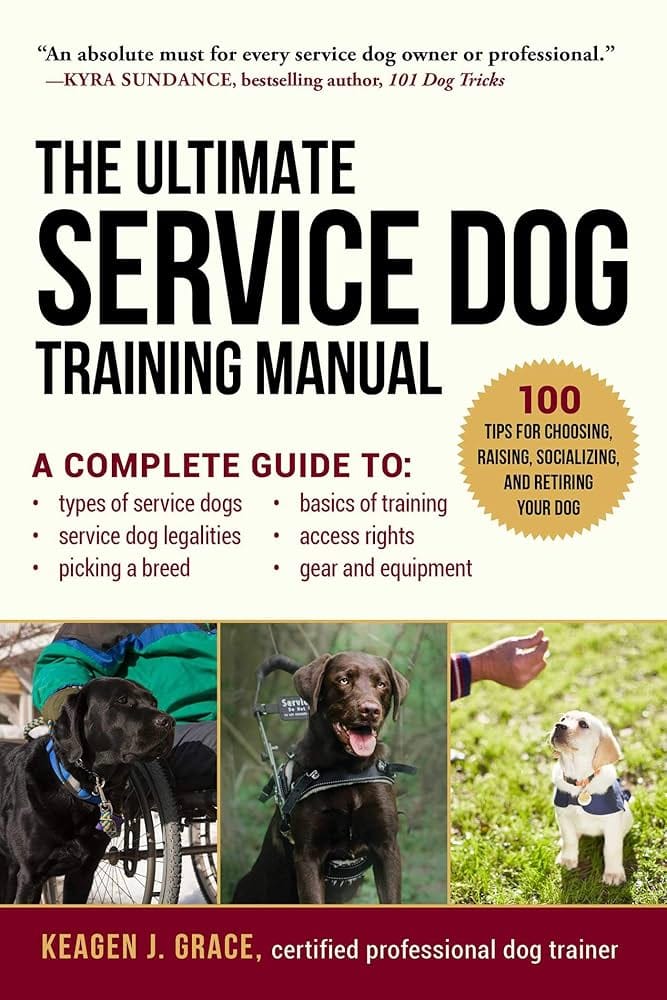
The journey of transforming a playful puppy into a focused, life-saving service dog is a remarkable process built on dedication, science, and a profound bond between human and animal. Understanding How Are Service Dogs Trained reveals an intricate system of careful selection, foundational obedience, and highly specialized task work designed to assist individuals with disabilities. It’s a path that requires hundreds, sometimes thousands, of hours of meticulous effort before a dog is ready to wear the vest. For those curious about this process, exploring details like what are service dogs trained to do can provide deeper insight into their incredible capabilities.
This comprehensive guide will walk you through the essential stages of service dog training, from selecting the right candidate to the final tests that certify them as a working partner.
The Foundation: Selecting the Right Canine Candidate
Not every dog is cut out to be a service animal. The process begins with a rigorous selection protocol to identify puppies with the ideal temperament, health, and aptitude for the demanding work ahead.
Temperament and Personality
Professional organizations look for specific traits that are crucial for a successful service dog. A suitable candidate is typically:
- Calm and Confident: The dog must remain unfazed by loud noises, crowded spaces, and unexpected situations.
- Eager to Please: A strong desire to work with and for their human partner is essential for trainability.
- Intelligent and Focused: The ability to learn complex tasks and ignore distractions is paramount.
- Friendly but Not Overly Social: A service dog should be neutral towards strangers and other animals, focusing solely on their handler.
Health and Genetic Screening
Potential service dogs undergo extensive health screenings to rule out genetic conditions that could impact their ability to work long-term. Common checks include evaluations for hip and elbow dysplasia, eye conditions, and heart problems. A sound body is just as important as a sound mind.
Stage One: Socialization and Foundational Skills
Once a puppy is selected, usually around 8 weeks of age, their training begins immediately. The first year is crucial for building a solid foundation.
Early Socialization (Birth to 16 Weeks)
Puppy raisers, often dedicated volunteers, play a vital role in this stage. They expose the puppy to a wide variety of sights, sounds, smells, and environments. The goal is to create a well-adjusted, confident dog that is comfortable in any public setting. This includes trips to grocery stores, parks, and even on public transport. For instance, knowing the rules for travel is important, which is why topics like ‘can you take dogs on a train‘ are part of their broad education.
Basic Obedience and Manners
Alongside socialization, the puppy learns fundamental obedience cues. This is more advanced than a typical pet obedience class. The commands must be proofed to be reliable in any environment, with numerous distractions. Key skills include:
- Sit, Stay, and Down: Held for extended periods.
- Heel: Walking politely on a loose leash without sniffing or pulling.
- Leave It: Ignoring dropped items, food, or other temptations.
- Come: A reliable recall, no matter the situation.
These skills are the building blocks for the more complex tasks they will learn later. This phase can take up to a year, laying the groundwork for a successful working life.
Stage Two: Advanced Training and Specific Tasks
After mastering foundational skills, around 12 to 18 months of age, the dogs enter the next phase of their education. This is where they learn the specific tasks that will help their future handler mitigate their disability. The question of how are service dogs trained truly gets answered here, as the curriculum becomes highly individualized.
How Do You Train a Service Dog for Specific Tasks?
The tasks a service dog learns are directly related to the handler’s disability. Trainers use positive reinforcement techniques, such as clicker training and high-value rewards, to shape behaviors. The training breaks down complex actions into small, manageable steps.
As Dr. Sarah Miller, a leading expert in canine behavior, states, “Task training is a delicate dance of communication and repetition. We are essentially teaching a dog to recognize a specific human need—be it a medical alert or a physical assist—and perform a practiced, reliable action in response. It’s about building a language between the dog and handler.”
Examples of specialized training include:
- Mobility Assistance Dogs: Learn to retrieve dropped items, open and close doors, turn lights on and off, and provide a stable brace for someone with balance issues.
- Hearing Dogs: Are trained to alert their deaf or hard-of-hearing handler to important sounds like a smoke alarm, a doorbell, an alarm clock, or a crying baby.
- Diabetic Alert Dogs: Use their powerful sense of smell to detect changes in their handler’s blood sugar levels and provide an alert.
- Psychiatric Service Dogs: Are trained to perform tasks like interrupting panic attacks, providing deep pressure therapy during an anxiety spike, or reminding their handler to take medication.
The duration of this advanced training varies. Getting a grasp on ‘how long are service dogs trained‘ involves understanding that this stage can take another 6 to 9 months, depending on the complexity of the tasks required.
Stage Three: Public Access and Handler Pairing
A fully trained service dog must be impeccable in public. The final stage of training focuses on ensuring the dog can perform its tasks flawlessly in any environment while remaining unobtrusive and well-mannered.
What is Public Access Training?
Public access training involves practicing obedience and tasks in real-world settings. The dog learns to navigate busy sidewalks, lie quietly under a table in a restaurant, and remain calm in chaotic places like airports or shopping malls. They are tested on their ability to ignore distractions, from curious children to other animals, and focus entirely on their handler. This is where all the early socialization pays off. For those who require assistance in environments with specific risks, specialized training like snake aversion training for dogs near me can be a critical addition.
Matching with a Handler
Once a dog has passed its public access test, the organization begins the careful process of matching it with a person on their waiting list. This is a highly personalized process, considering the applicant’s needs, lifestyle, and personality, as well as the dog’s temperament and skillset.
The final step is team training. The handler and the dog spend several weeks working with a professional trainer to learn how to communicate and work together effectively. The handler learns the dog’s commands, how to maintain the training, and how to advocate for their rights as a service dog team.
Frequently Asked Questions (FAQ)
What breeds are best for service dogs?
Labrador Retrievers, Golden Retrievers, and German Shepherds are the most common breeds due to their intelligence, trainability, and stable temperaments. However, many other breeds, including Poodles and mixed breeds, can also be excellent service dogs if they have the right disposition.
How much does it cost to train a service dog?
The cost can be substantial, often ranging from $25,000 to $50,000. This covers breeding, veterinary care, professional training, and team placement. Most individuals receive their dogs from non-profit organizations that rely on donations and grants. The high cost is why finding a ‘fully trained service dog for sale‘ involves careful research into reputable organizations.
Can I train my own pet dog to be a service dog?
While it is legally permissible in some countries, like the U.S., it is extremely challenging. Owner-training requires immense knowledge, time, and objectivity. Most pet dogs do not have the foundational temperament for service work, and it can be difficult for an owner to train a dog to the high standards required for reliable public access and tasking.
What is the difference between a service dog and an emotional support animal?
A service dog is individually trained to perform specific tasks to mitigate a person’s disability. They have public access rights under laws like the Americans with Disabilities Act (ADA). An emotional support animal (ESA) provides comfort with its presence but is not trained to perform specific tasks. ESAs do not have the same public access rights as service dogs.
How can I tell if a dog is a real service dog?
You can’t always tell. Legally, you are only allowed to ask two questions: (1) Is the dog a service animal required because of a disability? and (2) What work or task has the dog been trained to perform? You cannot ask for documentation, require the dog to demonstrate a task, or ask about the person’s disability. True service dogs are calm, focused, and unobtrusive.
Conclusion: A Partnership Built on Trust and Training
The answer to how are service dogs trained is complex and multifaceted. It is a long, expensive, and intensive journey that combines careful breeding, expert training, and the dedication of countless individuals, from puppy raisers to professional trainers. The result is more than just a well-behaved dog; it’s a lifeline. This rigorous process forges an unbreakable bond between a person and their dog, creating a partnership that provides independence, security, and a freedom that might otherwise be out of reach.
