
The world of rodeo is built on the powerful and athletic bucking horses that thrill crowds and challenge riders. These aren’t just any horses; they are meticulously bred, trained, and selected for their innate ability and desire to buck. This article delves into the fascinating process of “making broncs,” exploring the breeding programs, training methods, market dynamics, and welfare considerations that define these specialized equine athletes.
The Art of Breeding Bucking Horses
Producing bucking horses is a long-term endeavor that demands expertise and dedication. Breeders like Austin Siklenka focus on “quality over quantity,” aiming to develop horses with specific talents. This process begins with carefully selected stallion and mare pairings, a venture that can take years to yield results.
The training for young horses starts with a “dummy” – a small, weighted contraption attached to a surcingle. This allows two- and three-year-old horses to learn the routine of entering the chute, being fitted with a flank strap, and bucking without the pressure of a rider. As Siklenka explains, “The horses are learning how to handle themselves… It’s like an athlete in training.” This controlled environment helps them develop consistency, athleticism, and the confidence to perform.
What Makes a Good Bucker?
A truly exceptional bucking horse is consistent, user-friendly, and possesses a powerful, high-jumping, and kicking style. Rodeo riders, aiming to make a living by staying mounted for eight seconds, prefer horses that exhibit predictable movements rather than erratic “funky dance moves.” Just as in other equestrian disciplines, consistency is key for achieving high scores. The horse and rider are each scored out of 50 points, with scores in the 80s considered very good and scores in the 90s exceptional.
Horses that demonstrate potential are entered into futurity contests where they are judged for their skill while being ridden by dummies. They are not ridden by humans until they reach at least four years of age. This gradual introduction ensures they build confidence and skill before facing the challenge of a human rider.
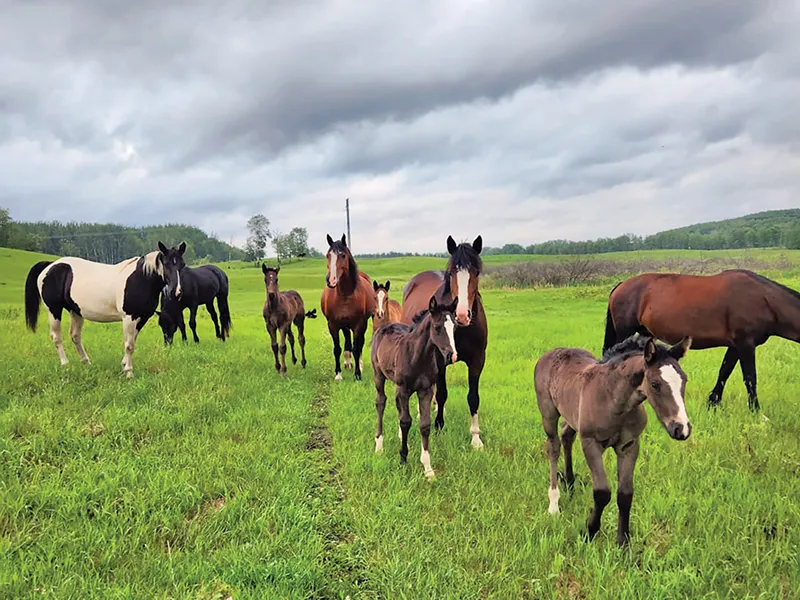 Breeding farms rodeo horses canada, austin siklenka breeding farm, rodeo horse breeding farms saskatchewan, Bucking horses*Mares and foals on Austin Siklenka’s farm in Meadow Lake, Saskatchewan. Photo: Austin Skilenka*
From Ranch Horses to Rodeo Legends
The concept of purpose-bred bucking horses is a relatively modern one. Historically, horses like Midnight, a legendary bucking horse born in 1915, were simply ranch horses that were unrideable. Midnight’s exceptional bucking ability led him to become a rodeo star and the first animal inducted into the Canadian Rodeo Hall of Fame.
The demand for bucking horses grew, and figures like Feek Tooke began to experiment with breeding. Tooke’s belief that bucking was a trainable trait, not just an outburst of defiance, led him to cross breeds like Shire studs with hot Arabian mares. This breeding program produced offspring with consistent bucking abilities, and soon rodeo riders sought out Tooke-bred horses for their predictable and exciting performances. This marked a shift from simply finding unrideable horses to actively breeding them.
Canadian breeders, such as the Keslers and Gene and Joy Allen, followed suit, establishing long-standing programs dedicated to producing top-tier bucking stock. Today, organizations like the Bucking Horse Breeders Association (BHBA) registry meticulously record pedigrees, ensuring the lineage of these specialized athletes is preserved. As Siklenka notes, “Breeding buckers is a really in-depth, serious activity. It might take 40 years to breed a superstar.”
The Bucking Horse Market
A thriving market exists for bucking horses, with significant sums exchanged for exceptional talent. Auctions like the Canadian Made Bucking Horses (CMBH) event showcase top stock, with many horses finding buyers in the United States. High-selling horses, typically aged seven to 10, are valued for their proven ability to produce consistent rides and their potential to sire future champions.
The demand for professional-caliber bucking horses remains high. Buck Peters, organizer of CMBH, explains that only about 10 percent of colts born will become successful buckers, with even fewer making it to the higher levels of competition. This rarity contributes to the high prices for proven athletes.
For horses that do not excel as buckers, other markets exist. Their athleticism and strong build make them suitable for various roles, including outfitting, ranch work, and as performance riding horses.
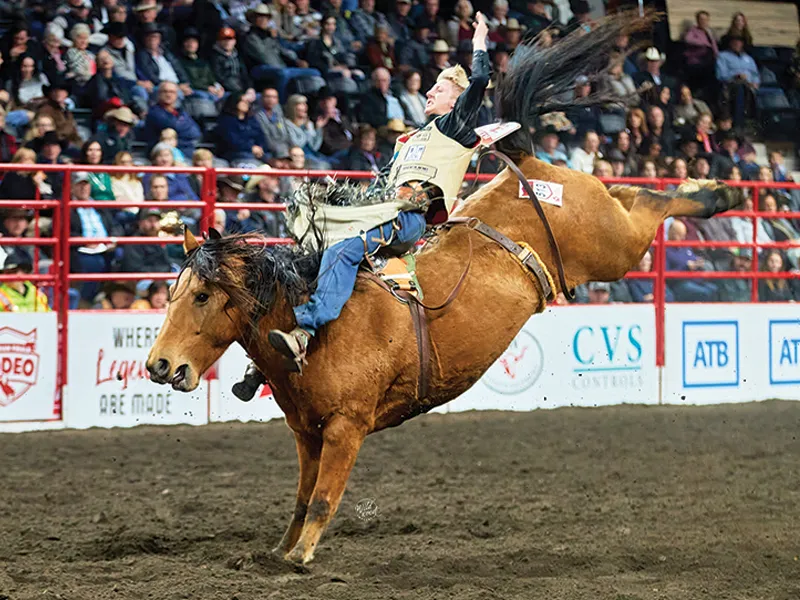 horse bucking rodeo, rider on bucking horse, rodeo horse canada, wildwood imagery, best bucking horses canada*Photo: Wildwood Imagery*
Horse Welfare in Rodeo
Modern bucking horse programs prioritize horse welfare, providing animals with ample “friends, freedom, and forage.” These horses typically live in natural, herd environments on large pastures for most of the year. They receive regular veterinary care, vaccinations, and handling.
Upon arrival at a rodeo, horses are thoroughly inspected by officials and veterinarians to ensure they are healthy and free from injury or distress. While injuries can occur, the focus is on making the best decisions for the horses’ well-being.
Research, such as a study conducted at the Calgary Stampede, suggests that bucking horses become habituated to rodeo procedures through experience, rather than exhibiting learned helplessness. Horses with more rodeo experience displayed fewer “vigorous behaviors” prior to performance, indicating a level of calmness and understanding of the routine. This ongoing interest in understanding and prioritizing the welfare of bucking horses is a positive development in the sport.
The Rider’s Journey
The success of a bucking horse can significantly impact a rider’s career. A skilled rider, like 18-year-old Chad Siemens, understands the importance of the horse they draw. Siemens, who won the Novice Bareback competition, emphasizes the role of hard work and determination, stating, “a teaspoon of try beats a cupful of talent.” He, along with many aspiring riders, trains rigorously on mechanical broncs and live horses, aiming to turn their passion into a professional career.
The journey of a bucking horse, from a purpose-bred foal to a rodeo star, is a testament to selective breeding, dedicated training, and a deep understanding of equine athleticism. These magnificent animals are not merely participants in a sport; they are athletes in their own right, bred for performance and respected for their power and spirit.
