
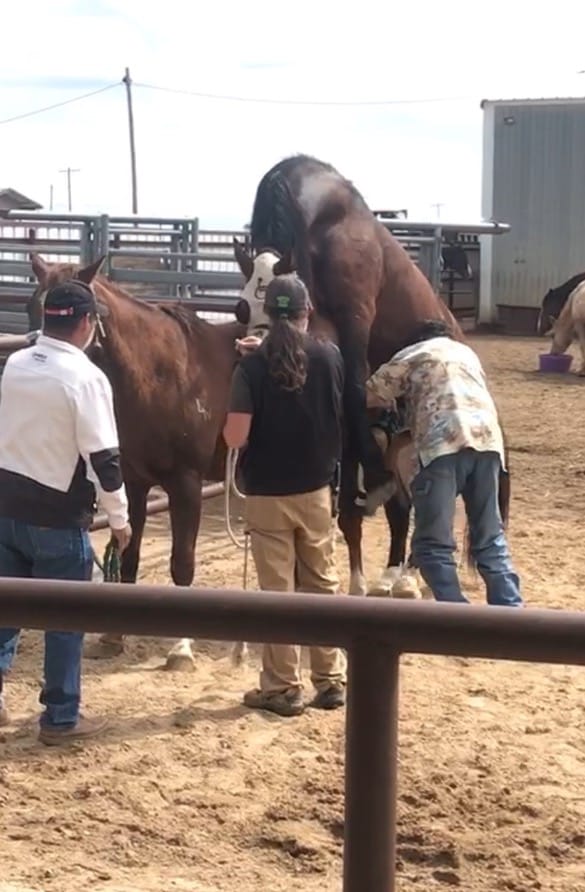
The spirit of the West, embodied by the fearless cowboy and the untamed bronc, is a powerful image. But behind every successful ride in the rodeo arena lies a rigorous and specialized training process. Training a bronc horse isn’t about breaking their spirit; it’s about channeling their natural power and athleticism into a controlled, yet explosive, performance. This journey requires a deep understanding of equine behavior, patience, and a unique set of skills from both the horse and the trainer.
The Essence of Bronc Riding and Training
At its core, bronc riding is a sport that showcases the raw power and unpredictable nature of unridden or minimally ridden horses. These horses, often referred to as “outlaw” horses, possess a natural inclination to buck, kick, and twist in an attempt to dislodge any rider. The training for these horses, therefore, focuses on enhancing these natural behaviors in a way that is safe for both horse and rider, while also being a spectacle for the audience. It’s a delicate balance, demanding respect for the animal’s instincts and a commitment to ethical training practices. The goal is not to make the horse perform unnatural acts, but to shape their inherent wildness into a repeatable, albeit still challenging, performance.
Understanding the Bronc Horse’s Nature
Before any training begins, it’s crucial to understand the bronc horse itself. These are not typically your average riding school horses. They are often larger, more muscular breeds, with a strong flight instinct and a high degree of energy. Their natural response to perceived threats or discomfort is to buck, and this is the very trait that makes them suitable for bronc riding.
- Instincts: Bucking, kicking, and spinning are deeply ingrained survival instincts for horses. A bronc horse’s training aims to harness these instincts rather than suppress them.
- Temperament: While wild at heart, individual horses have varying temperaments. Some are naturally more aggressive, while others might be more reactive. Trainers must learn to read these individual characteristics to tailor their approach.
- Physicality: The physical build of a bronc horse is key. Powerful hindquarters and a strong back are essential for effective bucking. Training will often focus on building this specific musculature.
The Bronc Training Process: A Step-by-Step Approach
The training of a bronc horse is a gradual process, typically beginning at a young age and progressing through several stages. It’s a marathon, not a sprint, requiring immense patience and consistency.
Early Handling and Groundwork
Like any horse, broncs begin with fundamental groundwork. This phase is critical for establishing trust and basic communication.
- Saddling and Bridling: Introducing the saddle and bridle is done slowly and carefully. Horses are desensitized to the feel and weight of the equipment. This might involve leaving the saddle on for short periods, gradually increasing the duration, and associating it with positive reinforcement.
- Lunging: Lunging is used to teach the horse to respond to voice commands and rein pressure while moving in a circle. This helps develop responsiveness and control.
- Whipping/Spurring (Controlled): This is perhaps the most controversial aspect, but when done correctly, it’s about teaching the horse to respond to pressure and create a controlled buck. A trainer might use a lunge whip or a spur (gently) to encourage a reaction, teaching the horse that bucking is a way to relieve this pressure. This is not about causing pain but about eliciting a natural response.
Introducing the Saddle and Rider
Once the horse is comfortable with the equipment and basic commands, the next stage is introducing the saddle and, eventually, a rider.
- Saddle Time: The horse is accustomed to having a saddle on for longer periods, sometimes with a rider walking them around. The goal is for the horse to accept the weight and presence of a rider without undue stress.
- Gentle Bucking: The trainer might use specific techniques to encourage gentle bucking while the horse is being ridden at the walk or trot. This could involve rocking the saddle or applying pressure in a way that mimics a rider’s movement. The aim is to get the horse used to the sensation and learn to move with it.
Developing the Bucking Pattern
This is where the specialized training for bronc riding truly begins. The focus shifts to refining the horse’s bucking style to make it more effective and spectacular.
- Professional Trainers: Often, horses destined for bronc riding are sent to specialized trainers who have a deep understanding of the sport and the horses. These trainers utilize specific techniques to encourage the desired bucking motion.
- Using a “Riding Stick” or “Whip”: Trainers may use a padded stick or a specialized whip to cue the horse to buck. This is applied to the flanks or shoulders, designed to elicit a bucking response. The key is consistency and understanding how to apply pressure that encourages the horse to buck rather than simply run away.
- “Hanging Up” the Saddle: A technique where the rider leans back in the saddle, creating pressure that can encourage the horse to buck. This is a skill developed over time, and the horse learns to associate this pressure with bucking.
- Spinning and Kicking: Alongside bucking, trainers work on encouraging the horse to spin and kick. These movements are part of a bronc’s repertoire to dislodge a rider and add to the excitement of the ride.
Introducing Rodeo-Specific Elements
As the horse becomes more proficient at bucking, spinning, and kicking, training may incorporate elements specific to rodeo competition.
- Pen Work: Horses are often worked in a pen, allowing trainers to practice short, intense bucking sessions. This simulates the confined space of a rodeo chute.
- Gate Work: Working with the arena gates can help horses get accustomed to the sounds and environment of a rodeo.
- Gradual Exposure: Horses are gradually exposed to crowds, the sound of the announcer, and other rodeo elements to desensitize them and prepare them for the competition atmosphere.
Ethical Considerations in Bronc Training
The training of bronc horses is often viewed with a critical eye, and for good reason. It’s essential to emphasize that ethical training prioritizes the horse’s welfare.
- Welfare First: Reputable trainers and rodeo organizations are increasingly committed to the welfare of the animals. This means avoiding abusive methods and focusing on natural horsemanship principles.
- Understanding the Horse’s Limits: A good trainer knows when a horse is physically or mentally unable to perform. Pushing a horse beyond its limits is not only unethical but also detrimental to its long-term performance and health.
- Positive Reinforcement: While the nature of bronc riding involves eliciting strong reactions, positive reinforcement still plays a role. Rewarding a horse for a good performance or for cooperating during training can build a more positive relationship.
- Professional Guidance: For those interested in learning more about bronc training, seeking guidance from experienced and ethical trainers is paramount. Organizations like the Professional Rodeo Cowboys Association (PRCA) often have resources and guidelines regarding animal welfare in rodeo.
The Role of the Trainer
The trainer is the linchpin in the bronc horse’s development. They must possess a unique blend of skills:
- Deep Equine Knowledge: Understanding equine psychology, physiology, and behavior is non-negotiable.
- Patience and Persistence: Bronc training is a long and often frustrating process. Trainers must be incredibly patient and persistent.
- Physicality and Timing: A trainer needs to be physically capable and have excellent timing to cue the horse effectively and safely.
- Empathy: Despite the rough nature of the sport, a good trainer has empathy for the animal and works with its nature, not against it.
Conclusion: A Partnership Forged in the Arena
The training of a bronc horse is a complex and demanding endeavor, a testament to the incredible partnership that can form between humans and these powerful animals. It’s a world where instinct meets training, and where the raw power of nature is channeled into a thrilling spectacle. While the methods may seem intense, when practiced ethically and with a deep respect for the horse, bronc training is an art form that celebrates the spirit and athleticism of these magnificent creatures. The goal is always to produce a horse that can perform at its peak, safely and with its natural abilities showcased to their fullest.
