
The house sparrow, often overlooked amidst more colorful or melodious avian species, holds a unique fascination for bird enthusiasts. These common British birds, while not possessing spectacular plumage or a grand singing repertoire, offer a wealth of interesting behaviors and social dynamics worthy of closer observation. This exploration delves into the daily lives of house sparrows, revealing their intricate world of nesting, social interactions, and survival strategies.
Nesting Habits and Habitat
A communal nesting site for house sparrows can often be found in dense, thorny bushes like brambles. These provide a sanctuary, offering protection from predators for both the adult birds and their vulnerable chicks. The surrounding environment, such as nearby mudflats and banks, is crucial, supplying essential resources like food, water, and nesting materials. This symbiotic relationship with their habitat underscores the importance of even seemingly humble patches of nature for supporting bird populations.
 Nest site of house sparrows
Social Dynamics and Dominance
House sparrows are social creatures, living in flocks that exhibit a range of interactions. A male house sparrow’s dominance within the flock is often visually communicated through the size and darkness of a distinctive “bib” of black feathers on its throat and chest. Males with larger, darker bibs are typically considered more dominant. This visual hierarchy plays a significant role in the flock’s social order.
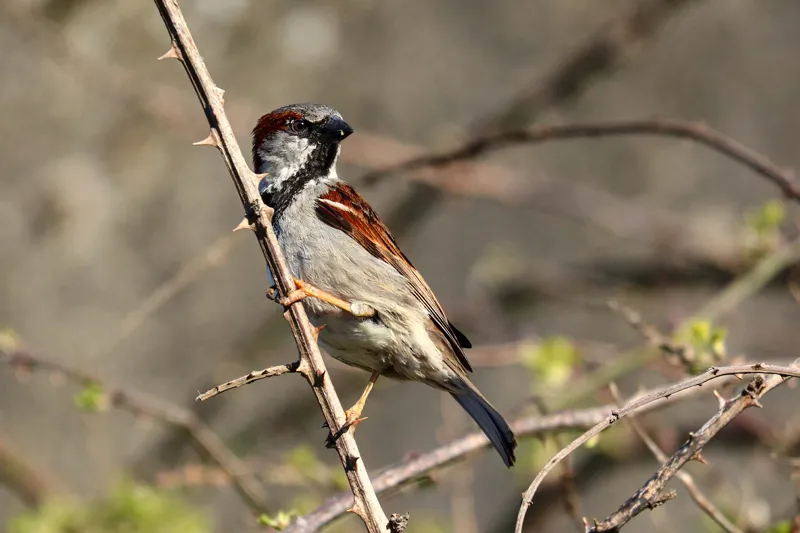 Male house sparrow with a prominent black bib
Conversely, males with smaller throat patches are generally lower in the pecking order. Even within a social structure, squabbles and disputes are not uncommon. A common aggressive display involves crouching with an fanned-out tail and an open beak, a clear indication of territorial or social tension.
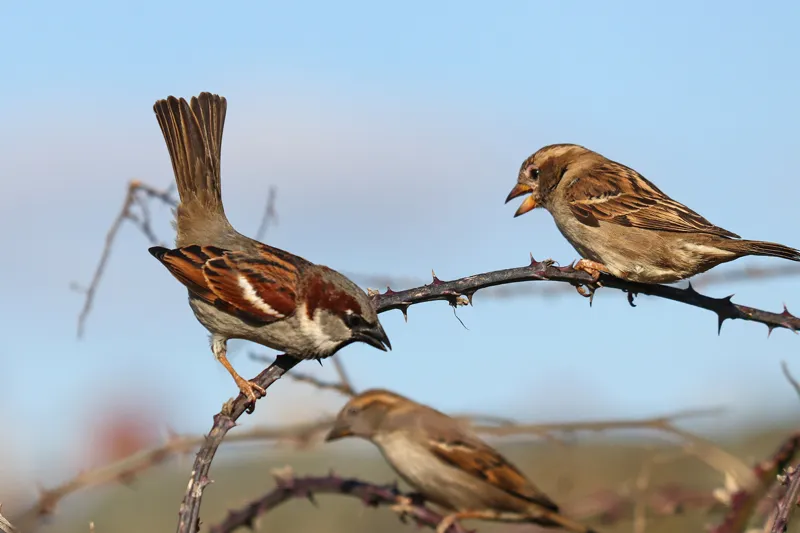 House sparrow displaying aggression
Courtship and Mating Rituals
Attracting a mate involves a variety of engaging behaviors. Males may perform a comical “dance,” characterized by hopping, wing-flicking, and tail-flicking, to impress a chosen female. Often, multiple males will join in these displays, creating a lively spectacle.
 Male house sparrow performing a courtship dance
A male might also sing near a prospective nest site, sometimes even presenting a beak full of nesting material as a demonstration of his ability to provide. As a female approaches, the male will intensify his efforts, quivering his wings and puffing out his chest feathers to enhance the appearance of his black bib, signaling his readiness and desirability as a partner.
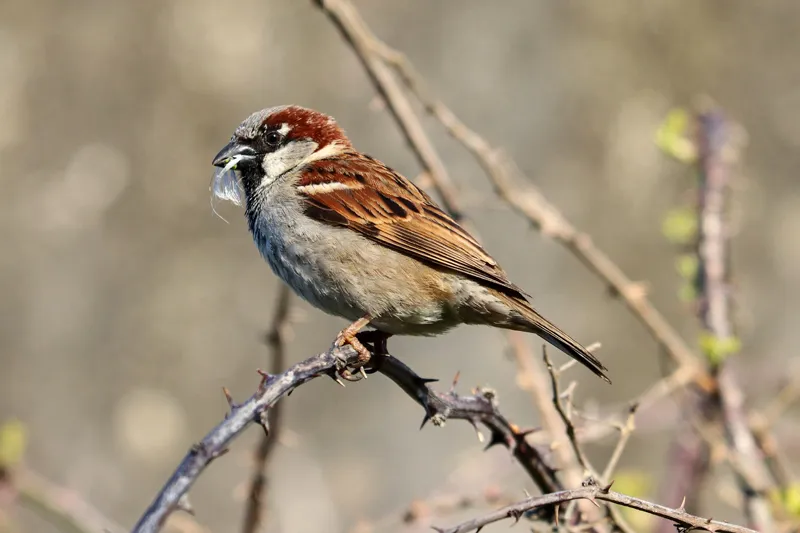 Male sparrow with nesting material in beak
The construction of nests involves dried vegetation as the primary material, with added linings of fur, feathers, string, and even paper, showcasing the birds’ resourcefulness.
Foraging, Bathing, and Health Observations
The availability of resources near their nesting sites is critical. Mudflats and surrounding areas provide ample food, often in the form of grubs and insects, essential for sustenance and feeding young.
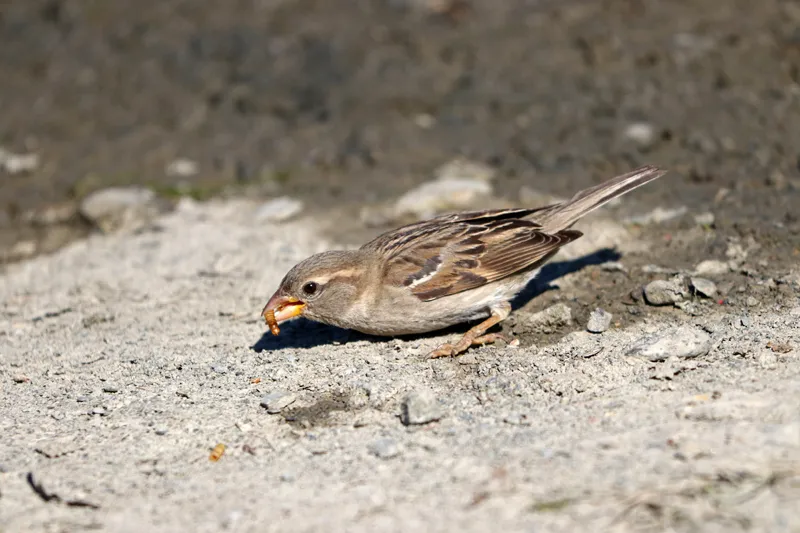 Sparrows foraging for food
Water sources are equally important, not only for drinking but also for bathing. Sparrows utilize high tide marks near their habitats for a refreshing dip, remaining close to safety in case of approaching predators.
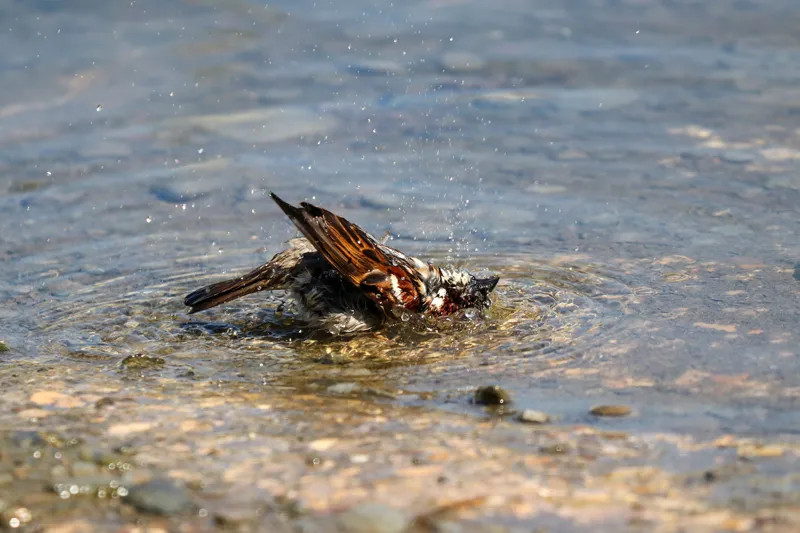 Male house sparrow bathing
Observations of house sparrows have also revealed instances of feather loss, particularly around the eyes of females. This can be attributed to the strenuous nature of breeding and rearing young, which can make the birds susceptible to parasites like mites. Despite this, the birds observed generally appeared to be in good health.
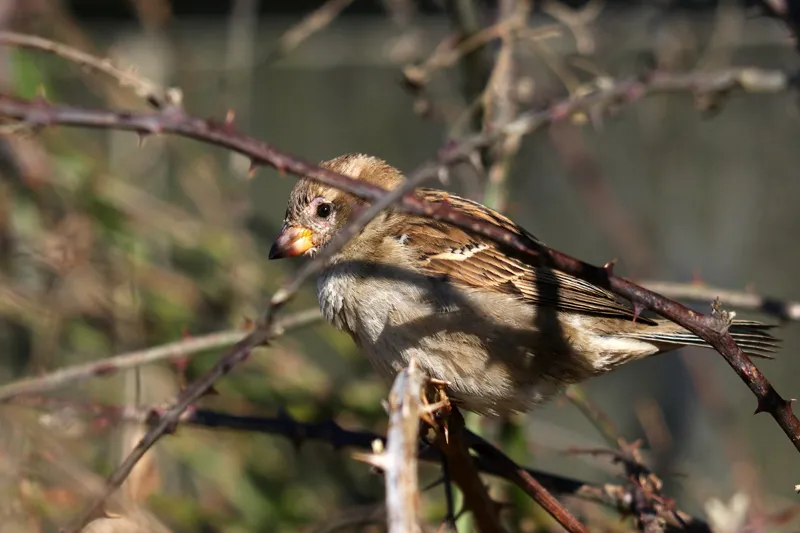 Female sparrow with bald patches around her eyes
The Art of Photographing House Sparrows
Capturing images of house sparrows amidst dense vegetation like brambles presents a unique challenge. The tangled branches can make spotting and focusing on the birds difficult. However, these conditions can also lead to aesthetically pleasing photographs, especially when combined with the soft light of early evening.
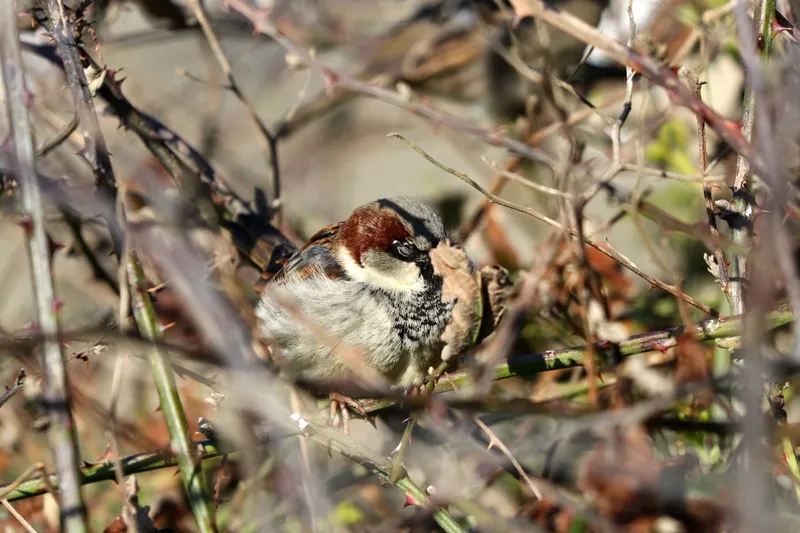 House sparrow resting within dense foliage
Observing the secret lives of these often-underestimated birds offers a valuable reminder of the rich biodiversity present even in urban and suburban environments. Their complex social structures, dedicated nesting behaviors, and constant quest for resources highlight the resilience and adaptability of wildlife.
All photographs copyright of Claire Stott/Grey Feather Photography © 2020. For more of her work, visit www.greyfeatherphotography.com or follow on Facebook or Instagram (@greyfeatherphotography).
