
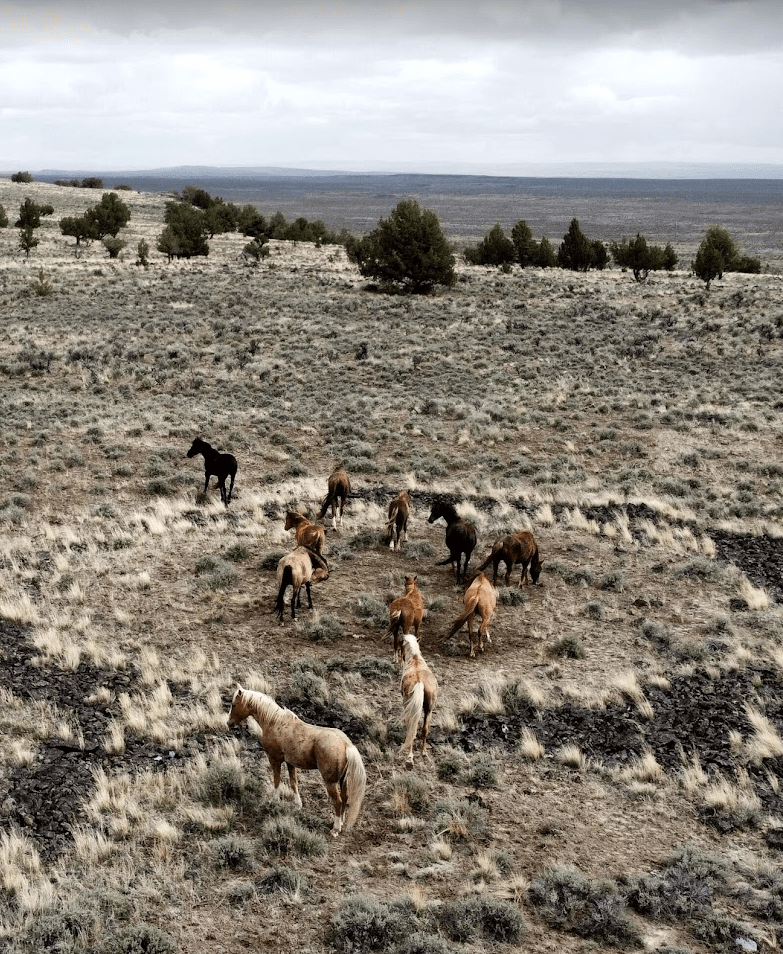
Wild horses are an enduring symbol of the American West, their untamed spirit evoking images of freedom and resilience. However, their presence on the continent is not a pristine natural occurrence, but rather a complex environmental history involving human introduction and reintroduction. While often viewed as an “invasive species” by land managers today, a closer look at their evolutionary past reveals a more nuanced picture. The debate surrounding their management highlights a clash between ecological history, scientific consensus, and prevailing land management policies.
The Historical Journey of Horses in the Americas
Horses were first brought to the Americas by European colonizers approximately five hundred years ago. They rapidly integrated into the lives of Native American communities, becoming instrumental in exploration, transportation, and cultural practices. From the pioneering journeys of Lewis and Clark to the enduring legacy of open-range ranching, horses played a central role in shaping the American West. For centuries, their power and utility were indispensable, until the advent of fossil fuels gradually diminished their practical importance in many aspects of human livelihood. Now, the relationship between humans and horses is undergoing another significant shift, marked by considerable debate and controversy.
[In a recent article published in Slate, Warren Cornwall described the management of wild horses as dealing with an “invasive species.” This perspective is echoed in ongoing debates where American and Canadian land managers, animal rights activists, and ranchers frequently clash over culling campaigns and various management strategies. Cornwall’s article points out the challenges: “Left unchecked, they overwhelm fragile desert ecosystems by chomping too much of the greenery to stubble. And they compete for the grass with another invader that has more economic clout: cattle.”
Horses: A Native Species Rediscovered
Despite the prevailing view of horses as invaders, scientific evidence strongly suggests that horses are, in fact, native to North America. Their evolutionary history on the continent stretches back millions of years. Early ancestors, such as the dog-sized Eohippus, roamed the land fifty million years ago. By four million years ago, the genus Equus, the direct ancestor of modern horses, had evolved and adapted to the open, semi-arid grasslands that characterized the Pliocene epoch. It is believed that a holarctic population of Equus ferus once spanned across Eurasia and North America, utilizing land bridges exposed during glacial periods. However, by 10,000 to 8,000 years ago, American horses became extinct, likely due to a combination of hunting pressures and climate change.
[Therefore, when Europeans reintroduced horses to the Americas 500 years ago, they were, in essence, initiating the first major rewilding campaign by bringing back a species that had long been absent. This scientific understanding has been developing for over a century. Charles Darwin himself noted the presence of Equus teeth and bones in Patagonia during his 1833 expedition. Joseph Leidy’s 1849 work on “The fossil horses of the Americas” further contributed to this knowledge. Horse evolution became a classic example in biology, notably popularized by Thomas Huxley, illustrating evolutionary principles through its family tree.
The Bureau of Land Management’s Stance
Despite the growing body of genetic and paleontological evidence, official bodies like the Bureau of Land Management (BLM) maintain a different position. The BLM, in its “Myths and Facts” section concerning wild horses in the United States, addresses the question of nativeness. Myth 12 states: “The disappearance of the horse from the Western Hemisphere for 10,000 years supports the position that today’s American wild horses should not be considered ‘native.'”
This argument, however, hinges on a specific interpretation of “native” and the significance of the 10,000-year gap. Ecologically speaking, 10,000 years is a relatively short period. The white pines of 10,000 years ago are genetically identical to those present today. Similarly, the horses of the last ice age would be readily recognizable as modern horses. The significant difference lies in the absence of a functional guild of large herbivores and their predators, including horses, from the North American ecosystem. The scientific consensus, supported by genetic evidence, is that modern horses are indeed native, descended from their ice-age ancestors. The BLM’s dismissal of this scientific consensus appears to be more of a value judgment than a statement of objective fact, prioritizing the current land management framework over ecological history.
[Towards a New Perspective: Reintroduction, Not Invasion
From a scientific standpoint, the reintroduction of horses into North American ecosystems where they previously thrived is not an invasion. The semi-arid grasslands of the West co-evolved with horses, and considerable evidence points to the crucial roles large herbivores play in habitat health, both historically and presently. Horses possess the potential to contribute significantly to the restoration of overgrazed and degraded habitats. However, realizing this potential requires a fundamental shift in the perspective of land managers.
The true non-native megafauna currently dominating many western rangelands are cattle. The perception of horses as detrimental pests arises primarily from their competition with cattle for resources. This view, however, is a subjective statement of values rather than an objective ecological assessment. While the livelihoods of ranchers are understandable, the issue lies with land managers who may be using the guise of objectivity to mask preferences for cattle over wild horses. This problem is not isolated to the BLM; it extends to broader conservation efforts as well.
In the case of wild horses, the BLM’s focus appears to be on maintaining rangelands primarily for livestock, which is a legitimate objective. However, when this motivation leads to the dissemination of confusion, misinformation, or flawed science, it becomes problematic, especially considering the ongoing challenges of shrub encroachment and overgrazing on western rangelands. The degradation of these landscapes cannot be solely attributed to wild horses. Instead of investing millions in culling, corralling, or implementing birth control measures for wild horses, a portion of these resources could be redirected towards researching how native grazers, such as horses, could be integrated into holistic rangeland management practices.
Perhaps it is time to reframe our perspective, moving away from viewing wild horses as invasive pests and instead recognizing them as a successful reintroduction, a vital component of the North American ecosystem.
* It’s important to note that Thomas Huxley’s early diagrams of horse evolution, which depicted a linear progression, have been refined. George Gaylord Simpson later described horse evolution as more akin to a shrub with branching lineages, indicating that all modern equids are the sole survivors of a once more diverse group.
** This article specifically addresses the nativeness of wild horses in the western United States. The author supports the classification of wild horses as “native” in other parts of the US wherever supported by the fossil record.
Categories: Commentary
Tagged: conservation, controversies, herbivory, invasives, management, megafauna, paleontology
Author: Jacquelyn Gill
