
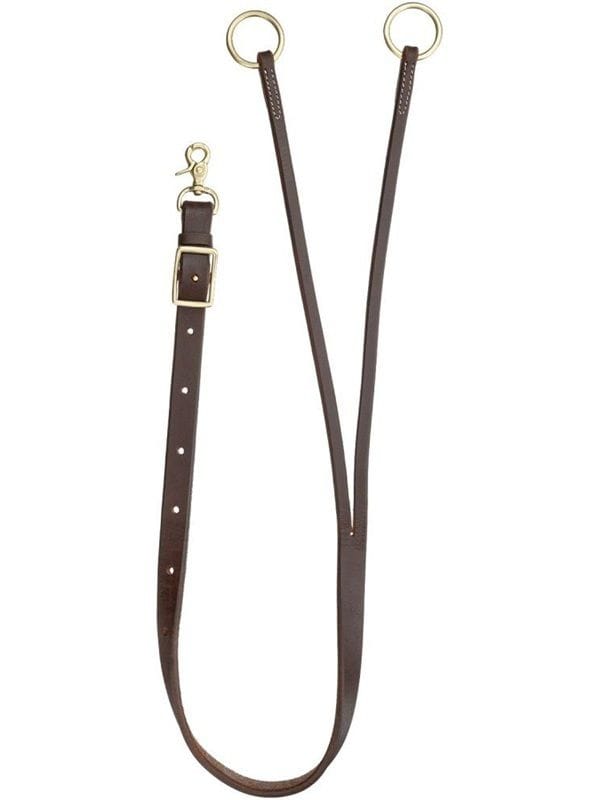
The Horse Training Fork is a specialized piece of equipment designed to assist riders in achieving a more consistent and desirable head carriage in their horses. Primarily used in Western riding and some Arabian disciplines, this tool acts as a training aid to encourage the horse to maintain a lower, collected frame. While its function may seem straightforward, understanding its nuances, proper application, and potential drawbacks is crucial for effective and ethical use.
Understanding the Training Fork’s Mechanism
At its core, a training fork works by redirecting rein pressure. It typically consists of a strap that attaches to the horse’s girth, between the front legs. This strap then splits into two shorter straps, each with a ring. The horse’s reins pass through these rings. When a horse raises its head too high, the training fork engages, applying gentle pressure to the bit. This pressure serves as a cue, encouraging the horse to lower its head and flex at the poll, the area just behind the ears.
This mechanism is similar to that of a running martingale, another common training aid. However, a key distinction often lies in the design and application, with training forks being more prevalent in Western riding contexts and often made to complement Western tack. Some variations, known as training martingales, may include an additional strap that goes over the horse’s neck to help keep the rings in a consistent position, whereas a simple training fork’s rings might slide along the reins.
Benefits of Using a Training Fork
The primary benefit of using a training fork is its ability to help riders achieve and maintain a desired headset, promoting collection and balance. For young or inexperienced horses, it can be a valuable tool in teaching them to accept contact with the bit and understand the cues for a collected frame.
- Consistent Feel: For the rider, a training fork can provide a more consistent feel in their hands, helping them to slow down their own movements and apply pressure more effectively. This is particularly useful when training young horses.
- Improved Collection: By encouraging a lower head carriage, the training fork aids in developing the horse’s collection, which is essential for many equestrian disciplines, including dressage.
- Rider Aid: It can act as a supportive tool for the rider, helping them to better understand and communicate the desired head position to the horse. This can be especially beneficial for riders who may struggle with inadvertently raising their hands, as the fork can prevent the horse’s head from being pulled up with the rider’s misplaced hand.
- Safety: Rein stops, used in conjunction with training forks, are critical safety features. They prevent the rings of the training fork from sliding up and potentially getting caught on the bit or other parts of the bridle, which could cause panic or discomfort for the horse.
Proper Use and Considerations
While a training fork can be a beneficial tool, its effectiveness and ethical use depend heavily on proper application. It is not a substitute for good riding technique but rather a supplement to aid in the training process.
- Intended vs. Unintended Use: The intended use of a training fork is to provide a gentle reminder when a horse lifts its head too high. However, some riders may misuse it by adjusting it too short, effectively “tying the horse’s head down” rather than guiding it. This can lead to a horse that braces against the pressure or becomes dull to the bit.
- Fit and Adjustment: Proper adjustment is key. The fork should be set so that it only engages when the horse’s head is excessively high, not constantly applying pressure. The goal is to encourage the horse to find the correct position on its own, with the fork acting as a guide.
- Leading the Horse: A practical consideration is that when dismounted, if the reins are not secured, a simple training fork can drop to the ground. Some riders tie the reins around the saddle horn to prevent this.
- Progressive Training: As the horse becomes more educated and develops better natural collection, the need for a training fork should diminish. It is a tool to facilitate learning, not a permanent fixture.
- Difference from Tie-Downs: It’s important to distinguish a training fork from a tie-down. While both affect head carriage, a tie-down offers less flexibility and can be more restrictive. A training fork allows for more subtle rein aids and offers a degree of freedom of movement for the horse’s head.
Types of Training Forks and Related Aids
Training forks come in various materials, including leather, nylon, and rubber tubing, and are offered by numerous brands. They can be attached to breast collars or directly to the girth.
Beyond the basic training fork, related aids include:
- Running Martingales: Similar in function, running martingales often feature a neck strap and are used in both English and Western disciplines.
- German Martingales: These are another variation, often with more rings and attachment points.
- German Training Martingales: These combine features of both martingales and training forks.
Conclusion
The horse training fork is a valuable tool when used correctly and ethically. It can significantly aid in developing a horse’s proper headset, collection, and responsiveness. However, like any training aid, its effectiveness is maximized when integrated into a comprehensive training program that emphasizes clear communication, correct technique, and a progressive approach, ultimately fostering a harmonious partnership between horse and rider.
