
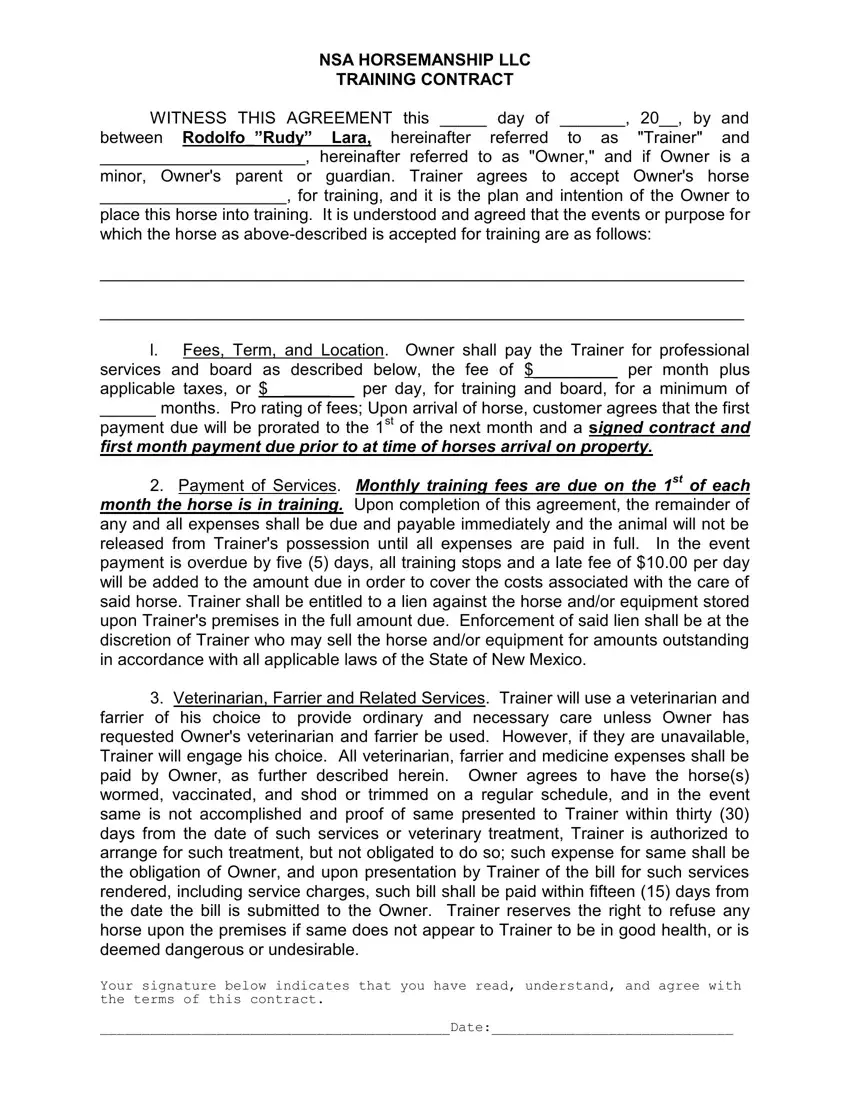
Establishing a clear and comprehensive horse training contract is paramount for any professional horse trainer and owner. It serves as a foundational document that outlines expectations, responsibilities, and terms of service, thereby preventing misunderstandings and fostering a positive working relationship. This contract is not merely a legal formality; it’s a vital tool for ensuring that both parties are aligned on the training goals, financial arrangements, and the overall welfare of the horse.
Why a Horse Training Contract is Essential
A well-drafted horse training contract is crucial for several reasons. Firstly, it protects both the trainer and the owner by clearly defining the scope of work, duration of the training period, and specific objectives. This includes detailing the type of training (e.g., basic obedience, specialized discipline, rehabilitation), the agreed-upon schedule, and the desired outcomes. Without such clarity, assumptions can lead to dissatisfaction and disputes.
Secondly, the contract addresses financial matters, including training fees, payment schedules, and any additional costs such as veterinary care, farrier services, feed, and board. Specifying who is responsible for these expenses and how they will be managed ensures transparency and avoids unexpected financial burdens.
Thirdly, it outlines the responsibilities regarding the horse’s well-being. This includes veterinary care, farrier work, feeding, stabling, and insurance. A contract should specify emergency procedures and decision-making authority in case of illness or injury, ensuring the horse receives prompt and appropriate care.
Finally, a contract provides a framework for addressing potential issues, such as cancellations, early termination, or unforeseen circumstances. Having these scenarios addressed in advance can save significant time, money, and emotional distress if they arise.
Key Components of a Horse Training Contract
When developing a horse training contract, several key components should be included to ensure it is comprehensive and legally sound.
1. Parties Involved
Clearly identify the parties entering into the agreement:
- Trainer’s Full Name and Business Name: Including contact information (address, phone number, email).
- Owner’s Full Name: Including contact information (address, phone number, email).
- Horse’s Information: Full name of the horse, breed, age, sex, registration number (if applicable), and any distinguishing marks.
2. Training Objectives and Scope of Services
Detail the specific goals of the training program. This should be as precise as possible.
- Training Goals: What specific skills or behaviors is the horse expected to learn? (e.g., “perform basic dressage movements at Training Level,” “become safe for trail riding,” “overcome fear of trailers”).
- Type of Training: Specify the discipline (e.g., English, Western, Dressage, Jumping, Reining, Eventing).
- Training Schedule: Outline the frequency and duration of training sessions (e.g., “five days per week,” “30-minute sessions,” “full training board”).
3. Duration of Agreement
Clearly state the term of the contract.
- Start Date and End Date: If the contract is for a fixed period.
- Continuation Clause: Whether the agreement automatically renews and under what conditions.
- Trial Period: If any, specify the terms and conditions.
4. Fees and Payment Terms
This section is critical for financial clarity.
- Training Fee: Specify the amount and the payment schedule (e.g., monthly, weekly).
- Payment Due Date: When payments are expected.
- Late Payment Penalties: Any interest or fees for overdue payments.
- Included Services: Clarify what the training fee covers (e.g., training rides, grooming, turnout).
- Additional Costs: Detail all other expenses the owner is responsible for, such as board, feed, hay, veterinary care, farrier services, supplements, and medications. Specify how these will be billed and paid.
5. Horse’s Health and Welfare
The owner is generally responsible for the horse’s overall health, but the contract should clarify the trainer’s role and responsibilities.
- Veterinary Care: Owner must provide proof of current vaccinations and deworming. Specify the process for authorizing veterinary treatment, especially in emergencies. Who makes the decision, and what is the financial limit, if any, before owner consultation is required?
- Farrier Care: Owner is responsible for regular farrier care. Specify the schedule and who arranges it.
- Feed and Supplements: Owner to provide specific feed and supplements, or trainer to purchase and bill owner.
- Insurance: It is highly recommended that the owner carries mortality and medical/surgical insurance on the horse. The contract may require this.
6. Trainer’s Responsibilities
Outline the duties of the trainer.
- Care and Management: Describe the daily care the trainer will provide.
- Training Methods: While not always detailed, it’s good practice to mention adherence to humane and ethical training practices.
- Reporting: How and when will the trainer update the owner on the horse’s progress? (e.g., weekly email, monthly progress reports, occasional videos).
7. Owner’s Responsibilities
Clarify the owner’s obligations.
- Payment: Timely payment of all fees and expenses.
- Communication: Keeping contact information updated and responding to trainer communications.
- Horse Availability: Ensuring the horse is available for training sessions.
- Visitor Policy: Specify rules for owner visits to the stable.
8. Liability and Indemnification
This clause addresses who is responsible in case of accidents or injuries.
- Waiver of Liability: The owner typically waives the trainer’s liability for injury or death of the horse, except in cases of gross negligence or intentional misconduct by the trainer.
- Indemnification: The owner agrees to indemnify the trainer against any claims arising from the horse’s actions.
- Trainer’s Insurance: The trainer should have their own liability insurance.
9. Termination Clause
Define the conditions under which either party can terminate the agreement.
- Notice Period: Specify the required notice period (e.g., 30 days).
- Grounds for Termination: Reasons for termination, such as breach of contract, failure to pay, or if the training is not progressing as expected.
- Return of Horse: Procedures for the return of the horse upon termination, including settlement of outstanding fees.
10. Governing Law and Dispute Resolution
- Governing Law: Specify the state or jurisdiction whose laws will govern the contract.
- Dispute Resolution: Outline how disputes will be handled (e.g., mediation, arbitration, or litigation).
11. Signatures
The contract must be dated and signed by both the owner and the trainer, with printed names and titles.
Sample Clauses and Considerations
Here are some sample clauses and important considerations when drafting your contract:
Sample Clause: Training Goals
“The Owner agrees to have their horse, ‘Starlight,’ trained by the Trainer for the purpose of achieving proficiency in basic dressage movements, including walk, trot, canter, and simple transitions. The training program will focus on developing responsiveness to aids, building a solid foundation for further training, and ensuring the horse is safe and comfortable under saddle for recreational riding. The desired outcome is for Starlight to successfully participate in local schooling shows within six months.”
Sample Clause: Payment Terms
“Training fees are $XXX per month, payable in advance on the first day of each calendar month. Board and feed are separate and will be billed directly by the stable at $YYY per month. Farrier services, estimated at $ZZ per visit, will be arranged by the Trainer and billed to the Owner. Veterinary expenses exceeding $100 per incident will require prior authorization from the Owner, except in cases of life-threatening emergencies where the Trainer will act in the best interest of the horse and notify the Owner as soon as practically possible.”
Consideration: Photography and Videography
If the trainer intends to use photos or videos of the horse for marketing purposes, this should be explicitly stated in the contract, with the owner’s permission.
Consideration: Right to Refuse Service
A trainer may want to include a clause stating their right to refuse service if the owner is not adhering to the contract terms or if the owner’s actions are detrimental to the training process or the horse’s welfare.
Using a Template and Legal Advice
While this guide provides a comprehensive overview, it is highly recommended to use a professionally drafted template or consult with a legal professional specializing in equine law when creating your horse training contract. Laws and regulations can vary by region, and personalized legal advice ensures your contract is tailored to your specific needs and compliant with local laws. Investing in a solid contract upfront can save significant trouble down the line, ensuring a more successful and harmonious training experience for both you, the owner, and your equine partner.
Frequently Asked Questions (FAQ)
Q1: What is the most important section of a horse training contract?
A1: While all sections are important, clearly defining the training objectives and financial terms is often considered the most critical to avoid misunderstandings and disputes.
Q2: Do I need a lawyer to draft a horse training contract?
A2: It is highly recommended to have a lawyer review or draft your contract, especially if you are entering into a long-term or high-value training agreement.
Q3: What if the horse is injured during training?
A3: The contract should specify who is responsible for veterinary care costs and outline the process for decision-making in emergency situations. Liability clauses will also address responsibility in case of negligence.
Q4: Can I terminate the contract early?
A4: Most contracts include a termination clause outlining the conditions, notice period, and any associated costs or procedures for early termination by either party.
Q5: What information should be included about the horse?
A5: The contract should include the horse’s full name, breed, age, sex, and any unique identifying features. Proof of vaccination and deworming may also be required.
Conclusion
A robust horse training contract is an indispensable tool for professional horse trainers and owners alike. It fosters transparency, establishes clear expectations, and protects the interests of all parties involved, most importantly, the horse. By meticulously outlining training objectives, financial responsibilities, health protocols, and termination conditions, both trainer and owner can embark on a training journey with confidence and clarity, paving the way for mutual success and a positive equine partnership. Remember, a well-defined agreement is the first step towards achieving your training goals effectively and ethically.
