
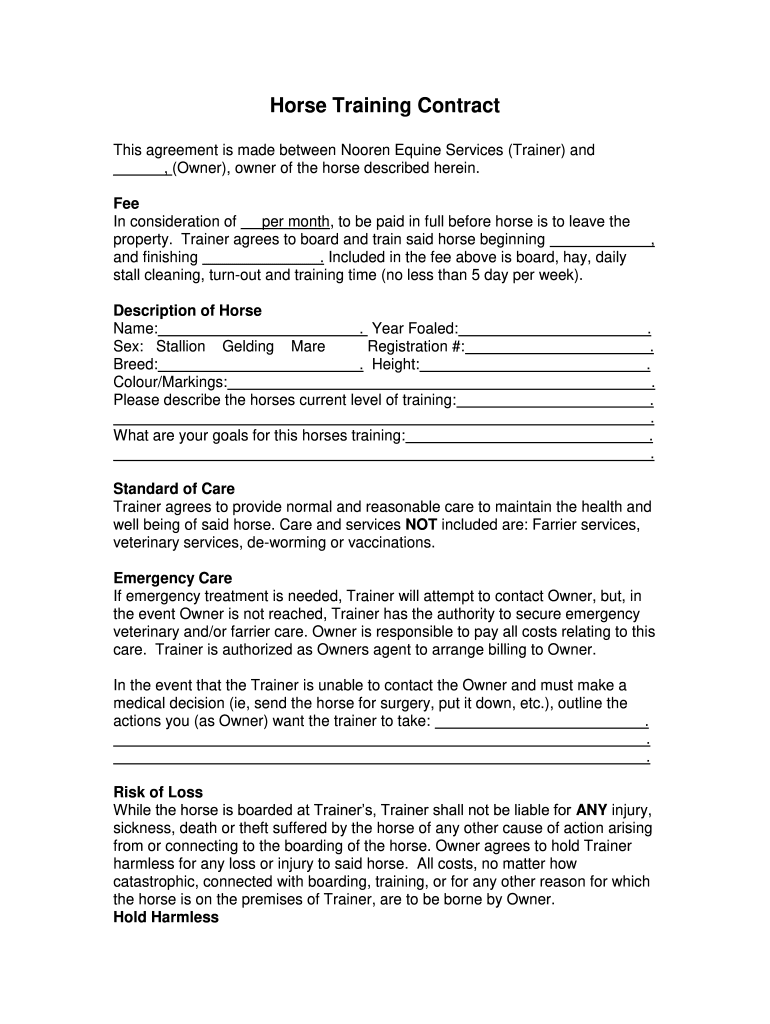
A well-drafted Horse Training Agreement Contract is the cornerstone of a successful and transparent relationship between a horse owner and a trainer. It serves as a vital document that outlines expectations, responsibilities, and financial terms, thereby minimizing misunderstandings and fostering a professional environment. This contract is not merely a legal formality; it’s a tool that ensures both parties are aligned on the goals of the training program and the care of the equine athlete.
When embarking on a training journey for your horse, whether it’s for competition, behavioral issues, or general well-being, clarity from the outset is paramount. A comprehensive agreement contract provides this clarity, acting as a roadmap for the entire training process. It’s essential for owners to understand what they are agreeing to and for trainers to clearly define the scope of their services and fees. This document safeguards the interests of both parties and promotes a positive and productive training experience.
The Importance of a Written Horse Training Agreement
In the world of equestrianism, verbal agreements, while sometimes made with good intentions, can easily lead to disputes. A written horse training agreement contract offers a multitude of benefits, ensuring that both the owner and the trainer have a clear, documented understanding of their commitments. This is particularly crucial given the significant investment of time, emotion, and financial resources involved in horse training.
One of the primary advantages of a formal contract is the detailed outlining of training objectives. Are you aiming for a specific competition level, addressing a particular behavioral problem, or simply seeking to improve your horse’s responsiveness? The contract should clearly define these goals, allowing the trainer to tailor a program accordingly and the owner to track progress effectively. This shared vision is key to achieving desired outcomes.
Furthermore, the contract establishes the financial obligations of the owner. This includes not only the training fees but also provisions for board, farrier services, veterinary care, and any other expenses that may arise during the training period. Specifying payment schedules, late fees, and accepted payment methods helps prevent financial friction down the line. Understanding the specifics of horse training costs is vital for budgeting.
Key Components of a Horse Training Agreement Contract
To be effective, a horse training agreement contract should be thorough and cover all essential aspects of the arrangement. While specific clauses may vary depending on the individual needs and the type of training involved, several key components are almost universally included.
1. Identification of Parties and Horse
The contract must clearly identify the full legal names and contact information of both the horse owner and the trainer. It should also include a detailed description of the horse, including its name, breed, age, color, sex, and any identifying marks or microchip numbers. This ensures that the agreement pertains to the correct horse and individuals.
2. Scope of Services and Training Goals
This section is critical and should elaborate on the specific training services to be provided. It should detail the type of training (e.g., reining, dressage, starting young horses, problem behavior modification), the frequency and duration of training sessions, and the specific goals to be achieved. For instance, if the goal is to prepare a horse for sale, the contract might specify the target market and performance level. If you are looking for a horse already trained, consider trained cutting horses for sale.
3. Duration of Agreement
The contract should specify the start date and the expected duration of the training program. This could be a fixed period (e.g., 90 days) or an ongoing arrangement with provisions for termination by either party. Clearly defined timelines help manage expectations and provide a framework for assessing progress.
4. Fees and Payment Terms
This is a crucial financial section. It must clearly state the training fees, specifying whether they are weekly, monthly, or per session. It should also detail what is included in the training fee and what constitutes an additional cost (e.g., farrier, veterinary, medications, specialized feed, transport). Payment due dates, acceptable payment methods, and policies for late payments or returned checks must be explicitly stated.
5. Boarding and Care Provisions
If the trainer is also responsible for boarding the horse, the contract should outline the terms of care. This includes details about feeding, turnout, stall cleaning, and general daily management. If the horse remains at the owner’s facility or another stable, the responsibilities for care during training hours should be clarified.
6. Veterinary and Farrier Care
The contract must address who is responsible for authorizing and covering the costs of veterinary and farrier care. It should specify how decisions regarding emergencies will be made and who will be contacted. Consent for routine procedures versus emergency interventions should be delineated.
7. Liability and Assumption of Risk
Given the inherent risks associated with horses, this section is vital. It typically includes a clause where the owner acknowledges the risks involved in horsemanship and training and agrees to hold the trainer harmless from liability for injury or damage to the horse, rider, or any third party, provided the trainer has acted with due care and skill. This underscores the importance of being a horse trainer and understanding these risks.
8. Termination Clause
The contract should outline the conditions under which either party can terminate the agreement. This might include insufficient progress, breach of contract terms, or unforeseen circumstances. Procedures for notice, payment for services rendered up to the termination date, and arrangements for the horse’s return should be clearly defined.
9. Insurance
The contract may specify insurance requirements for the horse, the owner, and potentially the trainer. This can help protect all parties in the event of unforeseen accidents or injuries.
10. Governing Law
This clause specifies the jurisdiction whose laws will govern the interpretation and enforcement of the contract.
Best Practices for Drafting and Using the Contract
Creating an effective horse training agreement contract involves more than just filling in blanks. Adhering to best practices ensures the document is legally sound, practical, and serves its intended purpose.
Consult with Legal Counsel: While templates can be a starting point, it is highly recommended to have a legal professional specializing in equine law review or draft your contract. They can ensure it complies with local laws and adequately protects your interests. This is especially important when dealing with complex arrangements like white horse security training prices.
Be Specific and Unambiguous: Avoid vague language. Every clause should be clear, concise, and leave no room for misinterpretation. Use plain language where possible, but don’t shy away from necessary legal terminology, ensuring it’s explained if needed.
Honest Communication: The contract should reflect an honest and open dialogue between the owner and trainer. Discuss all expectations, concerns, and potential issues before finalizing the document.
Regular Review and Updates: As the training progresses, circumstances may change. It might be beneficial to review the contract periodically, especially if training goals or timelines are adjusted. Amendments should be made in writing and signed by both parties.
Professionalism and Trust: While the contract provides a legal framework, it should be built upon a foundation of mutual respect and trust. The contract is a tool to facilitate a positive working relationship, not a substitute for good communication and professional conduct. Consider the process of how to become a horse trainer in Canada and the professionalism required.
Conclusion: Securing a Successful Training Partnership
A well-structured horse training agreement contract is an indispensable element for any owner entrusting their horse to a professional trainer. It provides a clear framework, defines responsibilities, and protects both parties, paving the way for a productive and successful training journey. By investing the time and effort into creating a comprehensive and fair agreement, owners and trainers can build a strong foundation of trust and collaboration, ultimately benefiting the horse and achieving the desired training outcomes. This proactive approach ensures that the focus remains on the horse’s development and the realization of shared equestrian goals.
