
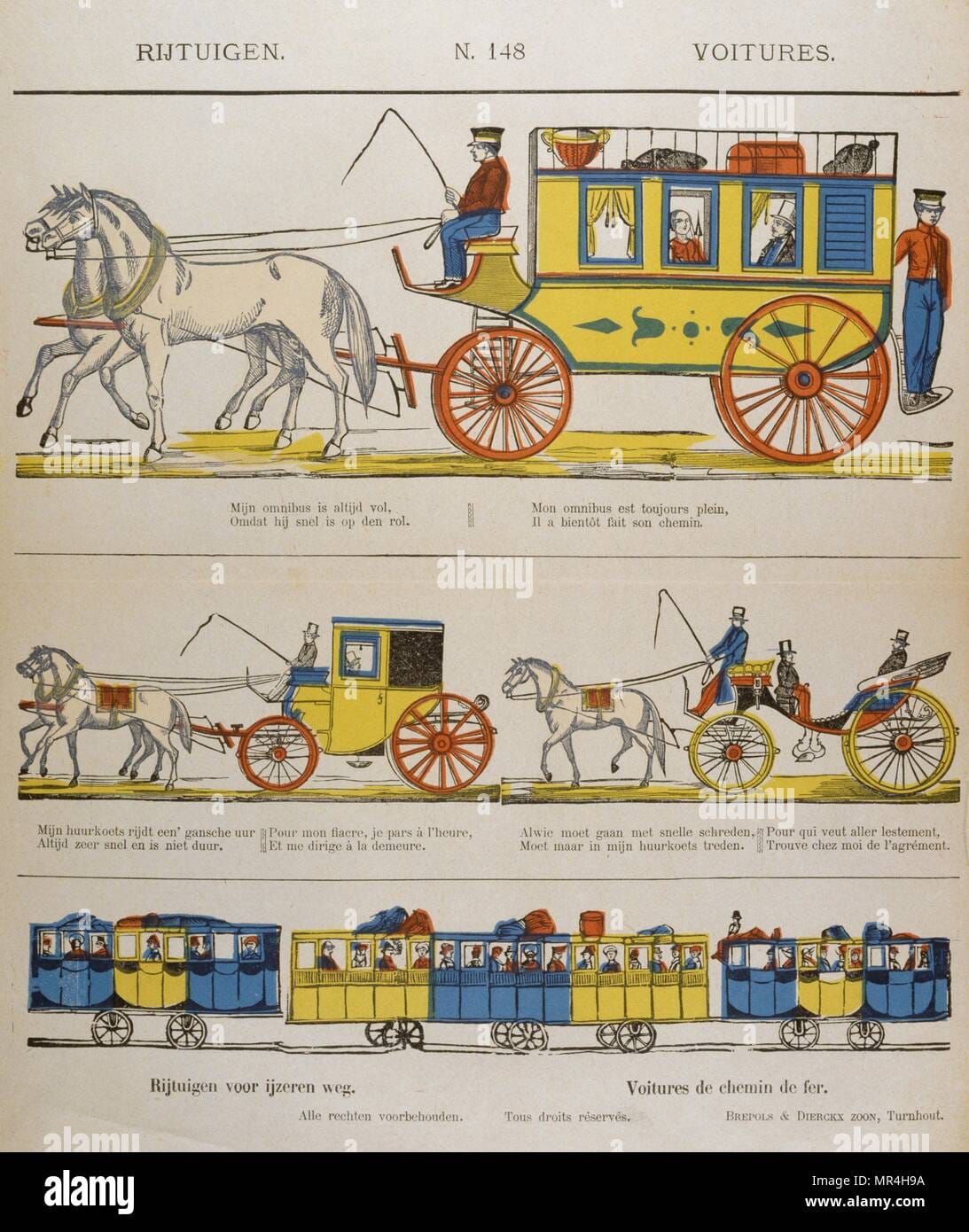
The concept of horse-drawn trains, an early form of rail transport, played a pivotal role in the development of modern transportation networks. These systems utilized the power of horses or other draught animals to pull wagons, carriages, or tram cars along iron or steel tracks. Primarily flourishing in the late 18th and 19th centuries, horse-drawn railways served as crucial arteries for both freight and passenger transport before the advent of steam locomotives. They offered a significant improvement over road travel, providing a smoother ride and greater efficiency, with horses capable of pulling substantial loads at moderate speeds.
The Dawn of Horse-Drawn Railways
The earliest documented use of horses for rail transport dates back to the 16th century, with inclined railways in mines and funiculars employing animal power. However, it was in the late 18th and early 19th centuries that horse-drawn railways began to expand, bridging the gap between rudimentary wooden tramroads and the more sophisticated steam railways. In Britain, the Stockton and Darlington Railway, which opened in 1825, famously used horses to pull passenger cars, while steam locomotives handled the freight. Across the Atlantic, the United States saw its first urban horsecar line in 1832 with the New York and Harlem Railroad, a system that would eventually expand to cover much of the city.
How Horse-Drawn Trains Operated
Horse-drawn trains operated on a simple yet effective principle. Horses were harnessed to the front of the train, pulling the cars along the tracks. The low rolling resistance of metal wheels on rails allowed a single horse to haul a considerable weight, often up to ten tons on level tracks. This efficiency, combined with the animal’s power, made them a viable alternative to less efficient methods. Urban horsecar systems, which emerged in the 1830s, were particularly notable. These tram cars ran on tracks embedded in city streets, providing a smoother and more reliable form of public transport than horse-drawn omnibuses.
Advantages and Limitations
The primary advantages of horse-drawn railways were their relative efficiency, smoothness of ride compared to unpaved roads, and the readily available power source. They were also perceived as safer than the early, often unreliable steam locomotives, which were prone to boiler explosions. However, horse-drawn transport was not without its limitations. Animal endurance, susceptibility to disease, and the logistical challenges of feeding and caring for the horses posed significant constraints. In urban environments, the accumulation of horse manure and urine created sanitation issues. Furthermore, the speed was limited by the animals’ capabilities, and they struggled with steep gradients.
The Transition to Steam and Beyond
The rise of steam power in the mid-19th century gradually rendered horse-drawn railways obsolete for long-distance and heavy freight transport. Steam locomotives offered greater speed, power, and capacity, revolutionizing the transportation landscape. Nevertheless, horses continued to play a role in the railway industry for many decades, particularly in shunting operations—moving trains within yards and sidings. Even as motorized alternatives emerged, horses remained cost-effective for smaller, localized tasks.
Modern Relevance and Innovations
While horse-drawn trains are largely a relic of the past, the principles of efficient, animal-powered transport continue to inspire. In some niche applications and historical reenactments, horse-drawn transport persists. More significantly, the concept of eco-friendly transportation has led to a resurgence of interest in animal-powered solutions, albeit in modernized forms. In some cities, traditional horse-drawn carriages are being replaced or supplemented by electric “e-carriages,” which offer a similar aesthetic and experience without the direct use of animals, addressing concerns about animal welfare and urban pollution. These modern adaptations highlight a continued appreciation for the past while embracing sustainable innovations for the future.
