
For anyone who grew up in the 80s or discovered the film later, Wolfgang Petersen’s The Neverending Story is a cornerstone of fantasy cinema. It’s a world of luckdragons, racing snails, and ancient turtles. Yet, amid all the wonder, one scene stands out, etched into the collective memory of a generation: the heartbreaking fate of the Horse In The Neverending Story. Long before we met other cinematic heartbreaks, we witnessed the beautiful white steed, Artax, meet his end not in a blaze of glory, but in the suffocating grip of despair. This moment became more than just a plot point; it was a profound, and for many, a first, lesson in loss, hopelessness, and the painful limits of friendship. A similar discussion often arises around questions like what was atreyu’s horse’s name in the neverending story, as fans seek to understand every detail of this poignant relationship.
A Bond Forged in Fantasia
Before the tragedy, there was the companionship. The horse, whose name is Artax, was more than just a mount for the story’s young hero, Atreyu. He was his closest friend, his confidant, and his steadfast partner on a quest to save the magical land of Fantasia from a creeping, all-consuming void known as “The Nothing.” Atreyu, a brave warrior from the Plains People, was chosen for this impossible task, and Artax was his only companion as he set out. Their bond was evident in every frame they shared, a silent understanding between boy and beast. They journeyed across vast landscapes together, a symbol of courage and loyalty in the face of overwhelming odds.
This partnership is what makes their eventual separation so devastating. The audience invests in their shared journey, making Artax not just a horse, but Atreyu’s other half. He represents innocence, strength, and the pure spirit of Fantasia that Atreyu is fighting so desperately to protect.
The Scene That Defined a Generation: The Swamps of Sadness
The hero’s journey leads them to the Swamps of Sadness, a bleak, misty marshland that Atreyu must cross to seek the counsel of Morla, the Ancient One. But this is no ordinary swamp. As the film’s narrator explains, the swamp has a sinister power: it preys on emotion. Anyone who allows the sadness of the world to overwhelm them will be consumed by the swamp, sinking into its murky depths forever.
Atreyu is protected by the Auryn, the powerful amulet given to him by the Childlike Empress, which gives him courage and wards off the swamp’s influence. Artax, however, has no such protection. As they wade deeper into the mire, the weight of despair begins to take hold of the noble creature. He stops, his powerful legs refusing to move. Atreyu, initially confused, grows frantic as he realizes what’s happening. He pleads, begs, and screams at his friend to fight back. “You have to try! You have to care!” he cries, his voice cracking with desperation. “You’re my friend! I love you!” But Artax remains still, his eyes vacant, as he slowly sinks beneath the black water. The struggle is entirely internal, and it is a battle Atreyu cannot fight for him. The question of did the horse in the neverending story die is answered in this unforgettable, heart-wrenching sequence.
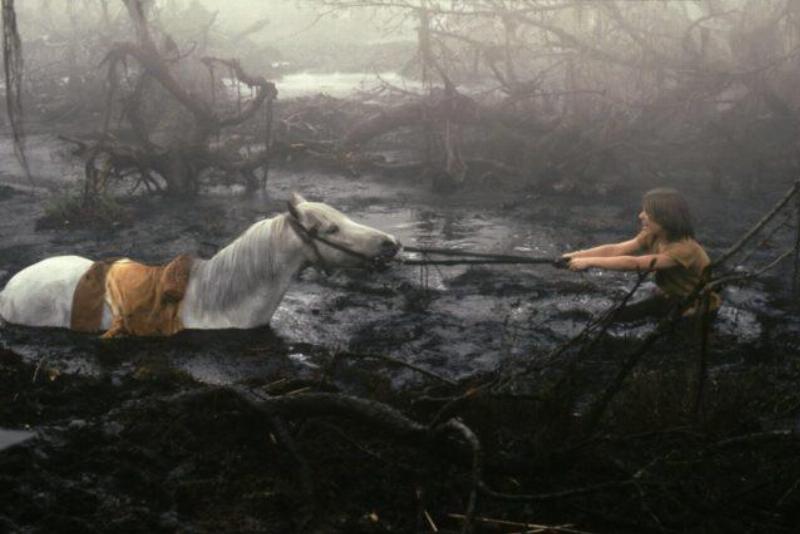 The iconic horse in The Neverending Story, Artax, slowly sinking into the muddy Swamps of Sadness.
Why Did the Horse in The Neverending Story Have to Die?
Artax’s death is so profoundly disturbing because it isn’t caused by a monster or a villain. He isn’t struck down in battle. He simply gives up. The swamp is a physical manifestation of clinical depression, a force that drains its victims of the will to live. Artax’s sinking is a powerful and terrifyingly accurate metaphor for how depression can consume someone, no matter how much their loved ones try to pull them out.
“The Swamps of Sadness scene is a masterful piece of cinematic storytelling,” says Dr. Sarah Miller, a child psychologist and media analyst. “It externalizes an internal struggle. Atreyu represents the desperate friend or family member who cannot comprehend why their love and encouragement aren’t enough. The scene teaches a harsh but vital lesson: you cannot save someone who has lost the ability to fight for themselves.”
This moment forces both Atreyu and the audience to confront the concept of emotional death. The Nothing is destroying Fantasia by eradicating hope, and Artax is its first true, on-screen victim. His death raises the stakes of Atreyu’s quest, transforming it from a fantasy adventure into a desperate battle for the very soul of his world. For many viewers, the image of the white horse neverending story became synonymous with this deep, allegorical struggle.
A Lesson in Helplessness and Hope
The scene is a crucible for Atreyu. In losing Artax, he is left utterly alone, stripped of his only companion and forced to confront his own grief and despair. Yet, he must continue. His survival and perseverance in the face of such a devastating loss are central to his heroism. He learns that true courage isn’t about never feeling sadness, but about moving forward despite it. It is a nuanced and mature theme for a children’s film, and it’s what gives the story its enduring power. The raw emotion of the scene makes you question everything, even leading to searches like ‘does the horse in neverending story die‘ just to be sure.
The Lasting Trauma and Legacy of Artax’s Death
For decades, the death of Artax has been a cultural touchstone, often cited as one of the most traumatic scenes in children’s cinema. It sparked playground rumors and even a persistent urban legend that the horse actor actually died during filming. This, of course, is untrue. The scene was accomplished with a clever underwater platform that was slowly lowered, and two beautifully trained horses played the role of Artax, both of whom were treated with the utmost care.
The fact that the legend persisted for so long is a testament to the scene’s visceral impact. The performance of the actor, Noah Hathaway, and the palpable sense of dread were so convincing that people found it hard to believe it was just filmmaking. It felt real, and the pain it caused was real. It introduced a generation of children to complex emotions—grief, depression, and helplessness—in a way that was direct, unfiltered, and unforgettable. This has made the horse neverending story a phrase that immediately evokes a powerful emotional response.
Frequently Asked Questions (FAQ)
What was the name of the horse in The Neverending Story?
The horse’s name was Artax. He was the loyal companion and best friend of the young hero, Atreyu.
Did the horse really die during the filming of the movie?
No, this is a common urban legend. The scene was filmed using two highly trained horses and an underwater elevator platform. Both horses were unharmed and well cared for.
Why did Artax sink in the Swamps of Sadness?
The Swamps of Sadness magically cause anyone who lets sadness and despair overwhelm them to sink into the mud. While Atreyu was protected by a magical amulet, Artax was not and succumbed to the overwhelming hopelessness of the swamp.
What does Artax’s death symbolize?
Artax’s death is a powerful allegory for succumbing to depression and despair. It symbolizes the loss of hope and the internal struggle that no amount of external help can fix if the will to fight is gone.
Is Atreyu’s horse in the rest of the movie?
After dying in the Swamps of Sadness, Artax is gone for the majority of the film. However, he is brought back to life at the very end when Fantasia is restored by Bastian’s wishes.
A Story That Never Truly Ends
The legacy of Artax is a testament to the power of storytelling. His death was not just a sad moment; it was a narrative masterstroke that gave The Neverending Story its emotional weight and thematic depth. It elevated a fantasy film into a profound exploration of hope’s battle against despair. The image of the beautiful horse in The Neverending Story being swallowed by darkness is heartbreaking, but the lesson it imparts—that even in the face of unimaginable loss, the quest for hope must continue—is what makes the story truly timeless.
