
The moment the Horse In Neverending Story Died is seared into the collective memory of a generation. It is a scene of profound loss and despair, a cinematic gut punch that many viewers first experienced as children, leaving an indelible mark. We’re talking, of course, about Artax, the noble steed of the young hero Atreyu. His slow, agonizing descent into the Swamp of Sadness is more than just a plot point in the 1984 fantasy classic, The NeverEnding Story; it’s a masterclass in storytelling that explores themes of hope, grief, and the crushing weight of despair. This single scene encapsulates the emotional depth that makes the film a timeless, albeit heartbreaking, piece of art. For a deeper look into cinematic moments of loss, the story of the horse died in neverending story offers a compelling parallel.
Who Was Artax? The Loyal Companion
Before the tragedy, Artax was more than just a horse; he was Atreyu’s closest friend and most trusted companion. A beautiful white steed, Artax represented strength, innocence, and the unwavering loyalty that exists between a boy and his animal. He wasn’t a magical creature in the traditional sense—he couldn’t fly or talk—but his bond with Atreyu was mystical in its own right. They journeyed together across the land of Fantasia on a quest to save it from a formless entity known as “The Nothing.” Their partnership was a symbol of hope and courage in the face of insurmountable odds. Artax was the silent, steady presence at Atreyu’s side, a tangible piece of home and comfort in a world rapidly falling apart.
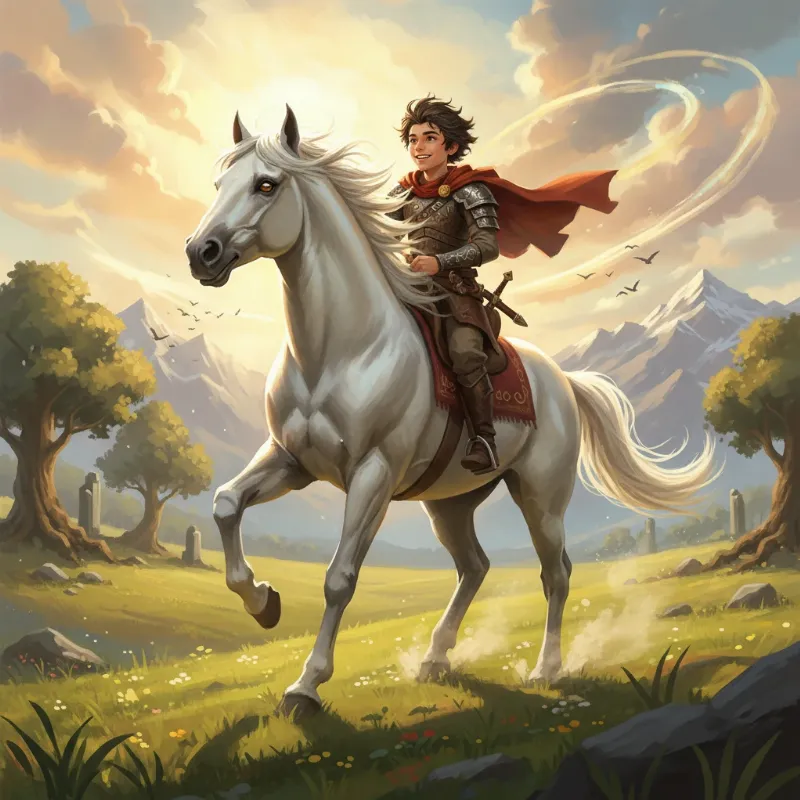 A hopeful image of Atreyu riding his horse Artax across a vibrant plain, representing their strong bond before the horse in Neverending Story died.
The Swamp of Sadness: A Metaphor for Despair
To understand why the horse in Neverending Story died, one must first understand the insidious nature of their location: the Swamp of Sadness. This wasn’t a typical marsh with quicksand or dangerous creatures. Its threat was purely psychological. The swamp’s murky waters would pull down any creature that allowed sadness and despair to overwhelm them. It was a physical manifestation of depression. The only way to traverse it safely was to maintain hope and push forward without succumbing to the crushing weight of sorrow that permeated the air.
This concept is a powerful and surprisingly mature theme for a children’s film. It teaches a difficult lesson: that sometimes, the most dangerous monsters are the ones inside our own minds. The swamp doesn’t care about physical strength; it preys on emotional vulnerability. For Atreyu, a young boy on a mission to save the world, this was a terrifying and almost insurmountable obstacle.
How Did the Horse in The NeverEnding Story Die?
The actual moment Artax dies is agonizingly slow and brutally realistic in its emotional weight. As Atreyu leads him into the swamp, Artax begins to slow down, his steps growing heavier. Atreyu, initially frustrated, soon realizes with dawning horror what is happening. The overwhelming sadness of the swamp is seeping into Artax, and the magnificent horse is giving up.
Atreyu’s desperate pleas are what make the scene so traumatic. He screams, he begs, he pulls at Artax’s reins, shouting, “You have to fight! You have to care!” But it’s no use. The horse has been consumed by a despair so profound that he can no longer move forward. He sinks slowly, inexorably, into the black mud while Atreyu weeps, helpless. The horse in Neverending Story died not from a physical wound, but from a broken spirit. He was overcome by the sheer hopelessness of their quest, a feeling the swamp amplified until it became fatal. The scene is a stark representation of how depression can paralyze even the strongest among us, a concept often explored in narratives like the story of the lost horse.
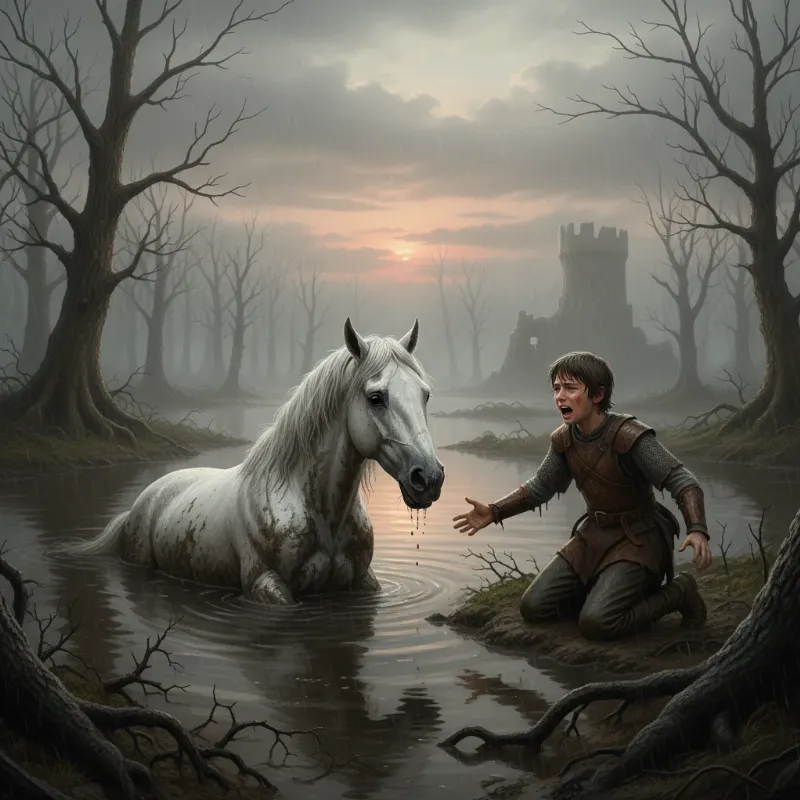 The iconic scene where the horse in Neverending Story died, with Atreyu desperately trying to save him.
The Symbolism Behind Artax’s Death
Artax’s death is a pivotal turning point in Atreyu’s journey. It symbolizes the loss of innocence and the harsh reality that courage and love aren’t always enough to save those we care about.
“The death of Artax represents the moment a child first understands that the world is not always fair,” explains Dr. Alistair Finch, a film historian. “It forces the hero, and by extension the audience, to confront profound grief and the necessity of continuing on even when your heart is broken. You have to carry the sadness, but you cannot let it sink you.”
Here are some key symbolic takeaways:
- Loss of Innocence: Atreyu begins his quest as a boy, but after losing Artax, he is forced to confront the cruel realities of the world alone. His childhood innocence sinks into the swamp with his friend.
- The Nature of Grief: The scene is a powerful allegory for how grief and depression work. Atreyu is immune to the swamp’s power because his quest—his purpose—keeps him focused and hopeful. Artax, lacking that singular drive, succumbs to the ambient despair.
- The Necessity of Hope: Artax’s death underscores the central theme of the film: the power of hope. It is only by clinging to hope that one can overcome The Nothing, which is essentially a manifestation of collective despair and forgotten dreams.
Behind the Scenes: The Reality of Filming
The story behind the filming of this scene is almost as intense as the scene itself. The horse actor, a beautiful pure-white stallion named O’Higgins, had to endure uncomfortable conditions. He was placed on a hidden hydraulic platform that was slowly lowered into the muddy water. According to director Wolfgang Petersen, the process was stressful for everyone involved, especially the horse and the young actor, Noah Hathaway (Atreyu). Hathaway formed a real bond with the horse, making his on-screen tears and desperation genuine. There are conflicting reports about the horse’s safety, but the filmmakers have long maintained that all necessary precautions were taken. Knowing the behind-the-scenes challenges adds another layer of emotional weight to what is already a powerful sequence, not unlike understanding how did the horse die in neverending story from a production standpoint.
The Lasting Impact on a Generation
Why does this scene still resonate so deeply decades later? For many children of the 80s, the moment the horse in Neverending Story died was their first on-screen experience with the concept of death, loss, and mental anguish. It wasn’t a quick, sanitized death common in cartoons. It was slow, painful, and deeply emotional. It didn’t offer an easy escape or a magical solution. It simply happened, and the hero had to find a way to go on. This raw, unfiltered portrayal of grief is what makes it unforgettable. It treated its young audience with respect, trusting them to handle complex emotions. It’s a shared cultural trauma for a generation, a cinematic rite of passage that taught a difficult but essential lesson about life’s sorrows. The visual of a noble creature being consumed is a powerful one, almost as haunting as seeing the neverending story horse head as a symbol of finality.
Frequently Asked Questions (FAQ)
What was the horse’s name in The NeverEnding Story?
The horse’s name was Artax. He was the loyal companion and steed of the main hero, Atreyu.
How did Artax the horse die?
Artax died by sinking into the Swamp of Sadness. The swamp’s magic causes any creature that feels overwhelming sadness or despair to be pulled under. Artax succumbed to this magical sorrow and gave up, allowing the swamp to consume him.
Why didn’t Atreyu sink in the Swamp of Sadness?
Atreyu was protected by the Auryn, the powerful amulet he wore. It gave him purpose and guided his quest, allowing him to push through the despair that claimed Artax. His focus on his mission to save Fantasia helped shield him from the swamp’s psychological effects.
Is the horse that played Artax still alive?
No. The two horses that reportedly played Artax have since passed away due to old age. The primary horse actor was a stallion named O’Higgins.
What does Artax’s death symbolize?
Artax’s death symbolizes several profound themes: the loss of childhood innocence, the crushing nature of depression and despair, and the harsh reality that love and willpower cannot always conquer every obstacle. It serves as a crucial moment of growth for Atreyu, forcing him to face grief and continue his quest alone.
A Legacy of Loss and Hope
The death of Artax remains one of the most powerful and discussed scenes in fantasy film history. It dared to show its young audience that sadness can be a monster as real as any dragon and that loss is a painful but inevitable part of any hero’s journey. The fact that the horse in NeverEnding Story died is not just a trivia point; it is a foundational lesson in storytelling. It teaches us that even when we lose something precious, as in any good lost horse story, the story isn’t over. For Atreyu, and for all of us who watched with tears in our eyes, the only way forward was to keep going, carrying the memory of those we’ve lost as a source of strength, not despair.
