
Throughout history, the bond between humans and horses has been forged in loyalty, work, and companionship. But sometimes, this connection transcends the ordinary, entering the realm of the truly heroic. The world is full of Horse Heroes True Stories Of Amazing Horses who have shown incredible bravery, intelligence, and devotion in the face of danger. These are not just tales of animals; they are powerful accounts of courage that remind us of the profound spirit dwelling within these magnificent creatures. From the chaos of the battlefield to the quiet desperation of a natural disaster, certain horses have risen to the occasion, saving lives and leaving an indelible mark on history.
These accounts are more than just exciting narratives; they offer a glimpse into the deep emotional capacity of horses. Similar to the compelling narratives found in amazing horse stories, the tales of these heroes showcase an instinct to protect and serve that is truly awe-inspiring. They challenge our perceptions and deepen our respect for a species that has stood by humanity for centuries. Let’s explore the stories of some of the most remarkable horse heroes the world has ever known.
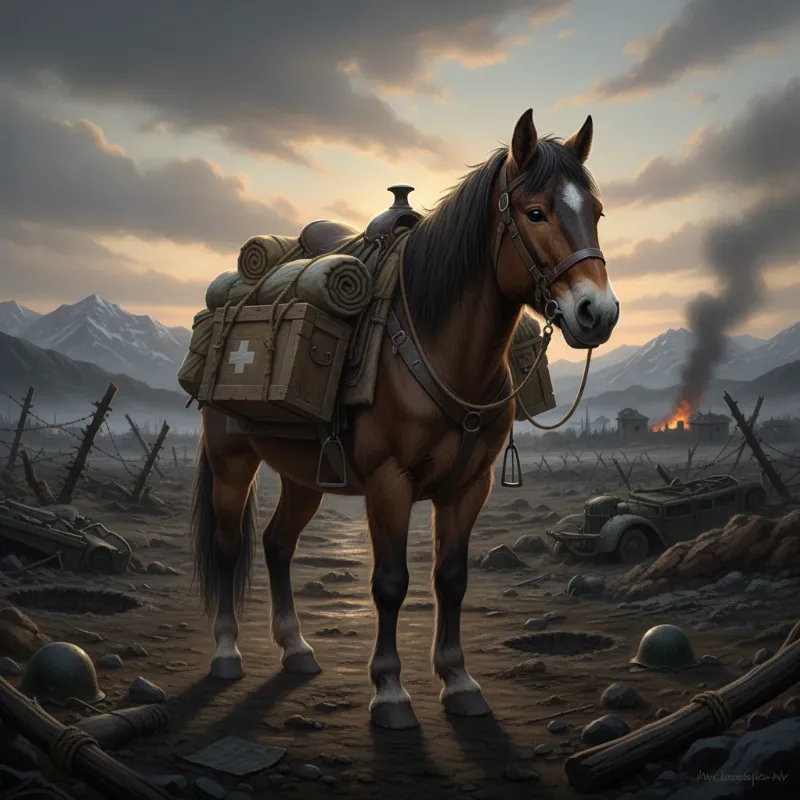 A detailed depiction of Sergeant Reckless, a heroic horse from the Korean War, emphasizing bravery and loyalty.
Sergeant Reckless: A True War Horse of the Marines
When you think of decorated military heroes, a horse might not be the first thing that comes to mind. But Sergeant Reckless was no ordinary horse. A small Mongolian mare, she became a legend in the United States Marine Corps during the Korean War for her unbelievable bravery and unwavering dedication.
From Racetrack to Battlefield
Originally named “Ah Chim Hai,” meaning “Flame of the Morning,” Reckless was purchased by Lieutenant Eric Pedersen to serve as a pack animal for his Recoilless Rifle Platoon. Her task was to carry heavy ammunition over rugged, dangerous terrain to frontline firing positions. She quickly learned her routes and, astoundingly, often completed supply missions on her own, without a handler to guide her. She would carry the ammunition up to the guns and then return to the rear to be reloaded, navigating the treacherous landscape under fire.
During the intense, five-day Battle for Outpost Vegas in March 1953, Reckless made 51 solo trips in a single day, carrying over 9,000 pounds of ammunition to the front lines and carrying wounded soldiers back on her return journeys. She was wounded twice during the battle but never faltered in her duty. Her steadfastness under fire was so remarkable that she became a symbol of courage for the Marines she served alongside.
Dr. Eleanor Vance, an equine historian, notes, “Sergeant Reckless wasn’t just a beast of burden; she was a fellow Marine. Her intelligence and bond with the soldiers were extraordinary. She understood her mission and performed it with a level of autonomy and bravery that is almost unheard of in an animal.”
For her incredible service, Reckless was officially promoted to the rank of Sergeant. She was awarded two Purple Hearts, a Marine Corps Good Conduct Medal, and several other military honors. After the war, she was brought to the United States, where she lived out the rest of her days as a celebrated national hero.
Black Jack: The Riderless Horse Who Served a Nation
Not all heroes charge into battle. Some serve with quiet dignity, symbolizing a nation’s grief and respect. For over two decades, a Morgan-Quarter Horse mix named Black Jack served as the riderless horse in the funerals of America’s fallen leaders, a poignant symbol of a warrior who would ride no more.
A Symbol of Final Farewell
Black Jack participated in the state funerals of three U.S. Presidents: John F. Kennedy, Herbert Hoover, and Lyndon B. Johnson. His most famous procession was for President Kennedy, where his spirited nature and majestic presence captured the attention of a grieving world. With polished boots reversed in the stirrups, symbolizing that the deceased leader was taking one last look back at his family and country, Black Jack became a powerful and enduring image of loss.
He served in this solemn role for over 1,000 funerals, including that of General Douglas MacArthur. His role required immense discipline and a calm temperament amidst the sorrowful sounds of drums and gun salutes. Black Jack performed his duty with a grace that brought comfort and a sense of honor to countless ceremonies. He was a hero not for acts of physical bravery, but for his steadfast service and the profound symbolism he embodied for a nation in mourning.
What Makes a Horse a Hero?
The true stories of horse heroes reveal that their courage isn’t just a fluke. It stems from a unique combination of innate traits and the powerful bond they form with humans. These animals possess a deep well of trust and loyalty that, when combined with their natural intelligence, allows them to perform extraordinary feats.
Key Traits of Heroic Horses
- Intelligence: Heroic horses often display incredible problem-solving skills and an ability to understand complex commands and situations, just as Sergeant Reckless did when navigating supply routes alone.
- Loyalty: The deep connection a horse feels for its owner or handler can drive it to perform incredible acts of protection and service.
- Calm Temperament: The ability to remain steady under extreme pressure, whether it’s the noise of a battle or the chaos of a rescue situation, is a hallmark of an equine hero.
- Courage: While horses are naturally flight animals, these heroes suppress their own fear to face danger head-on, driven by duty and their bond with humans.
Many incredible tales of bravery are also found in horse rescue stories, where equines have shown remarkable resilience and trust even after facing hardship.
Modern Day Equine Heroes
Heroism among horses is not confined to the pages of history books. Even today, horses continue to perform life-saving roles across the world. From police horses who bravely manage chaotic crowds to therapy horses who provide emotional support to veterans and children with disabilities, their contributions are immense. Search and rescue horses navigate terrain inaccessible to vehicles, carrying handlers to find lost hikers or survey disaster areas. Their strength, agility, and calm demeanor make them invaluable partners in challenging and often dangerous work. These modern heroes prove that the spirit of courage and service is alive and well in the equine world.
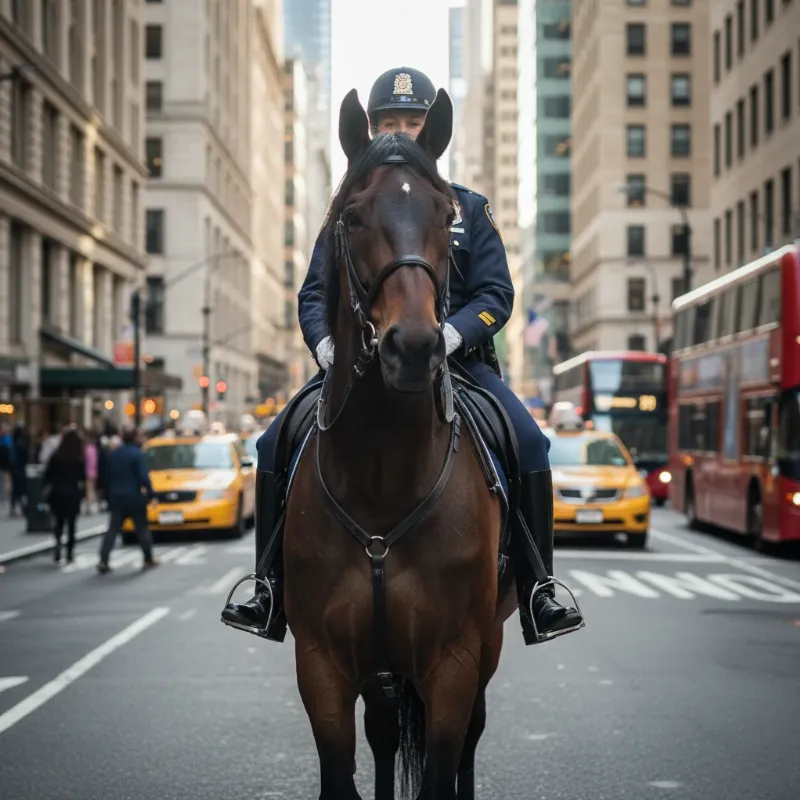 A police horse standing calmly amidst a bustling city street, showcasing its role as a modern-day hero.
How do horses help in therapy?
Therapy horses have a unique ability to mirror human emotions, providing a non-judgmental space for individuals to heal. The simple act of grooming or riding a horse can lower blood pressure, reduce anxiety, and build confidence in people dealing with trauma or disabilities.
Their large, gentle presence offers a sense of security and unconditional acceptance. For veterans with PTSD, for example, working with a horse can help re-establish trust and provide a calming focus. The horse’s immediate and honest feedback helps individuals become more aware of their own emotional states, making them incredible partners in psychological healing.
The Enduring Legacy of Horse Heroes
The horse heroes true stories of amazing horses are more than just captivating tales; they are a testament to the remarkable capabilities and profound spirit of these animals. From Sergeant Reckless on the battlefields of Korea to Black Jack in solemn processions, these horses have demonstrated a level of courage and devotion that rivals any human hero. They remind us that heroism can be found in many forms and that the bond between humans and animals can inspire some of the most extraordinary acts of bravery the world has ever seen. By remembering their stories, we honor their legacy and celebrate the enduring partnership that has connected our two species for millennia.
Frequently Asked Questions (FAQ)
1. Who is the most famous war horse in history?
While many have served, Sergeant Reckless is arguably one of the most famous and decorated war horses in modern history due to her official rank and extensive military honors from the U.S. Marine Corps.
2. Are horses naturally brave animals?
Horses are prey animals, and their natural instinct is “flight” rather than “fight.” However, through training, trust, and a strong bond with a human handler, they can learn to overcome their fear and exhibit incredible bravery in dangerous situations.
3. How are horses used in search and rescue operations?
Search and rescue horses are invaluable in rugged or remote areas where vehicles cannot go. They can cover long distances, navigate difficult terrain, and their elevated position gives their riders a better vantage point for spotting lost individuals.
4. What was the role of the riderless horse in a military funeral?
The riderless horse, with boots reversed in the stirrups, is a military tradition that symbolizes a fallen warrior who will ride no more. It signifies that the deceased is taking one last look back at their family and troops.
5. Can any horse become a therapy animal?
Not every horse is suited for therapy work. A therapy horse must have an exceptionally calm, gentle, and patient temperament. They undergo extensive training to ensure they are not easily spooked and can interact safely with people of all ages and abilities.
