
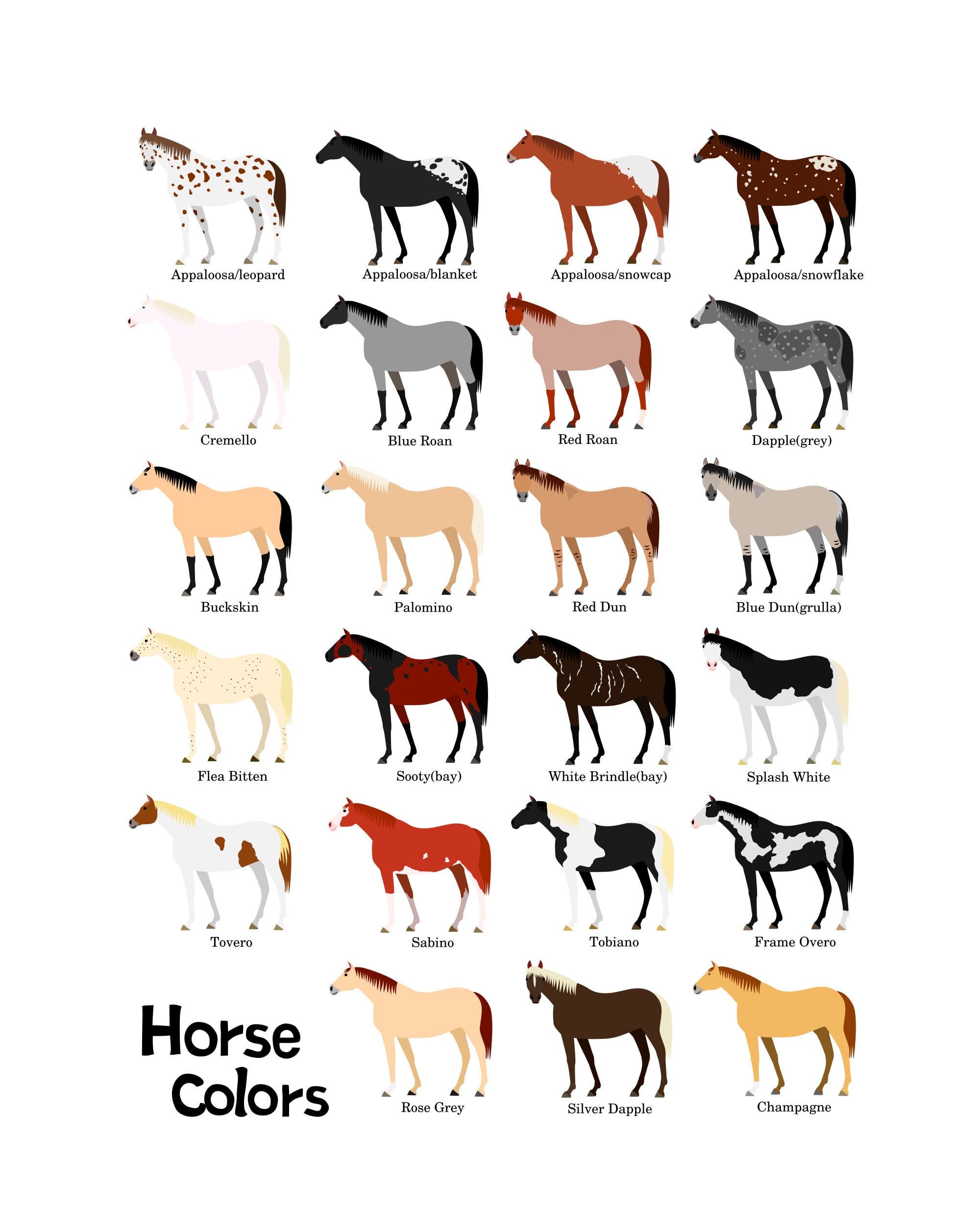
Deciphering the diverse world of horse coat colors can seem like learning a new language, but understanding these common terms is essential, especially when exploring equine adoption and searching for your #RightHorse. This guide breaks down the most prevalent coat colors and patterns you’ll encounter in the equine world.
Appaloosa
The Appaloosa is recognized both as a distinct horse breed and a specific color pattern. Appaloosas are famously known for their striking spotted coats. While registered Appaloosas typically exhibit these characteristic spots, it’s rare but possible for horses of other breeds to display similar Appaloosa markings.
Bay
A bay horse is characterized by a brown body complemented by black coloring on its legs, mane, and tail. This elegant coat color presents in various shades, from a very dark brown that can appear almost black (dark bay) to a vibrant reddish-brown (blood bay). Like any coat color, bay horses can also feature white markings on their face and lower legs.
Chestnut/Sorrel
Chestnut horses possess a body, mane, and tail that are all shades of red. In Western riding disciplines, the term “sorrel” is frequently used for chestnuts, while “chestnut” is often reserved for darker, reddish-brown hues. Chestnut horses may have white markings, but they will not have any black in their coat.
Gray
As the name suggests, gray horses are known for their progressively lightening coats. Born with various base colors, they gradually “gray out” over their first few years, eventually becoming white. Many gray horses develop small, scattered dark speckles, often referred to as “fleabites,” which become more prominent with age.
Black
True black is a less common coat color than many might assume. This is because black is a recessive color that is frequently influenced and altered by more dominant genes.
Roan
Roan horses feature white hairs interspersed throughout their base coat, creating a shimmering or blended effect. A “red roan” is a chestnut horse with intermingled white hairs, while a “bay roan” is a bay horse with this characteristic white hair mixture. A “blue roan” occurs when white hairs are mixed into a black base coat.
Palomino
Palomino horses exhibit golden coats paired with white manes and tails. The intensity of the golden color can range from a rich, deep gold to a lighter, creamier yellow.
Buckskin
Similar to palominos in their golden coat color, buckskin horses differ in that they possess black coloring on their legs, mane, and tail.
Dun
The dun gene is a dilution gene that affects a horse’s base coat color and introduces specific primitive markings. A dun horse will always have a dorsal stripe running down its back. They may also have darker faces and legs, and sometimes exhibit horizontal striping on their legs. “Red dun” and “bay dun” refer to chestnut and bay base coats, respectively, affected by the dun gene. When the dun gene impacts a black base coat, the resulting color is called a grulla.
Pinto
Pinto horses are distinguished by large, irregular patches of white and another color across their bodies. Various specific pinto color patterns have been identified, and dedicated equine registries work to preserve and classify horses displaying these distinctive patterns.
Understanding these common horse coat colors is a great first step towards appreciating the diversity within the equine world. If you’re interested in learning more about equine adoption and supporting horses in need, visit My Right Horse. The platform offers a wide selection of adoptable horses, comprehensive information on the adoption process, and easy sharing options to help connect the right horse with the right person.
