
The Curly Horse, also known as the Bashkir Curly, is a distinct breed celebrated for its remarkable curly coat. This unique genetic trait can manifest in various degrees, from subtle curls in the mane, tail, and ears to a full-body coat of curly hair, including the eyelashes. Some individuals even exhibit extreme curls in winter that soften into a wavy coat during warmer months.
The Curly Horse is a sturdy and well-built breed, characterized by strong bones, straight legs, a wide chest, and a balanced physique. They possess good, strong hooves and move with a bold, long-strided gait. Their manes are typically split and free of interlaced or twisted hair. Temperamentally, they are known for being friendly, intelligent, quiet, calm, docile, reliable, and level-headed, making them versatile partners.
A Spectrum of Curly Coat Expressions
The defining characteristic of the Curly Horse is its coat. The gene responsible for this trait is dominant and can express itself in several ways. Minimal expression might result in only a few curly hairs found in the mane, tail, fetlocks, and ear canals. Conversely, a maximal expression of the dominant gene can lead to a coat of curls all over the horse’s body. Some horses develop “extreme winter curls” that are shed and replaced by a more wavy coat in the summer. Interestingly, some Curly Horses, referred to as smooth-coat Curlies, may not display visible curls at all, as the trait can be heterozygous in these individuals.
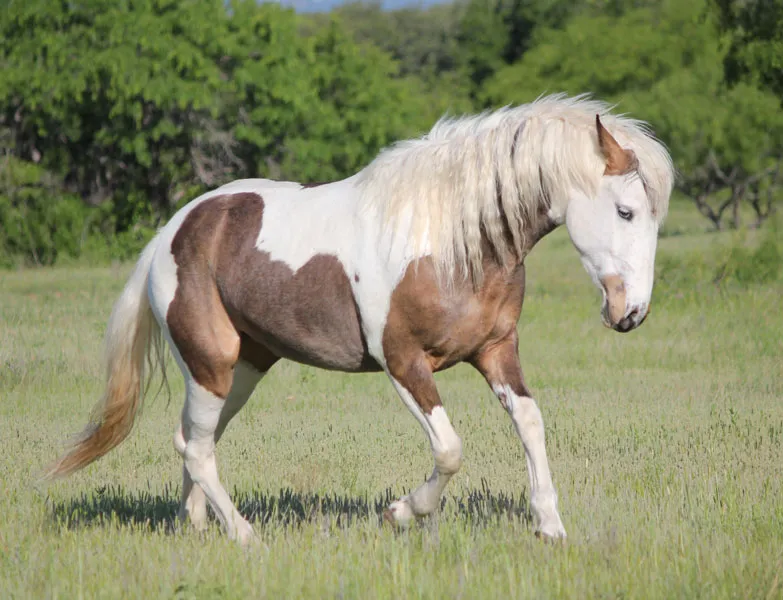 A striking example of a Bashkir Curly Horse with its characteristic wavy coat.
Temperament and Trainability
Beyond their unique coats, Curly Horses are highly prized for their disposition. They are consistently described as intelligent, calm, and exceptionally trainable. Their docile and level-headed nature makes them suitable for a variety of riders, including beginners. This inherent resilience and strength, combined with a remarkable ability to reason, sets them apart. Their eagerness to be around people further enhances their appeal as companions and working partners.
Physical Attributes and Colors
Curly Horses typically stand between 14 to 16 hands high, though some registries accept a broader range. They are solidly built with strong bones, straight legs, and a wide chest, contributing to their overall balance and athleticism. Their hooves are known for their strength. While chestnut is the most common color, a wide array of colors are seen, including black, gray, bay, cremello, grulla, roan, and buckskin. Pinto and Appaloosa patterns are also observed in the breed.
Versatility in Use
The Curly Horse’s combination of a gentle temperament, trainability, and physical capabilities makes them excel in numerous equestrian disciplines. They are frequently used for pleasure riding, trail riding, ranch work, and are particularly well-suited for training beginner riders. Their athleticism also lends itself to disciplines like show jumping and dressage. When crossed with gaited breeds, such as the Missouri Fox Trotter, they can produce offspring with natural gaits like the stepping pace (known as the “Curly Shuffle”), foxtrot, or running walk.
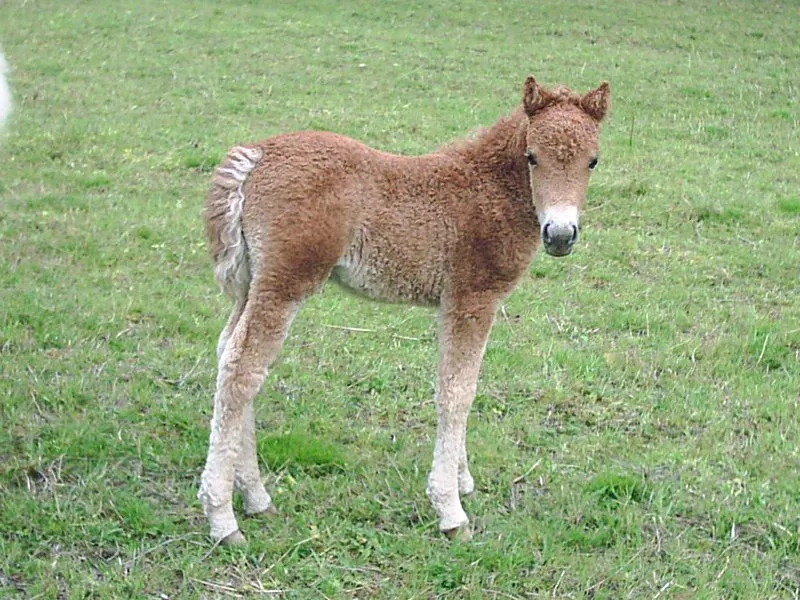 A young Bashkir Curly Horse foal exhibiting a softer, wavy coat.
Health and Lifespan
The Curly Horse is generally considered a very healthy and sturdy breed, with no specific genetic health issues commonly reported. They possess a tough constitution. With proper care, their lifespan typically ranges around 25 years. Their diet consists of high-quality hay, a fair amount of grain, and access to fresh water and a white salt block.
Origins: A Debated History
The precise ancestry of the Curly Horse remains a subject of ongoing research and debate. One prevailing theory suggests a link to the Bashkir horse of Russia, known for its curly coat. However, research in the 1990s indicated that the Russian Bashkir is actually the Lokai breed, leading to a naming controversy among breed registries. Some adopted the name “American Bashkir Curly,” while others preferred “North American Curly.”
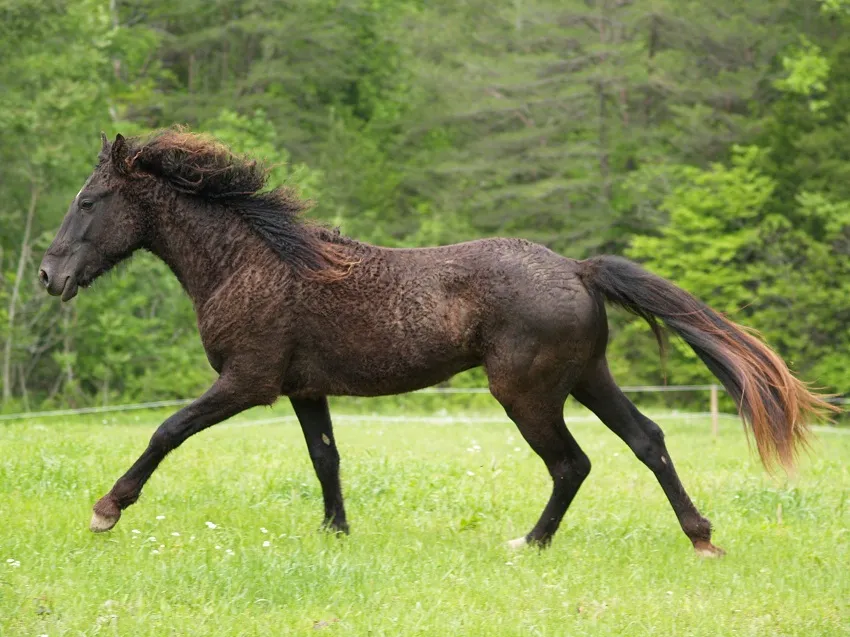 An American Bashkir Curly Horse demonstrating its solid build and confident stance.
Alternative theories propose that Curly Horses may have migrated to North America via the Bering Land Bridge during the Ice Age or were introduced by Russian settlers. Historical records suggest they were present in Asia as early as the 2nd century. Another hypothesis involves their introduction to Nevada by Tom Dixon in the late 19th century, though evidence points to the Sioux Indians owning curly-haired horses even earlier. Some theories also suggest Iberian ancestry, possibly brought by Spanish conquistadors.
The modern development of the breed is often credited to John Damele in Nevada in the early 1900s. He and his sons were impressed by the horses’ resilience, especially during harsh winters. After capturing a curly-coated mare named Copper D from a mustang herd, they established a breeding program. To enhance the breed, they introduced an Arabian stallion named Nevada Red AHR 18125 and a Morgan horse stallion named Ruby Red King AMHR 26101. These stallions are foundational to many of today’s Curly Horses.
Unique Traits and Applications
A fascinating aspect of the Curly Horse is its potential hypoallergenic quality, making it a good choice for individuals with horse-related allergies. The hair shed from their tails and manes in the spring is a unique resource. Collected by the Curly Fiber Guild of the International Curly Horse Organization, this hair is utilized by fiber artists for various crafts, including spinning, weaving, crocheting, and knitting. The breed is recognized and registered by several organizations, including the American Bashkir Curly Registry (ABCR), the Canadian Curly Horse Association (CCHA), Curly Sporthorse International (CSI), and the International Curly Horse Organization (ICHO).
The Curly Horse stands out not only for its distinctive appearance but also for its amiable temperament and versatility, making it a cherished breed among equestrians.
