
The Appaloosa stands as one of the most recognizable and beloved horse breeds in the United States, the very nation where it was meticulously developed. Primarily known as a stock horse, the Appaloosa excels in a variety of Western riding disciplines, yet its versatility allows it to perform admirably in many English riding styles as well. Its heritage as a stock horse means it is exceptionally well-suited for the demands of ranch and farm work, particularly in handling livestock.
The Appaloosa’s distinctive appearance is legendary, marked by unique traits such as striped hooves, mottled skin, visible white sclera around the iris, and striking coat patterns that overlay a base color with intricate designs. The breed encompasses a wide spectrum of body types, a testament to the diverse lineage of horses that have contributed to its development throughout its history in the United States. The Appaloosa’s rich history is deeply intertwined with the Native American Nez Perce (Niimíípu) people and the states of Washington, Oregon, and Idaho. In recognition of its cultural significance, the Appaloosa was officially named the state horse of Idaho in 1975, and the state even offers a license plate featuring this iconic breed.
The Evolution of the Appaloosa Name
European settlers initially referred to this horse type as the “Palouse horse,” a name derived from the Palouse River, which flowed through the ancestral lands of the Nez Perce people, the very tribe credited with developing the breed. Over time, “a Palouse horse” gracefully transformed into “Apalouse horse,” and eventually evolved into the familiar “Appaloosa.” Historical records reveal a variety of spellings for the breed in older texts, including Apalousey, Appaloosie, and Appalucy, reflecting the linguistic shifts and regional dialects of the era.
Further historical context is provided by a book published in 1948, which describes a breed known as the Opelousa. This hardy and resilient breed, a blend of Indian and Spanish horse lineage, was utilized by backwoodsmen in the late 18th century for transporting goods to New Orleans for trade. This historical account highlights the breed’s long-standing utility and adaptability.
Versatile Applications of the Appaloosa
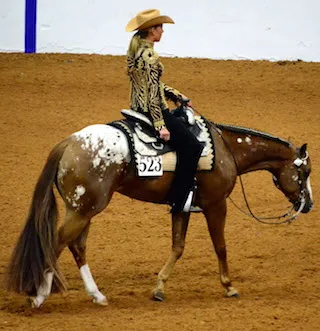 The Appaloosa’s inherent athleticism and willing disposition make it a highly sought-after breed for both English and Western riding disciplines. In Western riding, they demonstrate exceptional talent in events such as cutting, reining, roping, barrel racing, and pole bending. The unique Camaas Prairies Stump Race is a testament to their specialized abilities, being an Appaloosa-only barrel racing competition. For pole bending events, the Nez Percé Stake Race showcases their agility and speed.
The breed’s versatility extends to English disciplines, where Appaloosas frequently participate in challenging events like eventing, fox hunting, and show jumping. Their resilience and stamina also make them a popular selection for demanding endurance competitions and leisurely trail riding adventures.
When it comes to horse racing, Appaloosas particularly excel in middle-distance races, typically covering distances between 350 yards and half a mile. In a remarkable display of speed and endurance, an Appaloosa set an all-breed record in 1989 for a 4.5 furlong race (approximately 990 yards), a record that impressively still stands today. While the purses for Appaloosa horse racing may be smaller compared to mainstream racing, and the number of races held annually is limited, their competitive spirit remains undiminished.
The Appaloosa in Popular Culture
The striking appearance and spirited nature of the Appaloosa have led to its frequent depiction in numerous films and television series, particularly those that capture the essence of life on the American frontier. Notable examples include the iconic Westerns El Dorado and True Grit. In the 1966 film El Dorado, the legendary John Wayne rides an Appaloosa named Zip Cochise, adding to the breed’s cinematic legacy. More recently, in the 2010 adaptation of True Grit, the Appaloosa ridden by Matt Damon, named Cowboy, further cemented the breed’s presence on the silver screen. The breed’s significance is even underscored by films named directly after it, such as the 1966 Western The Appaloosa, starring the acclaimed Marlon Brando.
Osceola & Renegade: A Spirited Mascot Duo
The Florida State Seminoles, the esteemed athletic teams representing Florida State University, proudly feature Osceola and Renegade as their official mascot duo. Osceola embodies the spirit of the historical Seminole leader Osceola, while Renegade, his magnificent Appaloosa horse, represents the breed’s strength and majesty. This portrayal is officially supported by the leaders of the Seminole Tribe of Florida, acknowledging the cultural connection even though the Seminoles were not directly involved in the initial development of the Appaloosa breed itself.
A Glimpse into the Appaloosa’s Origins
Horses bearing a resemblance to the modern Appaloosa have likely graced the earth since prehistoric times. Evidence of this can be found in ancient cave paintings across Europe, which depict horses adorned with the characteristic leopard spotting. Furthermore, artwork originating from Ancient Greece offers depictions of domesticated, leopard-spotted horses, showcasing their presence in early civilizations. Across the globe, in Han dynasty China (206 BC – 220 AD), leopard-spotted horses also featured in artistic representations, underscoring their long and diverse history.
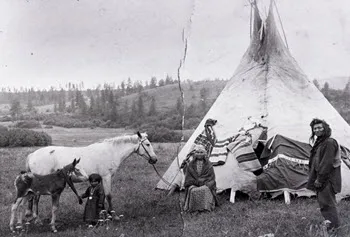 In the United States, the development of the distinctive Appaloosa breed is credited to the [Nez Perce people](https://www.appaloosamuseum.org/the-nez-perce-people/) of the Pacific Northwest. Tragically, the Nez Perce War of 1877 resulted in the loss of most of their horses, leading to a significant decline in the breed for several decades. However, thanks to the dedication of a few passionate breeders, the Appaloosa breed persevered. The formal establishment of the Appaloosa Horse Club (ApHC) in 1938 marked a crucial turning point, serving as the official breed registry and safeguarding its future.
The lineage of the modern Appaloosa can be traced back to the foundational bloodstock meticulously selected in 1938. The breed registry maintains a partially open stud book, allowing for the incorporation of genetic contributions from specific Arabian, Thoroughbred, and American Quarter horses, further enriching the breed’s diversity and athleticism.
Influence on Related Breeds
The influential bloodlines of the Appaloosa have played a significant role in shaping several other horse breeds. Notable examples include the Nez Perce Horse, the Colorado Ranger, and the Pony of the Americas. Additionally, a considerable number of gaited horse breeds developed in the United States owe a portion of their heritage to the Appaloosa horse, testament to its widespread impact and desirable traits.
