
Breeding horses requires a thorough understanding of their reproductive cycle, from recognizing the mare’s heat to managing pregnancy and post-foaling care. This guide delves into the intricacies of the equine estrous cycle, gestation, and common practices for reproductive cycle manipulation, offering insights for horse owners and breeders.
The Equine Estrous Cycle: A Seasonal Rhythm
Horses are seasonal breeders, with their reproductive cycles primarily influenced by daylight hours. Mares typically begin cycling from late spring to early fall, entering an anestrus (non-cycling) phase during the shorter days of winter. As daylight increases in spring, hormonal signals from the brain stimulate ovarian activity, initiating the breeding season.
Each estrous cycle in mares lasts approximately 21–22 days and is divided into two main phases:
Estrus: The Receptive Period
The estrus phase, lasting about 6–8 days, is when the mare is receptive to breeding. Increased sunlight triggers the release of gonadotropin-releasing hormone (GnRH), prompting the pituitary gland to produce follicle-stimulating hormone (FSH) and luteinizing hormone (LH). FSH stimulates the development of follicles on the ovaries, while LH promotes the maturation of a dominant follicle that will release an egg for potential fertilization.
During estrus, mares often exhibit distinct behaviors as estrogen levels rise. These can include frequent urination, tail raising, “winking” (everting the clitoris), squealing, and stud-like behavior. The cervix also relaxes and opens, facilitating breeding. Ovulation typically occurs late in the estrus phase, releasing the egg into the fallopian tube.
Diestrus: The Non-Receptive Period
Following ovulation, the mare enters the diestrus phase, which lasts for 14–16 days. Estrogen levels decrease, and the mare is no longer receptive to the stallion. The cervix closes and tightens. The ruptured follicle develops into a corpus luteum (CL), which secretes progesterone for 12–14 days. Progesterone is crucial for maintaining pregnancy by inhibiting hormones that would restart the estrous cycle. If pregnancy does not occur, the uterus releases prostaglandin, which destroys the CL, causing progesterone levels to drop and the cycle to restart. Monitoring these cycles is vital for successful breeding.
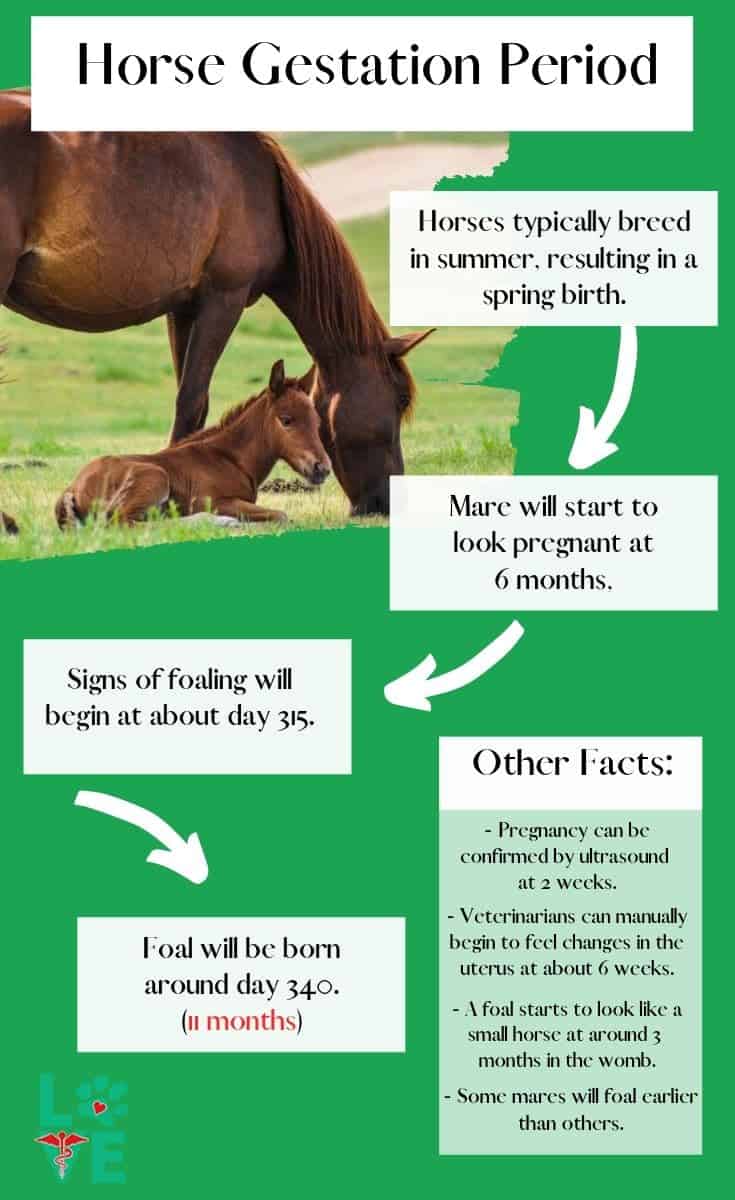
Gestation: The 11-Month Journey
If fertilization occurs, the embryo enters the uterus approximately six days after ovulation and attaches to the uterine lining around 17 days. Successful pregnancy establishment depends on the mare’s body recognizing the viable embryo and maintaining progesterone production. The gestation period in horses averages 340 days, though variations can occur. Regular veterinary check-ups are essential throughout this period to monitor fetal viability and screen for complications like placentitis.
Key milestones during gestation include:
- 14–16 days post-ovulation: Pregnancy and twin detection. Early detection of twins is critical, as it can be managed to increase the chances of a successful single pregnancy.
- 26–30 days: Fetal heartbeat and viability are assessed. Non-viable embryos can be terminated, allowing the mare to resume her estrous cycle.
- Around 45 days: Endometrial cups form, aiding progesterone production to sustain the pregnancy. These cups shed around 120 days.
- 60–70 days (or 110–140 days): Fetal sex can be determined via ultrasound before the fetus becomes too large.
- Five, seven, and nine months: Optional ultrasounds can monitor fetal growth and placental health, especially when administering the Pneumabort vaccine to prevent Equine Herpesvirus-1.
Signs that a mare is nearing foaling include enlarged mammary glands, waxing of the teats, relaxation around the tail and vulva, isolation from the herd, and a slightly decreased appetite.
Post-Partum Cycling and Breeding
Mares typically experience a “foal heat” cycle shortly after giving birth, usually around seven days post-foaling. Whether a mare is in optimal condition to be rebred during this cycle depends on her uterine recovery and absence of infection. Veterinarians assess ultrasound findings to determine suitability for rebreeding. If not bred or if pregnancy does not occur, the mare will resume her regular 21-day estrous cycle.
Reproductive Cycle Manipulation for Management
The timing of foaling can be influenced for various reasons, such as competition schedules or to avoid extreme weather conditions.
Light Manipulation
To encourage earlier cycling, mares can be exposed to artificial light to simulate longer days. Starting in late November or early December, 16 hours of light per day can help mares transition into the breeding season earlier, typically by February.
Hormonal Manipulation
Synthetic hormones can be used to manipulate the mare’s cycle:
- Altrenogest (Regumate®): A synthetic progestin, it can be used to synchronize cycles or suppress estrous behavior in mares with extreme behavioral changes.
- Prostaglandins (Lutalyse®): Used for “short-cycling” to induce regression of the corpus luteum, typically leading to ovulation 5–7 days later. This is useful for missed ovulations or persistent CLs.
- Desorelin (Sucromate™): Administered to mares with a follicle of at least 30 mm to induce ovulation within 36 hours, particularly useful for timed artificial insemination.
Pinpointing Estrus for Breeding Success
Accurate timing of breeding is crucial for optimizing conception rates, especially with artificial insemination (AI) using fresh or frozen semen. Behavioral monitoring, including teasing with a stallion, helps identify estrus. More precise timing, particularly for AI, relies on serial reproductive ultrasounds to track follicular development, uterine edema, and cervical tone. Mares exhibiting significant uterine edema and a soft cervix are nearing ovulation.
Mare Reproductive Cycle FAQs
- Best time for breeding? Ideally within 24 hours prior to ovulation for live cover/fresh semen, and 6 hours after ovulation for frozen semen AI.
- Estrus cycle length? The estrus (fertile) phase lasts 6–8 days.
- Frequency of heat? Mares cycle every 21–22 days during the breeding season.
- How to get a mare out of heat? Estrous suppression with altrenogest can be used.
- Signs of heat? Squealing, squatting, winking, and stallion-like behaviors.
Featured Image: iStock.com/ae-photos
