
The Royal Canadian Mounted Police (RCMP) and their iconic horses are globally recognized symbols of Canada. For over 80 years, the force has been dedicated to breeding elegant, strong, and even-tempered horses, a tradition that continues to define their proud heritage. This commitment to equine excellence is deeply embedded in the RCMP’s identity, contributing significantly to their historical image and public engagements.
The Genesis of the Iconic Mountie Image
The RCMP’s journey into specialized horse breeding began in 1937. Assistant Commissioner S. T. Wood, during his attendance at the coronation of King George VI, was struck by the striking visual of the Life Guards’ riders on their black horses, a sight that contrasted vividly with their red tunics. This observation planted the seed for a future requirement. Upon his appointment as Commissioner in 1938, Wood mandated the acquisition of only black horses for the force. Recognizing the need for a consistent and reliable source of these specific horses, the RCMP established its own breeding program. The program officially commenced in 1939 at Depot Division in Regina, Saskatchewan, focusing on these distinctive black horses. Over time, the breeding farm relocated, first to Fort Walsh, Saskatchewan, in 1942, and then to its current, expansive location in Pakenham, Ontario, in 1968.
A Closer Look at the Breeding Farm
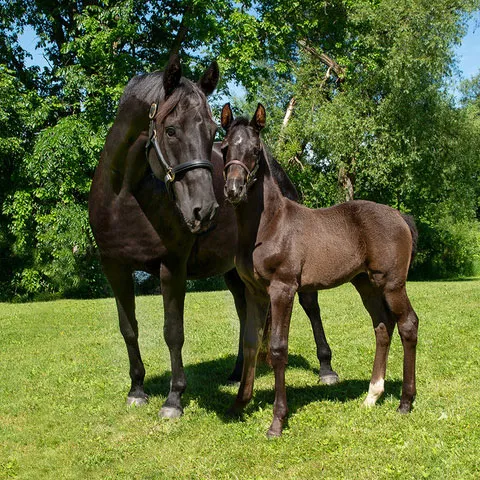 A mare and her foal
The current RCMP breeding farm is renowned for producing some of Canada’s finest Hanoverian horses. This state-of-the-art facility is home to approximately 15 broodmares, two breeding stallions, and a cohort of 30 young, developing horses. The paramount priority at the farm is the welfare of every horse. An experienced team of staff provides constant oversight, ensuring the health and well-being of the animals. Any emerging issues are addressed promptly, with veterinary support available as needed. Historically, the RCMP primarily bred Thoroughbreds. However, in a strategic move in March 1989, black Hanoverian broodmares and stallions were introduced. This integration was designed to enhance the bloodlines, specifically improving color, substance, and conformation, further refining the quality of their horses for the demanding roles they fulfill.
From Naming to the Musical Ride
Each year, the newest generation of foals receives their names through the engaging Name The Foal contest. Children from across Canada are invited to submit names, each starting with a specific letter that rotates annually, adding a fun and participatory element to the program. Not all foals will go on to join the prestigious RCMP Musical Ride. To be selected, horses must meet a rigorous set of requirements, including size, color, rideability, and temperament. Beyond the Musical Ride, these exceptional horses also play vital roles in various public functions. They participate in parades, provide Royal escorts, and add a touch of grandeur to other special events, further solidifying their role as ambassadors for the force.
The Life Cycle of an RCMP Horse
The typical life cycle of a Musical Ride horse spans approximately 20 to 25 years, with each phase of their life marked by distinct roles and responsibilities.
Birth to Age 3: Growth and Development
During their initial years, the young horses remain at the breeding farm. This crucial period is dedicated to their growth and development, laying the foundation for their future training.
Ages 3 to 6: Training and Development
Once they reach maturity, the young horses, referred to as remounts (replacement mounts), transition to the Musical Ride stables. Here, they undergo a comprehensive minimum of three years of intensive training and development, preparing them for the demanding performances ahead.
Age 6 Onward: Performance and Service
Upon the successful completion of their training, the horses proudly perform on the Musical Ride for approximately a decade. Their discipline, grace, and power captivate audiences worldwide.
Post-Musical Ride: Mentorship and Ceremonial Duties
When their performing careers with the Musical Ride conclude, these experienced horses transition into new roles. They become invaluable “schoolmasters,” assisting in the training of future riders and continuing to serve the RCMP through local ceremonial duties.
The RCMP Horse Auction
Periodically, generally every one to two years as needed, the RCMP holds an auction for surplus horses. These are horses that, while exceptional, do not meet the stringent requirements for the Musical Ride. These highly sought-after horses are ideal for various equestrian disciplines, including dressage and show jumping. The RCMP implements several measures to ensure these horses find suitable, serious buyers. Minimum bids are established, and all bidders must register in advance on GCSurplus. The proceeds generated from these auctions are reinvested directly back into the Musical Ride breeding program, ensuring the continued excellence and sustainability of this esteemed tradition.
