
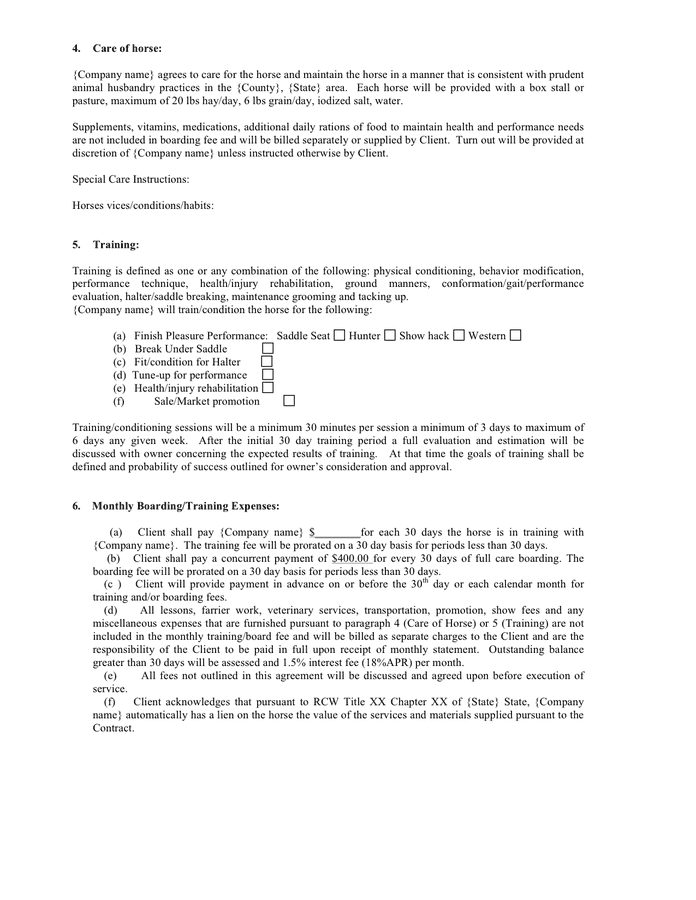
Navigating the world of equestrian services requires clear agreements, and a well-drafted Horse Boarding And Training Contract is paramount for protecting both horse owners and service providers. This agreement serves as the foundational document, outlining expectations, responsibilities, and the scope of services for the care and development of your equine partner. Understanding the key components of such a contract is essential for ensuring a harmonious and productive relationship within the equestrian community.
The Importance of a Detailed Contract
A horse boarding and training contract is more than just a formality; it’s a legally binding document designed to prevent misunderstandings and disputes. It clarifies financial obligations, care standards, liability, and the specific training goals. Without a comprehensive contract, owners may face unexpected costs or inadequate care, while trainers could struggle with unclear expectations or payment issues. Ensuring all aspects are documented protects the welfare of the horse, the investment of the owner, and the reputation of the trainer.
Key Components of a Horse Boarding and Training Contract
When establishing an agreement, several critical elements must be addressed to ensure clarity and protection for all parties involved.
1. Identification of Parties and the Horse
The contract must clearly identify all parties involved: the horse owner(s) and the boarding/training facility or individual trainer. Full legal names, addresses, and contact information should be included. Crucially, detailed information about the horse must be provided, including its registered name, breed, age, color, sex, and any distinguishing marks or microchip numbers. This ensures that the agreement pertains to the specific animal.
2. Boarding Services and Fees
This section details the type of boarding provided (e.g., full care, partial care, pasture board) and what is included in the monthly fee. Specifics such as stall size, feeding schedule and type of feed, bedding, turnout schedule, and grooming should be itemized. The exact cost of board, payment due dates, and acceptable payment methods are essential. Late payment penalties should also be clearly defined.
3. Training Services and Goals
The scope of training services must be explicitly stated. This includes the frequency of training sessions, the duration of each session, and the specific training methods to be employed. Clearly defined training goals are vital. Are you aiming for basic obedience, specific disciplines (e.g., dressage, jumping), or preparing for competition? This section should also outline the trainer’s experience and qualifications. Understanding how much does horse training cost per month can guide expectations for the services rendered.
4. Health, Veterinary Care, and Farrier Services
The contract should specify responsibilities regarding the horse’s health. This includes who is responsible for arranging and paying for routine veterinary care and farrier services. It should outline emergency procedures, including notification protocols and authorization for treatment if the owner is unavailable. A veterinarian and farrier of choice may be designated, or the facility may have its own preferred providers.
5. Liability and Insurance
This is a critical section addressing potential risks. It should outline the responsibilities of the owner and the trainer in case of injury to the horse, handler, or third parties, or damage to property. It is highly recommended that both parties have adequate insurance. The contract may require the owner to maintain specific mortality and major medical insurance for the horse and may specify liability insurance for the trainer or facility.
6. Termination Clause
The conditions under which either party can terminate the contract should be clearly stated. This typically includes notice periods required (e.g., 30 days written notice) and any associated fees or penalties for early termination. Reasons for termination, such as non-payment, breach of contract, or changes in the horse’s health or temperament, should also be addressed.
7. Horse Training Contract Template Considerations
When looking for a template, ensure it is comprehensive and adaptable. A good horse training contract template will cover all the aforementioned points and allow for customization to fit unique needs. It’s advisable to use a template that has been reviewed by legal counsel specializing in equine law.
The Role of Legal Counsel
While a template can provide a strong foundation, it is always best to have a legal professional review any horse boarding and training contract before signing. An attorney specializing in equine law can ensure the contract is legally sound, protects your interests, and complies with local regulations. They can help clarify ambiguous clauses and advise on potential risks. Understanding resources like horse training agreement contract examples is a starting point, but professional legal advice is invaluable.
Factors Influencing Contract Costs
The cost of boarding and training services can vary significantly based on location, the reputation of the facility or trainer, and the level of care and specialization provided. Understanding these factors can help set realistic expectations. For instance, how much does a horse trainer make a year can give insight into the pricing structures, as experienced and highly sought-after trainers often command higher fees. Similarly, the cost of living and the local equestrian market heavily influence boarding fees.
Finding Opportunities and Specialists
For those seeking employment or specialized services within the equestrian industry, resources abound. Exploring horse trainer jobs Colorado or similar location-specific searches can reveal opportunities. Likewise, identifying reputable boarding and training facilities often involves word-of-mouth recommendations, industry directories, and online reviews. A clear and fair contract is the first step in building a successful and trusting relationship in these professional interactions.
A well-defined horse boarding and training contract is indispensable for fostering transparency, accountability, and a positive experience for all involved in the care and development of horses. It safeguards investments, ensures the well-being of the equine athlete, and promotes ethical practices within the equestrian world.
