
The bond between a horse and a trainer is built on a delicate foundation of trust, communication, and mutual respect. But what happens when that foundation shatters? The scenario where a Horse Attacks Trainer is a terrifying reality that underscores the immense power and complex psychology of these magnificent animals. It’s a moment that can be life-altering, but it’s rarely a random act of malice. More often, it’s a tragic failure in communication—a final, desperate scream from a horse that feels threatened, misunderstood, or is in pain. Understanding the “why” behind such an event is the first and most critical step toward prevention and ensuring safety in the equestrian world. The path to becoming a master in this field can be complex, much like the journey of a mage horse trainer, requiring deep insight and skill.
Why Do Horses Attack? Understanding the Root Causes
A horse’s primary instinct is flight, not fight. When a horse chooses to attack, it means its flight response has been overridden by a more potent emotion or physical state. Unpacking these triggers is crucial for any trainer who values their safety and the well-being of their equine partners.
Fear and Self-Preservation
The most common reason a horse attacks a trainer is fear. A horse that feels cornered, trapped, or pushed too far past its threshold for stress will revert to its most primal survival instinct: self-defense. This isn’t maliciousness; it’s a desperate attempt to neutralize a perceived threat. The “threat” could be a training tool used too aggressively, a sudden movement, or a trainer who has ignored the horse’s more subtle pleas to stop. The horse’s brain screams “danger,” and it will use its primary weapons—teeth, hooves, and body mass—to protect itself.
Pain-Induced Aggression
Pain is a powerful motivator for aggression in any animal, and horses are no exception. An underlying physical issue is often the culprit when a normally gentle horse suddenly becomes dangerous. This could be anything from:
- Dental problems: Sharp points on teeth can cause immense pain when a bit is used.
- Saddle fit: An ill-fitting saddle can create painful pressure points along the back.
- Lameness: Hoof abscesses, joint issues, or soft tissue injuries can make movement excruciating.
- Internal issues: Conditions like ulcers can cause chronic discomfort, leading to a sour and unpredictable temperament.
A horse may lash out when a trainer touches a sore spot or asks for a movement that exacerbates the pain. It’s the horse’s only way of saying, “Stop, that hurts!”
Territorial and Resource Guarding
Some horses can become possessive over their space, their food, or even their herd mates. This is often called resource guarding. A trainer entering a stall might be seen as an intruder in the horse’s territory, triggering a defensive or aggressive response. This is particularly common with stallions, but mares and geldings can exhibit this behavior as well. The horse isn’t attacking the trainer; it’s defending what it perceives as its own.
Learned Behavior and Past Trauma
Unfortunately, some horses learn that aggression is an effective way to control their environment. A horse that has been handled harshly in the past may have discovered that biting or kicking makes the scary human go away. This becomes a conditioned response. Each time the aggression works, the behavior is reinforced. Re-training a horse with this kind of baggage requires immense patience, skill, and a deep understanding of equine psychology.
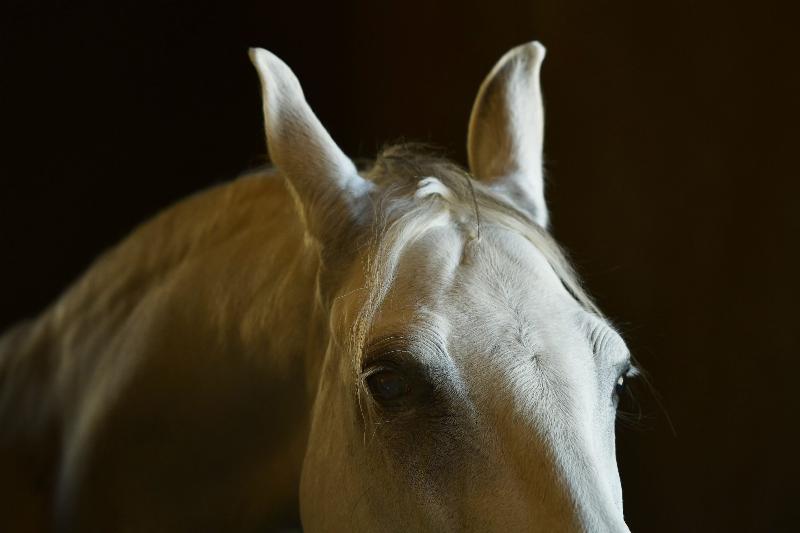 An aggressive horse with pinned ears and a tense jaw, illustrating a key warning sign before a horse attacks trainer
Reading the Warning Signs: How to Spot an Impending Attack
Horses rarely attack without warning. The problem is that their warnings are often subtle and easily missed by an inexperienced or preoccupied handler. Learning to read equine body language is not just a skill; it’s a survival tool.
The Subtle Whispers
Before a horse “shouts” with an attack, it almost always “whispers” its discomfort. Pay close attention to these early signs:
- Pinned Ears: Ears flattened tightly against the neck are a classic sign of anger or irritation.
- Tense Jaw and Muzzle: A hard, tight mouth, sometimes with wrinkled nostrils, shows anxiety and tension.
- “Whale Eye”: When a horse shows the whites of its eyes, it’s a clear indicator of fear or high stress.
- Swishing or Flagging Tail: A rapidly swishing or unnaturally still, clamped-down tail can signal agitation.
The Loud and Clear Warnings
If the subtle whispers are ignored, the horse will escalate its communication. These are clear signs to back off immediately:
- Threatening Gestures: This includes lifting a hind leg as if to kick, snaking the neck out to bite, or lunging forward.
- Pawing or Stomping: A horse that is aggressively pawing or stomping is showing extreme impatience and frustration.
- Charging: This is the most dangerous warning. A horse that runs at you is no longer just warning; it’s actively trying to drive you away.
- Showing Teeth: Sometimes called “snapping,” this is a clear intention to bite.
As equine behavior specialist Dr. Alistair Finch notes, “An attack is almost never ‘out of the blue.’ It’s the tragic culmination of missed signals and misunderstood needs. The horse has been ‘telling’ you something is wrong for a long time; the attack is when they finally shout.”
De-escalation and Defense: What to Do If a Horse Attacks a Trainer
If you find yourself in the terrifying situation of being attacked, your immediate actions are critical for your survival.
1. Create Space: Your first priority is to get out of striking range. A horse’s kick is incredibly powerful, and a bite can cause serious injury. Back away calmly but quickly.
2. Stay Big and Make Noise: Do not cower or shrink. Make yourself look as large as possible and use a loud, firm voice to say “No!” or “Back!”. This can sometimes be enough to startle the horse and interrupt the attack.
3. Never Turn Your Back: Turning your back and running can trigger a horse’s prey drive. Always keep your eyes on the horse and back away, facing it if possible.
4. Use a Barrier: If there is anything nearby—a gate, a feed bucket, a grooming kit—try to place it between you and the horse as you retreat.
5. Know Your Exits: Always be aware of your escape routes when working with a horse, especially one you don’t know well. Never allow yourself to be cornered in a stall or a small paddock.
Prevention is Key: Building a Foundation of Trust
The best way to survive a horse attack is to prevent it from ever happening. A safe training environment is not built on dominance, but on clear communication, fairness, and trust. Understanding the principles of horsemanship goes beyond simple commands; it’s about a deep, empathetic connection, similar to the dedication needed to understand how to train a war horse, where trust is paramount.
- Thorough Health Checks: Before assuming a behavioral problem, rule out pain. Have a veterinarian and an equine dentist perform a full check-up to ensure the horse is not acting out due to physical discomfort.
- Master Groundwork: Respect is earned on the ground. Solid groundwork establishes boundaries, teaches the horse to yield to pressure, and builds the trainer’s position as a trustworthy leader.
- Listen More Than You Talk: Pay constant attention to your horse’s body language. If you see signs of stress, back off and reassess your approach. A great trainer knows when to push, but a master trainer knows when to stop.
- Positive Reinforcement: While discipline is necessary, rewarding desired behaviors is far more effective at building a willing partner than punishing unwanted ones. It creates a horse that wants to work with you, not one that fears you.
The Aftermath: Can a Horse and Trainer Relationship Be Repaired?
When a horse attacks a trainer, the trust on both sides is shattered. The path forward is difficult and requires careful consideration.
First, an honest assessment is needed. Was this a one-time event caused by a specific, identifiable trigger (like acute pain), or is it part of a pattern of dangerous behavior? For a single incident, there is hope. The process involves going back to basics, rebuilding trust slowly through non-demanding interaction and groundwork, much like the patient process involved in bdo dream horse training.
However, if a horse has severe, ingrained aggression, it may require the intervention of a certified equine behaviorist. In some tragic cases, a horse may be deemed too dangerous for anyone but the most experienced professionals to handle. The safety of humans must always be the top priority. Finding the right path forward is key, just as riders seek out the bdo best horse training route for efficiency and success.
Ultimately, preventing a horse attack comes down to empathy. By striving to understand the world from the horse’s perspective—recognizing its fears, its pains, and its needs—we can become not just trainers, but true horsemen. It is through this deeper understanding that we can avoid the tragic scenario where a horse attacks a trainer and instead foster a partnership that is safe, productive, and truly magical.
Frequently Asked Questions (FAQ)
1. Can any horse become aggressive?
Yes, any horse, regardless of breed or previous temperament, has the potential to become aggressive if placed under enough stress, fear, or pain. Aggression is a response to circumstances, not an inherent trait in most horses.
2. Is a horse that has attacked once always dangerous?
Not necessarily. It is critical to identify and resolve the root cause of the attack. If the aggression was caused by a specific pain that has since been treated, the horse may return to its normal temperament. However, it should always be handled with extra caution.
3. What is the most dangerous type of horse attack?
A strike with the front hooves (striking) and a full-force double-barrel kick with the hind legs are among the most lethal forms of attack. A determined charge where the horse intends to run over a person is also extremely dangerous.
4. How can I stay safe around a horse I don’t know?
Always approach a new horse calmly from the side, speaking in a low tone. Avoid direct eye contact, which can be seen as a challenge. Pay close attention to its body language and have an experienced handler present. Never work with an unknown horse in a confined space without an escape route.
5. Is it my fault if a horse attacks me?
While it’s not about assigning blame, it’s crucial for trainers to take responsibility for creating a safe environment. An attack often means the trainer missed warning signs or pushed the horse beyond its limits. A humble, self-reflective approach is key to preventing future incidents.
