
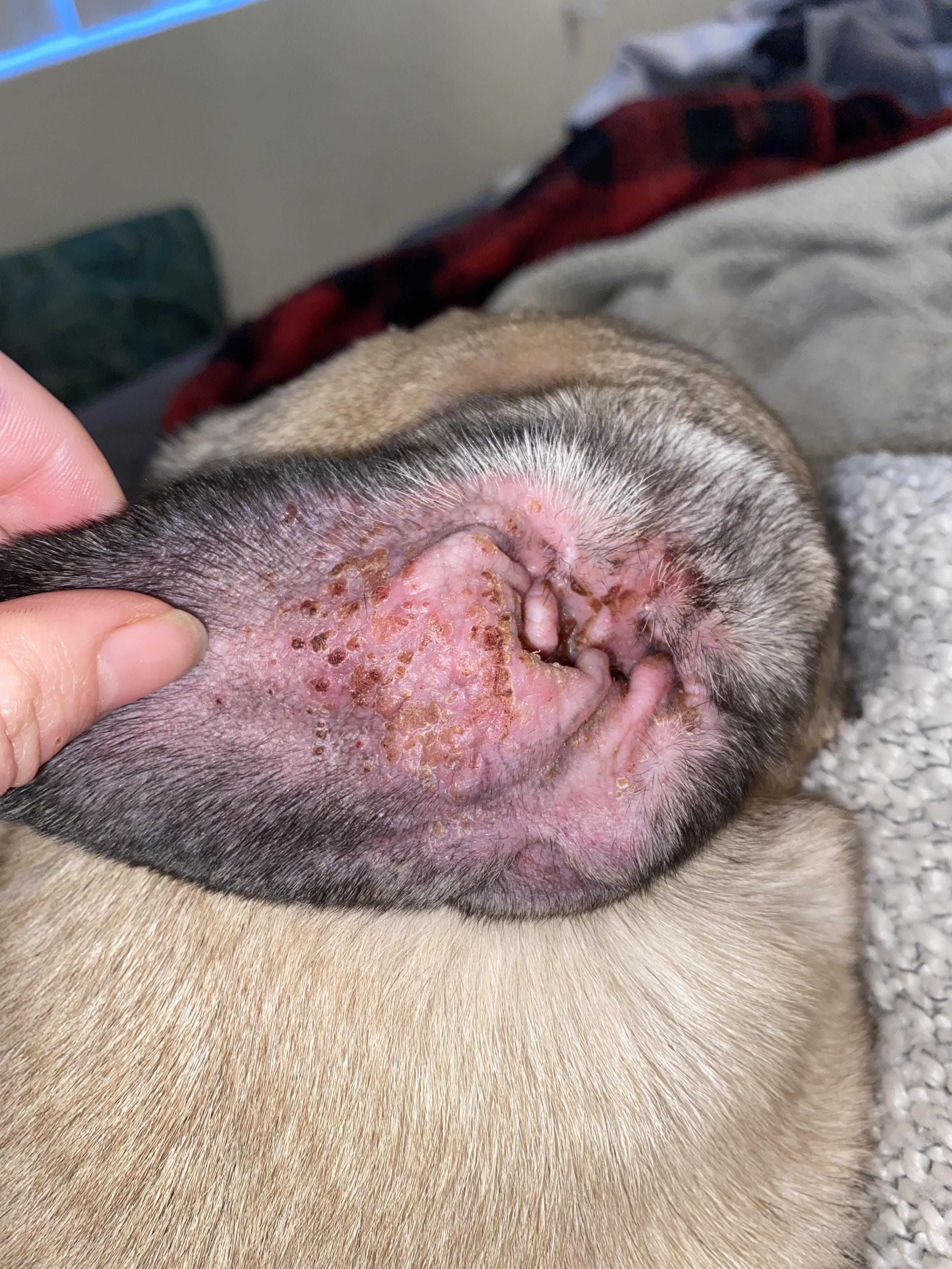
If you notice your dog frequently shaking her head or intensely scratching her ears, ear mites might be the culprit. While these tiny pests don’t burrow or bite like some other parasites, they are highly contagious and can lead to more serious complications if left untreated. Swift action is crucial to prevent their spread and protect your dog from self-inflicted injury. This guide will delve into identifying and effectively eliminating ear mites in dogs.
Understanding Ear Mites (Otodectes cynotis)
The term “ear mites” is sometimes used interchangeably with mange mites, such as sarcoptic or demodectic mange. However, this post focuses specifically on Otodectes cynotis, a distinct type of ear mite and a common cause of Otodectic mange. These mites are arachnids, related to spiders and ticks, but they do not bite. They typically inhabit a dog’s ear canal, feeding on earwax and oils, which causes intense itching.
As parasites, ear mites thrive on a host. The ear canal provides a warm, food-rich environment for them to establish themselves. While more prevalent in cats, dogs are also susceptible. Ear mites are highly contagious to other dogs, cats, and ferrets, necessitating prompt treatment to prevent wider infestation. Although rare, humans can develop a skin rash from these mites. Younger dogs may be more vulnerable, but ear mites can affect dogs of any age.
How Dogs Contract Ear Mites
Dogs can contract ear mites from various sources, including the environment, but they most commonly acquire them from infected animals like other dogs, cats, or ferrets. Outdoor cats are a frequent source of transmission. While foxes also carry ear mites, direct transmission to dogs from this source is less common.
Compared to cats, which can host up to a thousand mites per ear, dogs generally harbor fewer. Once a dog is infected, mites multiply rapidly. Female mites lay a significant number of eggs within their short lifespan, with the eggs hatching within days and the new generation quickly reproducing. This rapid life cycle underscores the importance of checking all pets in a household if one is diagnosed with ear mites. Given their microscopic size, identifying ear mites can be challenging, and their symptoms often mimic other ear conditions.
Recognizing the Signs of Ear Mites in Dogs
Several indicators suggest your dog may have ear mites:
- Persistent ear scratching: Your dog may constantly paw at or rub its ears.
- Head shaking: Frequent and sudden head movements are common.
- Ear discharge: A dark, reddish-brown discharge resembling coffee grounds is a hallmark sign.
- Unpleasant odor: Infected ears may emit a foul smell.
- Skin lesions: Intense scratching can lead to sores around the ears, which may become infected.
- Visible mites: In some cases, tiny, moving white specks may be observed within the ear canal.
If left untreated, ear mites and the associated scratching can lead to severe issues such as hearing loss, loss of balance, damage to the ear canal, ear hematomas, increased ear sensitivity, and secondary infections. Addressing the infestation early can prevent these more serious health problems.
Diagnosing Ear Mites in Dogs
You can often diagnose ear mites at home without a veterinary visit. Collect debris from your dog’s outer ear canal using a cotton swab or ball. Examine this debris on a dark surface with a magnifying glass, looking for tiny, white, moving specks. If you are unable to detect mites, try collecting samples from different areas or the other ear. If you remain unsuccessful, a veterinarian can confirm the diagnosis.
Your vet can typically identify ear mites using an otoscope or by examining the ear discharge under a microscope. If your dog is particularly restless during the examination, some vets might recommend sedation. To potentially avoid this, consider administering calming aids like Rescue Remedy or CBD oil before the appointment. If ear mites are ruled out, your vet can investigate other potential ear infections.
If your veterinarian confirms an ear mite diagnosis, it’s advisable to explore natural treatment options rather than immediately resorting to conventional pesticides.
Treating Ear Mites in Dogs Naturally
Veterinary treatments for ear mites often involve medicated ear cleaners, which can disrupt the natural ear microbiome, increasing the risk of future infections. Prescription medications, such as topical anti-parasitics (e.g., Revolution, Advantage) or oral/injectable pesticides (e.g., ivermectin, Bravecto), are also common. These treatments, some of which are also used for flea and tick prevention, carry potential risks.
Potential Side Effects of Conventional Medications
The neurotoxic nature of many parasiticides can lead to adverse reactions in dogs, including tremors, seizures, ataxia, vomiting, diarrhea, appetite loss, skin irritation, and lethargy. Because these medications typically only kill adult mites and don’t affect eggs, treatment courses can be prolonged, potentially extending over several weeks.
Safe and Effective Home Remedies for Ear Mites
Fortunately, several natural remedies can effectively and safely eliminate ear mites:
1. Olive Oil: As recommended in the Manual of Natural Veterinary Medicine, cleaning the ear with olive oil can help suffocate the mites. Apply olive oil to clean the ear and remove debris every three days for two weeks. This schedule targets newly hatched mites and ensures complete eradication. You can enhance this remedy by adding a few drops of specific essential oils to the olive oil, such as peppermint for its anesthetic properties, catnip to help control mites, St. John’s Wort for pain relief, or calendula for skin healing.
2. Garlic Oil: Herbalists suggest garlic oil as an effective anti-parasitic due to its sulfur content, which mites dislike. Garlic also possesses antibacterial and antifungal properties, beneficial for treating secondary infections. You can purchase garlic oil or make your own by steeping crushed garlic cloves in olive oil overnight. Apply the oil to the affected ear twice daily.
3. Green Tea: Green tea acts as a natural antiseptic, effective against mites and helpful in clearing the characteristic “coffee ground” debris. Prepare a strained, cooled solution of green tea and administer a few drops into each ear using a dropper. Gently massage the ears, then use a cotton ball soaked in green tea to wipe the inside of the ears. Repeat this process daily for four weeks.
Remember to treat all pets in the household simultaneously, as ear mites are highly contagious.
Preventing Ear Mites in Dogs
Maintaining your dog’s overall health is paramount in preventing parasitic infestations. A strong immune system makes your dog a less attractive host. Key preventive measures include:
- Nutrition: Feed a high-quality, whole-food, or raw diet.
- Vaccination: Avoid over-vaccination; administer only necessary vaccines.
- Medication: Minimize the use of antibiotics, pesticides, and pharmaceutical drugs, opting for natural alternatives when possible.
- Environmental Hygiene: Reduce chemical exposure in your home and yard by using natural cleaning products and avoiding lawn chemicals.
- Grooming: Bathe your dog with all-natural, organic shampoos.
While some advocate for daily ear cleaning, this can disrupt the natural balance of bacteria in a dog’s ears. It’s generally best to leave the ears undisturbed unless your dog shows signs of discomfort. Regular observation of your dog’s ears can help detect early signs of infestation, allowing for prompt treatment with natural remedies. Keeping your dog away from potential sources of infection, like outdoor or feral cats, is also important.
Frequently Asked Questions
How do you get rid of ear mites in dogs?
Natural remedies like olive oil, garlic oil, and green tea can be effective. For persistent or severe cases, consult a veterinarian for prescription treatments.
What are the signs of ear mites in dogs?
Common signs include excessive scratching, head shaking, a strong odor, and a dark, coffee-ground-like discharge in the ear.
What kills ear mites naturally?
Olive oil and green tea can help smother and remove mites, while garlic oil acts as a natural anti-parasitic.
Can humans contract ear mites from dogs?
It is extremely rare, but possible. Human infections are typically transient and resolve on their own, as mites prefer the ears of pets.
