
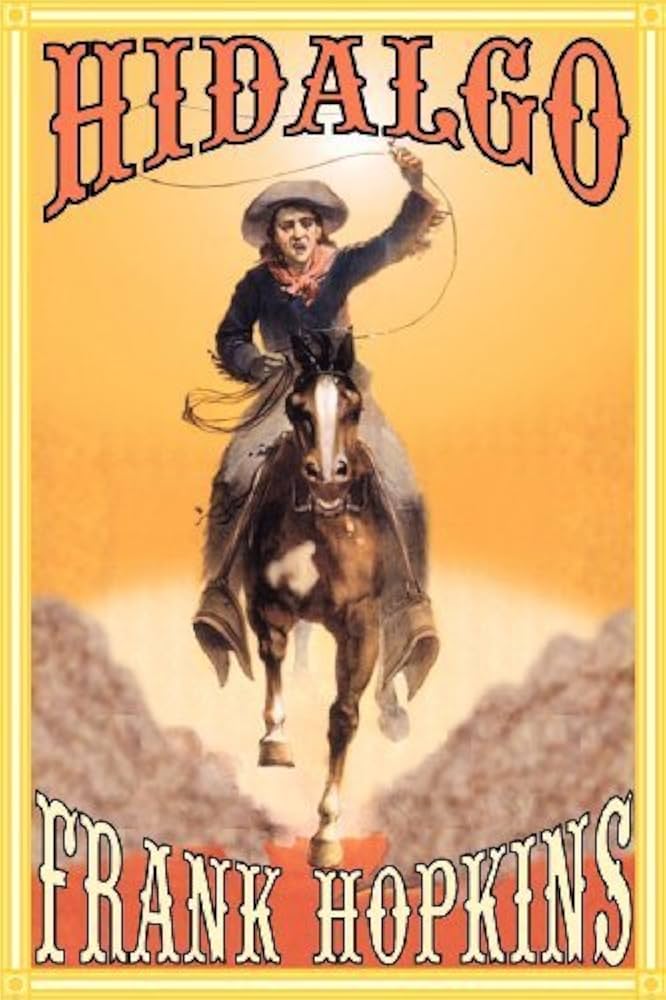
The tale of Frank T. Hopkins and his legendary Arabian mare, Hidalgo, is more than just a story about a horse; it’s an epic journey of courage, endurance, and the unbreakable bond between a man and his mount. Set against the harsh, unforgiving backdrop of the vast Arabian desert, this narrative unfolds as a testament to the extraordinary capabilities of both horse and rider. The legend claims that Hopkins, a young American rider, and his mare Hidalgo not only competed in but also triumphed over the Great Desert Race, a grueling endurance contest spanning over a thousand miles. This feat, if true, would stand as one of the most remarkable equestrian achievements in history.
The Genesis of a Legend: Frank T. Hopkins and Hidalgo
Frank T. Hopkins was a man deeply intertwined with the world of horses from a young age. Born in 1869, his early life was marked by adventure and a close connection with Native American cultures. It’s believed that his initial encounters with Arabian horses occurred during his travels and work as a courier for the U.S. Army. His writings suggest a profound admiration for the breed, particularly for their intelligence, spirit, and incredible stamina.
Hidalgo, described as a magnificent purebred Arabian, entered Hopkins’ life under circumstances shrouded in a bit of mystery, often recounted as a gift or a chance encounter that forged an immediate, powerful connection. She was renowned for her beauty, her resilience, and a spirit that matched her rider’s own adventurous soul. Together, they were a formidable pair, perfectly suited for the demanding equestrian challenges of the late 19th and early 20th centuries.
The Great Desert Race: A Thousand Miles of Endurance
The centerpiece of the Hidalgo legend is the Great Desert Race. This mythical contest, allegedly held in 1890, was an extreme endurance event designed to test the limits of both horse and rider. The race covered an astonishing distance of over a thousand miles across the formidable Arabian desert. Competitors faced relentless heat, treacherous sandstorms, scarce water, and the sheer physical and mental toll of such an arduous journey.
Hopkins and Hidalgo are said to have entered this race against seasoned Bedouin riders, many of whom were intimately familiar with the desert’s ways and rode horses bred for such conditions. The odds were stacked against the American rider and his mare. However, the legend asserts that their perseverance, skill, and the incredible endurance of Hidalgo allowed them to not only complete the race but to win it, setting a record that would become the stuff of equestrian lore. This victory, according to the story, cemented Hidalgo’s status as an exceptional mare and Hopkins as a rider of unparalleled grit.
Skepticism and Scrutiny: The Elusive Evidence
Despite the compelling nature of the story, the Great Desert Race and Hopkins’ alleged victory remain a subject of considerable debate and skepticism among historians and equestrian enthusiasts. A primary challenge in verifying the tale is the lack of concrete, contemporary evidence. While Hopkins wrote extensively about his adventures, including detailed accounts of the race, independent corroboration from the era is scarce.
Critics point to the absence of official race records, newspaper accounts, or diaries from other participants or observers that would confirm such a monumental event. The Arabian Peninsula in 1890 was not as accessible to Western media as it might have been in later decades, making the documentation of such an event difficult, but not impossible. The narrative, as it stands, relies heavily on Hopkins’ own accounts, which, while vivid, lack the objective validation typically expected for such an extraordinary claim.
The story gained significant modern traction with the release of the 2004 film “Hidalgo,” starring Viggo Mortensen. While the film popularized the legend for a global audience, it also acknowledged, through various disclaimers and behind-the-scenes information, that the cinematic portrayal took significant creative liberties with historical facts. The movie served as a powerful storytelling vehicle, emphasizing themes of courage and the human-animal bond, but it blurred the lines between historical account and fictionalized epic for many viewers.
The Enduring Spirit of Hidalgo
Regardless of the historical accuracy of the Great Desert Race, the story of Hidalgo and Frank T. Hopkins continues to resonate. The legend embodies powerful themes that appeal to the human spirit: the triumph of the underdog, the profound connection between humans and animals, and the sheer force of will required to overcome seemingly insurmountable obstacles.
Hidalgo, as a symbol, represents the pinnacle of equine endurance, intelligence, and spirit. She embodies the ideal of a partner, a confidante, and a fellow adventurer. The narrative inspires countless horse lovers and athletes, serving as a reminder that with dedication, passion, and the right companion, extraordinary feats are possible.
The legacy of Hidalgo lives on not just in the tales of the race, but in the enduring admiration for Arabian horses and the countless stories of remarkable equine partnerships throughout history. It’s a story that continues to capture the imagination, proving that sometimes, the legends are as important as the facts, especially when they speak to the best of what we and our animal companions can achieve together.
