
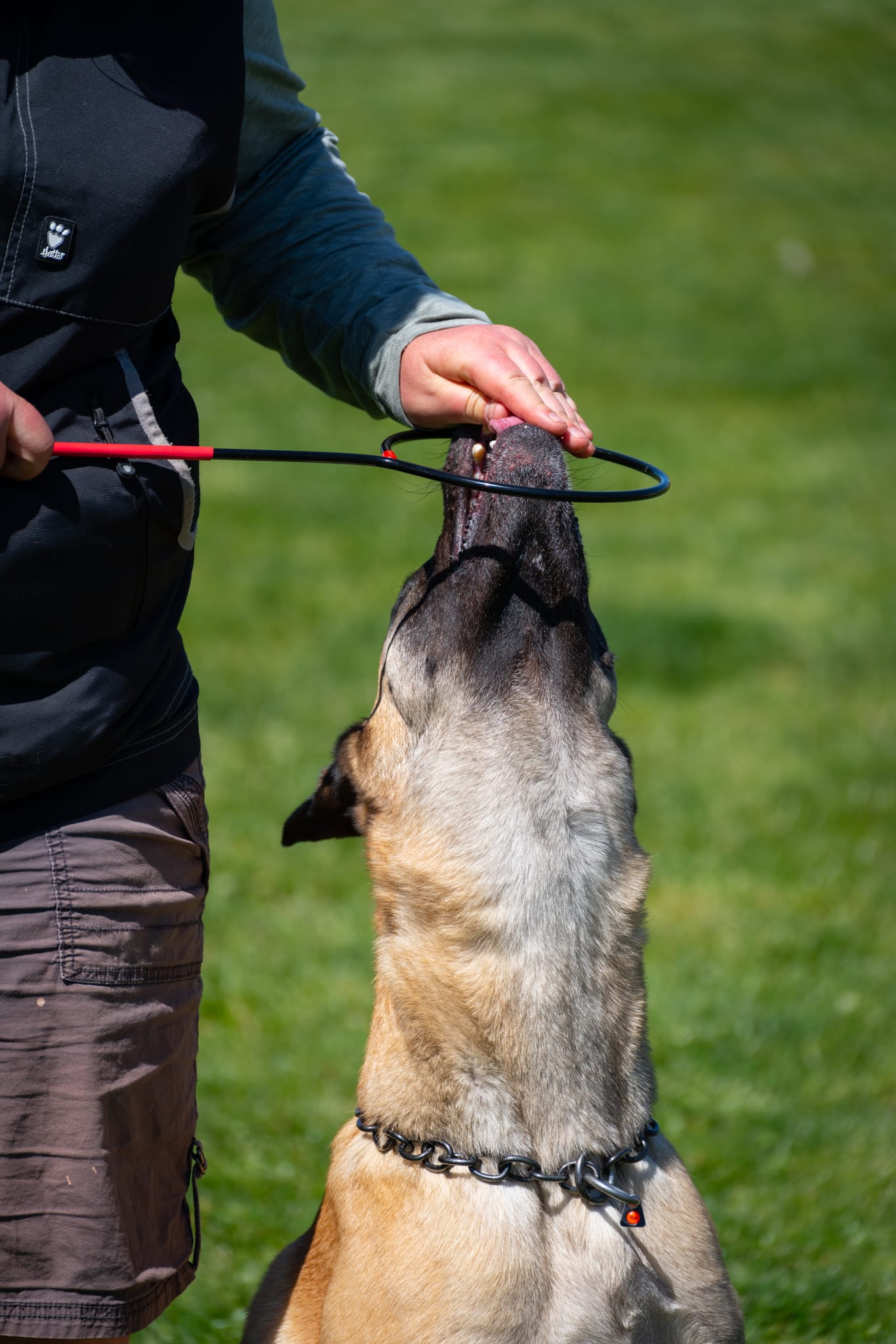
Heeling Stick Dog Training is a specialized technique that, when used correctly and humanely, can be an invaluable tool for refining a dog’s obedience and responsiveness. It’s not about punishment, but about providing clear, consistent communication to guide your dog into the perfect heel position. This method is particularly useful for owners and trainers looking to achieve a highly polished level of obedience, often seen in competitive dog sports or advanced training scenarios. Understanding the nuances of heeling stick training, including its purpose, proper usage, and ethical considerations, is crucial for any dedicated dog owner.
The core concept behind heeling stick training is to use the stick as an extension of your arm, creating a visual and physical cue that helps your dog understand where they should be in relation to you. This technique requires a deep understanding of dog body language, positive reinforcement principles, and a commitment to fair and consistent application. When implemented thoughtfully, it can foster a stronger bond between you and your dog, built on mutual understanding and clear communication.
Understanding the Purpose of a Heeling Stick
A heeling stick, often a short, lightweight stick or whip, is fundamentally a communication tool. Its primary purpose in heeling stick dog training is not to strike or intimidate the dog, but to use its presence and movement to guide the dog’s attention and body position. Think of it as a pointer or a redirector. When a dog drifts out of position during a heel, a gentle tap or a visual cue with the stick can encourage them to return to the correct spot.
Enhancing Communication Beyond Verbal Cues
Dogs often respond best to a combination of signals. While verbal commands are essential, they can sometimes be ambiguous, especially in distracting environments. The heeling stick adds a visual and tactile dimension to your communication. It can signal “move closer,” “straighten up,” or “stay with me” in a way that words alone might not convey effectively, especially for dogs that are highly responsive to visual cues. This can be especially helpful for dogs that are easily distracted or have a tendency to wander during a heel.
Achieving Precision in Heelwork
For those aiming for a high level of precision in obedience, such as in dog agility, obedience trials, or even just for a perfectly walkable dog on a leash, the heeling stick can be instrumental. It allows for micro-adjustments to the dog’s position that might be difficult to achieve with hand signals or verbal cues alone. This precision is key to successful competitive performance and a more harmonious walk.
The Role of the Heeling Stick in Advanced Training
In advanced training, the heeling stick can be used to refine very specific aspects of the heel, such as maintaining a perfectly straight line, keeping the dog’s head in the correct position, and ensuring a consistent speed. It’s a tool for polishing, for taking an already good heel and making it exceptional. For instance, a well-timed flick of the stick can be used to prevent a dog from looking away or drifting too far forward.
How to Use a Heeling Stick Safely and Effectively
The effectiveness and ethical application of a heeling stick hinge entirely on how it is used. Misuse can lead to fear, anxiety, and behavioral problems in your dog. Therefore, mastering the technique before applying it to your dog is paramount. It is highly recommended to seek guidance from a professional dog trainer experienced in using heeling sticks.
Starting with the Basics: Introducing the Stick
Before you even think about using the stick on your dog, your dog needs to be comfortable with its presence. Start by simply having the stick visible while you interact positively with your dog – offer treats, praise, and engage in play. Do not wave it around or make sudden movements. The goal is for the dog to associate the stick with good things, not with discomfort or alarm.
Gentle Guidance: The Tap and Redirect
When you begin integrating the stick into your training sessions, the approach should be gentle and precise. The stick should never be used to hit or punish. Instead, it’s used for light, consistent taps or nudges. For example, if your dog is lagging behind or moving too far to the side, a light tap on their flank or rear can encourage them to move back into the correct heel position. The key is a very light touch, just enough to get their attention and guide them.
Timing is Everything
The power of the heeling stick lies in its timing. The moment your dog starts to drift is the moment you should use the stick. If you wait too long, the dog won’t associate the correction with the action. Conversely, if you use it after the dog has already corrected itself, you risk confusing them. This precision requires practice and observation on your part.
Positive Reinforcement is Key
Using a heeling stick should always be paired with positive reinforcement. When your dog is in the correct heel position, offer verbal praise, a treat, or a gentle pat. This reinforces the desired behavior and ensures the dog understands that being in the right place leads to good outcomes. The stick is a guidance tool, not the sole means of training. Positive reinforcement solidifies the learning.
When to Consider Heeling Stick Training
Heeling stick training is generally considered an advanced technique. It’s most beneficial for dogs that have a solid foundation in basic obedience and are struggling with the finer points of heeling. If your dog is fearful, anxious, or aggressive, or if you are new to dog training, it’s best to focus on positive reinforcement methods like dog training elite san antonio or how to train a doberman dog that do not involve tools that could be misinterpreted as punitive.
Ethical Considerations and Alternatives
The use of any training tool, including a heeling stick, must be approached with a strong ethical framework. The dog’s welfare and emotional state should always be the top priority. Modern, force-free training methods have proven highly effective and are often preferred by many trainers and owners.
Avoiding Fear and Aversion
The most significant risk with heeling stick training is inadvertently creating fear or aversion in your dog. If the stick is used too forcefully, too often, or at the wrong times, the dog may begin to associate it with punishment, leading to stress, avoidance behaviors, or even aggression. This can damage the trust and bond you have with your dog.
The Importance of Professional Guidance
If you choose to use a heeling stick, seeking guidance from a certified professional dog trainer who specializes in positive methods is essential. They can demonstrate the correct techniques, help you understand your dog’s individual responses, and ensure the tool is used humanely and effectively. They can also help you determine if heeling stick training is truly appropriate for your dog’s temperament and your training goals. This is crucial for implementing techniques like click stick dog training.
Exploring Force-Free Alternatives
Many effective alternatives to the heeling stick exist, focusing entirely on positive reinforcement and reward-based methods. These include:
- Leash Handling: Subtle leash pressure and release can guide a dog into position. Mastering how do i train my dog to heel with leash control is a fundamental skill.
- Luring: Using a treat or toy to guide the dog into the correct position.
- Targeting: Training the dog to touch a target with their nose or paw, which can then be used to guide their body.
- Body Blocking: Using your own body to gently guide the dog.
- Verbal Cues and Hand Signals: Consistent and clear use of these signals, paired with rewards.
These methods build confidence and create a positive learning experience for the dog. Many owners find that techniques like those described in articles about a dog trainer walk next to me nyt can achieve excellent results without the need for a heeling stick.
Conclusion: A Tool for Precision, Not Punishment
Heeling stick training, when executed with expertise, patience, and a deep commitment to the dog’s well-being, can be a powerful tool for achieving exceptional obedience. It offers a unique way to enhance communication and refine a dog’s heeling performance. However, it is a technique that demands a thorough understanding of canine behavior, impeccable timing, and a gentle touch.
Ultimately, the decision to use a heeling stick should be made carefully, weighing its potential benefits against the risks of misuse. For many, focusing on positive reinforcement and force-free methods will provide a more compassionate and equally effective path to a well-behaved canine companion. Remember, the goal of any training is to build a stronger, more trusting relationship with your dog, and that should always be the guiding principle.
