
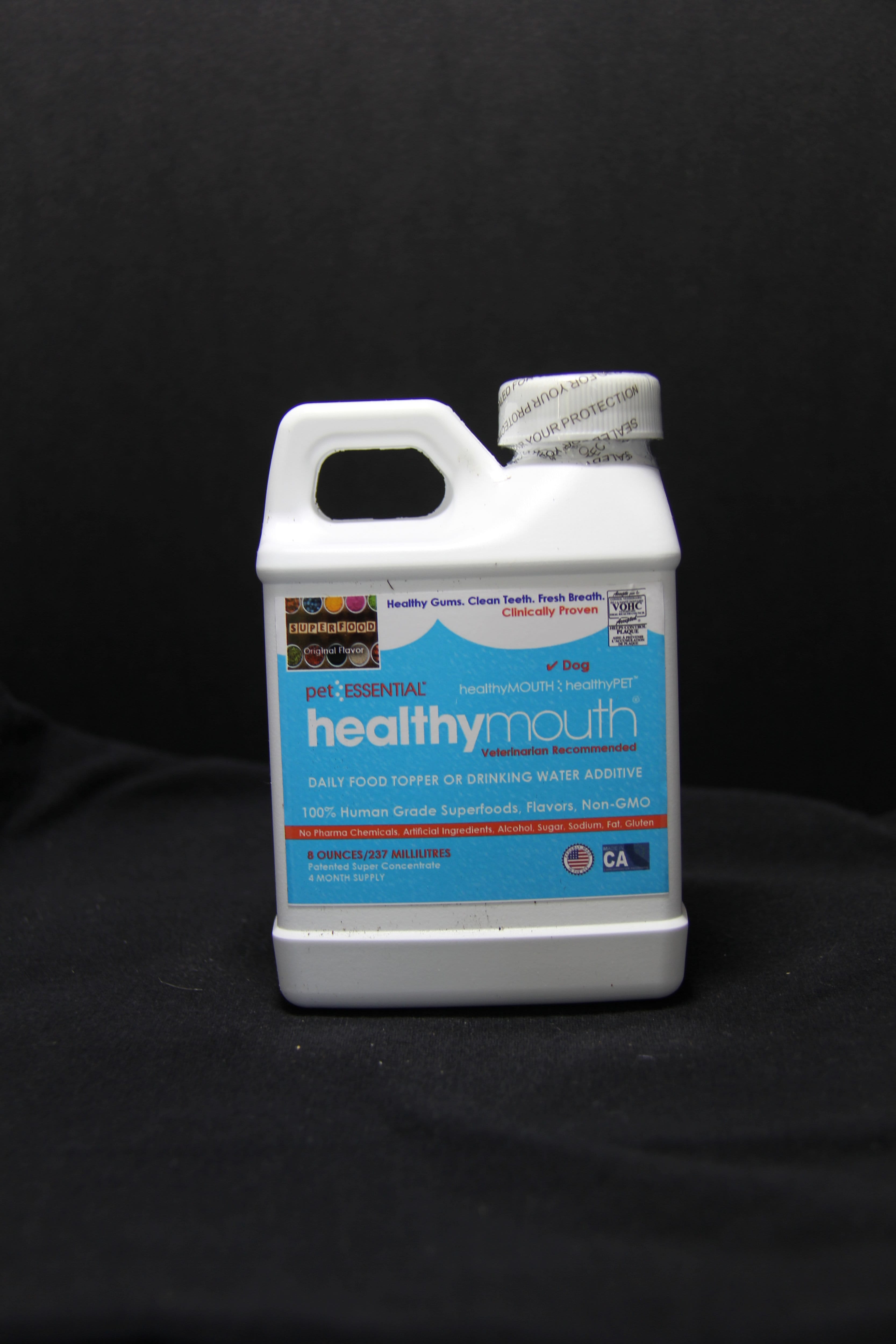
Navigating the vast array of pet products can be overwhelming for owners. Many products claim to enhance our pets’ health, but rigorous scientific evidence often lags behind marketing. One such product that has garnered attention is HealthyMouth, a water additive designed to reduce plaque accumulation and slow the progression of dental disease in pets. This article delves into the plausibility, research, and marketing surrounding HealthyMouth, offering an evidence-based perspective for pet owners.
Understanding the Product and its Ingredients
HealthyMouth is presented as a solution for pet dental health, with its efficacy attributed to a blend of ingredients. While the specific concentrations are not disclosed, the product lists several components, with papain and zinc gluconate identified as “active” ingredients. The rationale for including other ingredients, such as pomegranate, yucca, blueberry, vitamins B2 and C, clove, and cinnamon, is not always clearly defined. It’s important to note that the “organic” claim, while appearing on the label, has little established relevance to the product’s health benefits. The canine and feline formulations appear to be identical, with the addition of taurine in the feline version.
Ingredient-Specific Analysis
- Pomegranate: Some in vitro studies suggest antibacterial effects, and human clinical trials indicate potential benefits for oral rinses containing pomegranate extract in reducing plaque and bacteria. However, there is a lack of clinical trials in dogs and no trials in cats, apart from unpublished studies by HealthyMouth.
- Yucca: No in vitro research supports yucca extract’s benefit in preventing or treating dental disease. While some canine and feline clinical trials have reported a decrease in flatulence odor, its efficacy for dental health remains unproven. Gastrointestinal symptoms have been reported as a potential adverse effect.
- Zinc Gluconate: While claimed to be an antibacterial agent, human clinical trials of zinc gluconate in rinses and toothpastes are often combined with other antibacterials, making it difficult to isolate its effect. No clinical trials in dogs or cats have investigated its use for dental disease. Excessive zinc ingestion can lead to severe health complications.
- Blueberry: A single study suggested a particular blueberry extract might weakly inhibit bacterial aggregation in the human mouth. However, there is no substantial evidence in animal models or clinical trials to support its use in preventing or treating dental disease.
- Papain: This enzyme, derived from papaya, has not been extensively studied for dental disease prevention. Safety concerns include potential esophageal perforation and allergic reactions in humans, as well as a potential risk of reducing blood clotting.
- Vitamins B2 and C: These are often included as antioxidants. While oxidative damage can be a concern, its role in disease prevention is complex, and the claim of “boosting the immune system” is considered a marketing tactic rather than a scientifically validated benefit.
- Clove and Cinnamon: These appear to be primarily for flavoring. While the company claims pets enjoy the taste, there is no research to suggest any benefit or risk associated with these in dogs and cats for dental health.
Clinical Trials and VOHC Acceptance
HealthyMouth has received a seal of acceptance from the Veterinary Oral Health Council (VOHC), an organization that evaluates products for their efficacy in preventing and treating dental disease in animals. The VOHC requires clinical trial evidence to support product claims, adhering to specific protocols.
However, concerns arise regarding the studies HealthyMouth uses to substantiate its claims. The two clinical trials in dogs were funded by the product’s manufacturer. While the lead investigator, Dr. Jean Dodds, is a respected veterinarian, her prominent advocacy for “holistic” veterinary medicine introduces a potential for bias. The lack of peer-reviewed publication and the reliance on industry-funded research necessitate careful examination of the methodology.
The trials, conducted over 28 days with 40 dogs each at a greyhound rescue center, reportedly showed positive effects on plaque scores. However, crucial methodological weaknesses were noted: the absence of blinding (where neither the subjects nor the evaluators know who receives the treatment) and the allocation of subjects based on kennel housing rather than randomization. Blinding is essential to mitigate bias, and its absence significantly lowers the evidentiary value of the trial. No clinical trials in cats have been made public, and independent evaluations of HealthyMouth remain scarce.
Marketing Claims and Responsible Practices
The marketing of HealthyMouth often includes testimonials from satisfied customers, which, while persuasive, do not constitute reliable evidence of efficacy. A positive aspect is the company’s positioning of HealthyMouth as an adjunct to, rather than a replacement for, established dental care practices like home care and professional cleanings.
However, the marketing also employs misleading strategies, such as the use of terms like “natural” and claims of “no chemicals,” which are scientifically inaccurate. While some ingredients may carry risks in high doses, the lack of transparency regarding ingredient concentrations makes definitive safety assessments challenging. The reliance on the “naturalistic fallacy” – the assumption that natural means safe – is a concerning marketing tactic, as historically, some natural remedies have proven harmful.
Conclusion and Recommendations
While there is limited in vitro and human data suggesting a theoretical plausibility for some ingredients to benefit dental health, the evidence for HealthyMouth in veterinary species is not robust. The company-funded canine trials showed benefits, but methodological limitations, including the lack of blinding and unpublished data, warrant caution in interpreting the results. There is no significant evidence of harm, but safety has not been extensively tested in dogs and cats for all ingredients.
HealthyMouth is marketed responsibly in some aspects, emphasizing its role as a supplementary treatment. However, misleading advertising tactics are also employed.
Ultimately, while HealthyMouth is to be commended for taking steps toward VOHC approval, the current evidence does not definitively establish its meaningful efficacy or safety. Further independent, well-designed research is needed to clarify its benefits. Pet owners are encouraged to prioritize evidence-based dental care, including regular veterinary check-ups, professional cleanings, and appropriate home hygiene practices.
References:
- Veterinary Oral Health Council (VOHC) Protocol. http://vohc.org/protocol.htm
- HealthyMouth Website – Clinical Trials Information. https://www.healthymouth.com/dogs/clinical-trials
- Studies on Pomegranate Extract:(http://www.ncbi.nlm.nih.gov/pubmed/21206931),(http://www.ncbi.nlm.nih.gov/pubmed/19170139)
- Studies on Yucca Extract:(http://www.ncbi.nlm.nih.gov/pubmed/11294313),(http://www.ncbi.nlm.nih.gov/pubmed/9368959)
- Study on Blueberry Extract:(http://www.ncbi.nlm.nih.gov/pubmed/12058987)
- The Naturalistic Fallacy. http://en.wikipedia.org/wiki/Naturalistic_fallacy#Appeal_to_nature
