
For horse owners residing in regions that experience frigid temperatures and heavy snowfall during winter, selecting a breed that can naturally withstand these harsh conditions is paramount. A horse well-adapted to cold weather will be easier to maintain in good health and condition, whether it’s a pasture companion or a riding partner. While horses possess natural resilience to cold, certain breeds are exceptionally equipped to thrive in winter environments. This article explores five Hardy Horse Breeds that are ideally suited for life in cold climates.
Icelandic Horse
Originating from the Nordic “land of fire and ice,” Icelandic Horses are renowned for their robustness and exceptional ability to endure severe winter weather. Their hardiness is attributed to several key adaptations. Firstly, these horses boast a dense, double-layered coat that provides superior insulation. This thick undercoat, combined with a long outer coat, gives the breed its characteristic shaggy appearance during winter months. Furthermore, their thick, coarse manes and tails offer crucial protection against biting winds and extreme cold.
The Icelandic Horse’s relatively small stature and stocky build are also advantageous for conserving body heat. Their lower surface area to body mass ratio means they require less energy to maintain a comfortable internal temperature compared to larger breeds. Finally, Icelandic Horses are highly efficient metabolizers of food, enabling them to sustain muscle and fat reserves even when forage is scarce. These low-maintenance equines are perfectly at home in winter conditions.
Norwegian Fjord
Norwegian Fjord horses were meticulously bred to thrive in Norway’s challenging cold winter climate. Similar to Icelandic Horses, they possess a distinctive thick, heavy double coat that offers excellent insulation against the cold. This waterproof outer layer also ensures they remain warm and dry, even in snowy or wet conditions. Norwegian Fjords have a compact, muscular build that aids in conserving body heat, and their strong hooves provide excellent traction on rugged terrain. Often referred to as “easy keepers,” these horses typically do well on average-quality forage and may require minimal or no grain in their diet.
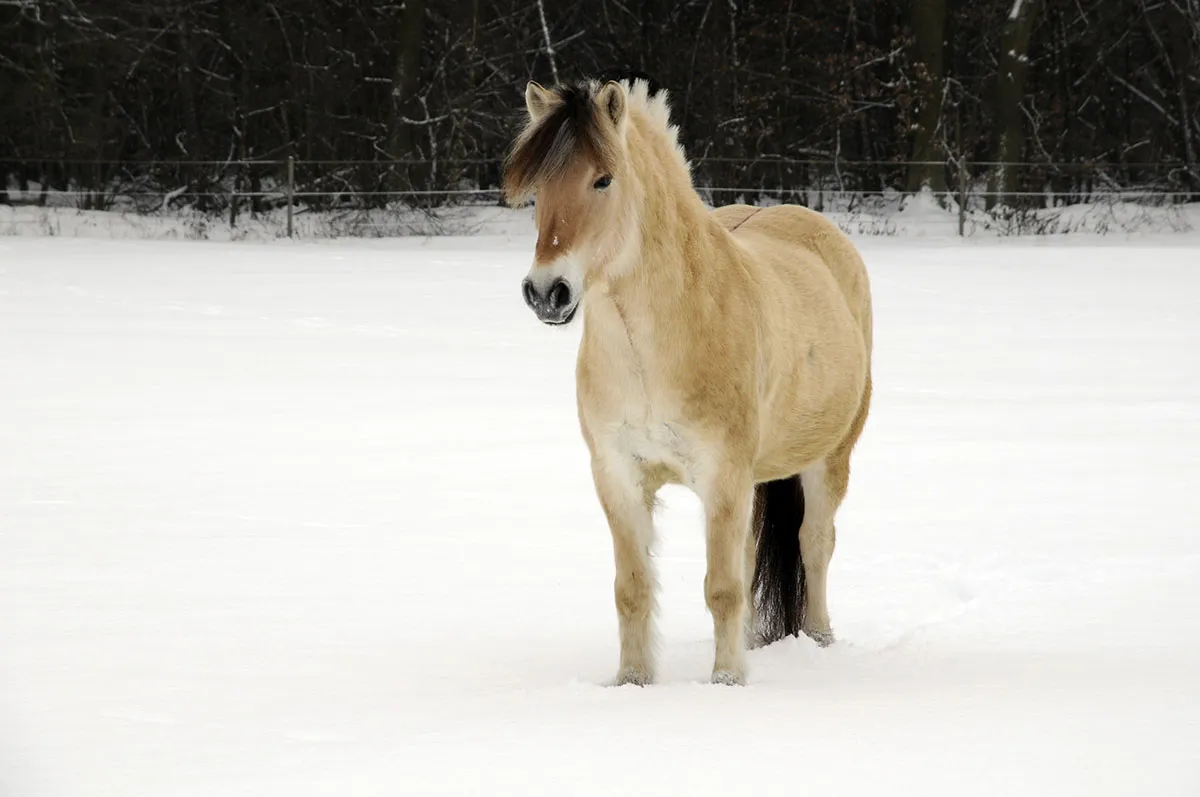 A Norwegian fjord horse stands in the snow
Shetland Pony
Shetland Ponies are native to the harsh environment of the Shetland Islands in the North Sea, a setting that has honed their survival skills in winter. Their exceptionally thick double coat acts as a natural insulator, meaning these fluffy ponies generally do not require blankets to stay warm. Their small stature and sturdy build contribute to efficient energy conservation and heat retention.
Furthermore, Shetland Ponies possess highly efficient digestive systems, enabling them to effectively extract and maximize nutrients from forage during the winter months. Research has indicated that Shetland Ponies can lower their metabolic rate and body temperature to conserve energy when winter forage is limited, demonstrating their remarkable adaptation to cold conditions.
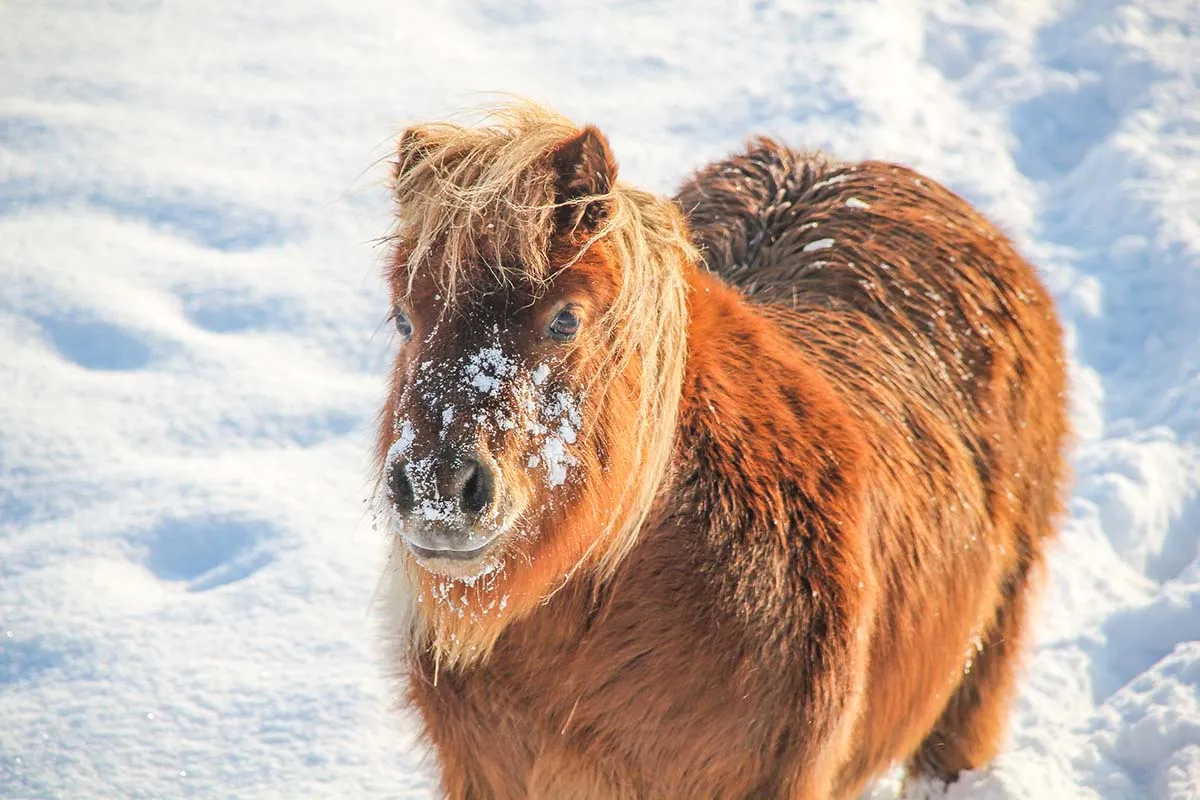 A cute chestnut Shetland pony in the snow with flakes on snow on his nose and face
Mustang
Mustangs, having roamed the Western United States freely for centuries, have evolved to withstand harsh winter weather without human assistance. During winter, they develop a thick coat that aids in regulating body temperature and providing warmth. Their compact and sturdy physique helps them retain body heat, and they are known for their natural surefootedness and hardy hooves, which are essential for navigating icy and rocky terrain.
Mustangs exhibit a remarkable ability to forage in areas that other animals might avoid, ensuring their sustenance during challenging periods. In the wild, they instinctively band together and utilize natural topography for shelter against winter storms. These resilient equines are a testament to nature’s design for survival in extreme environments.
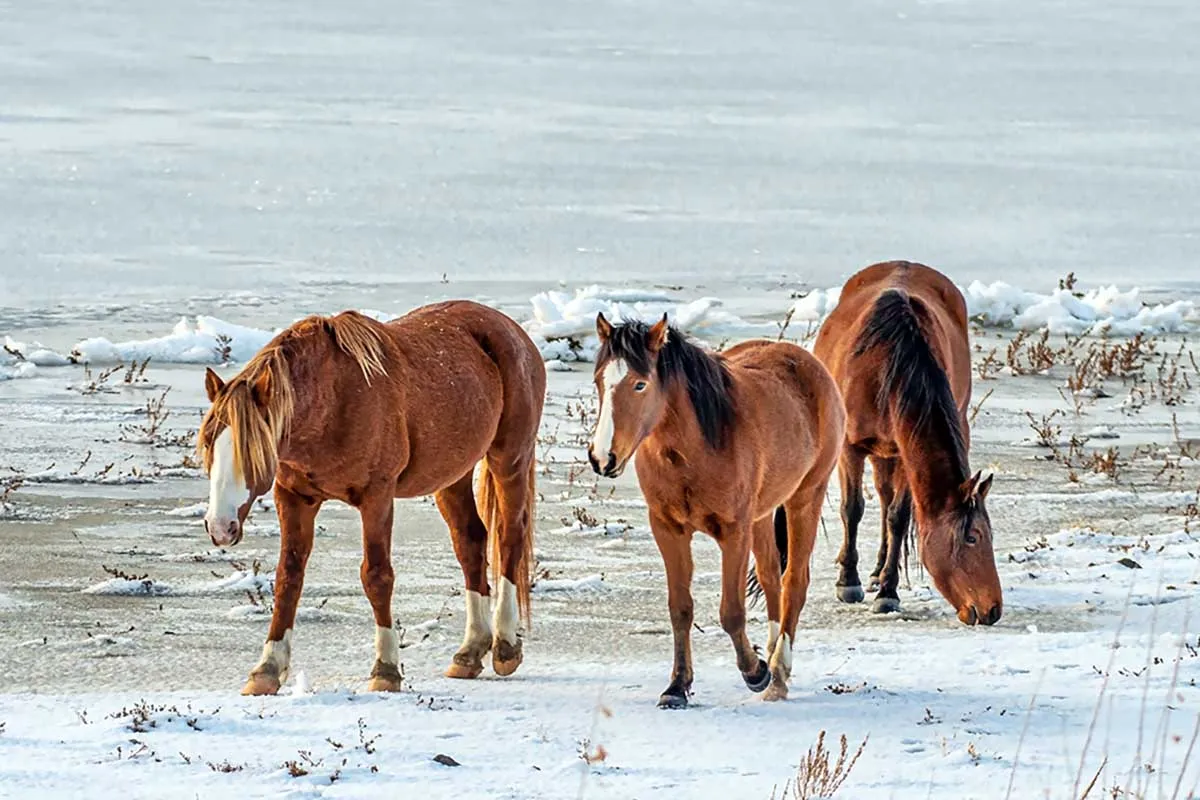 Three bay and chestnut mustang horses browse for forage on the icy range in winter
Shire
As one of the largest and hardiest horse breeds, the Shire, originating from the English countryside, is exceptionally well-suited to cold weather and rugged landscapes. These gentle giants possess a thick double hair coat that provides crucial insulation against the cold. Additionally, a layer of subcutaneous fat serves as an energy reserve, providing the necessary resources for generating body heat. Shire horses are equipped with strong, sturdy hooves that allow them to navigate slippery terrain with ease. The characteristic feathering—long hair on their lower legs—further helps to keep their extremities warm.
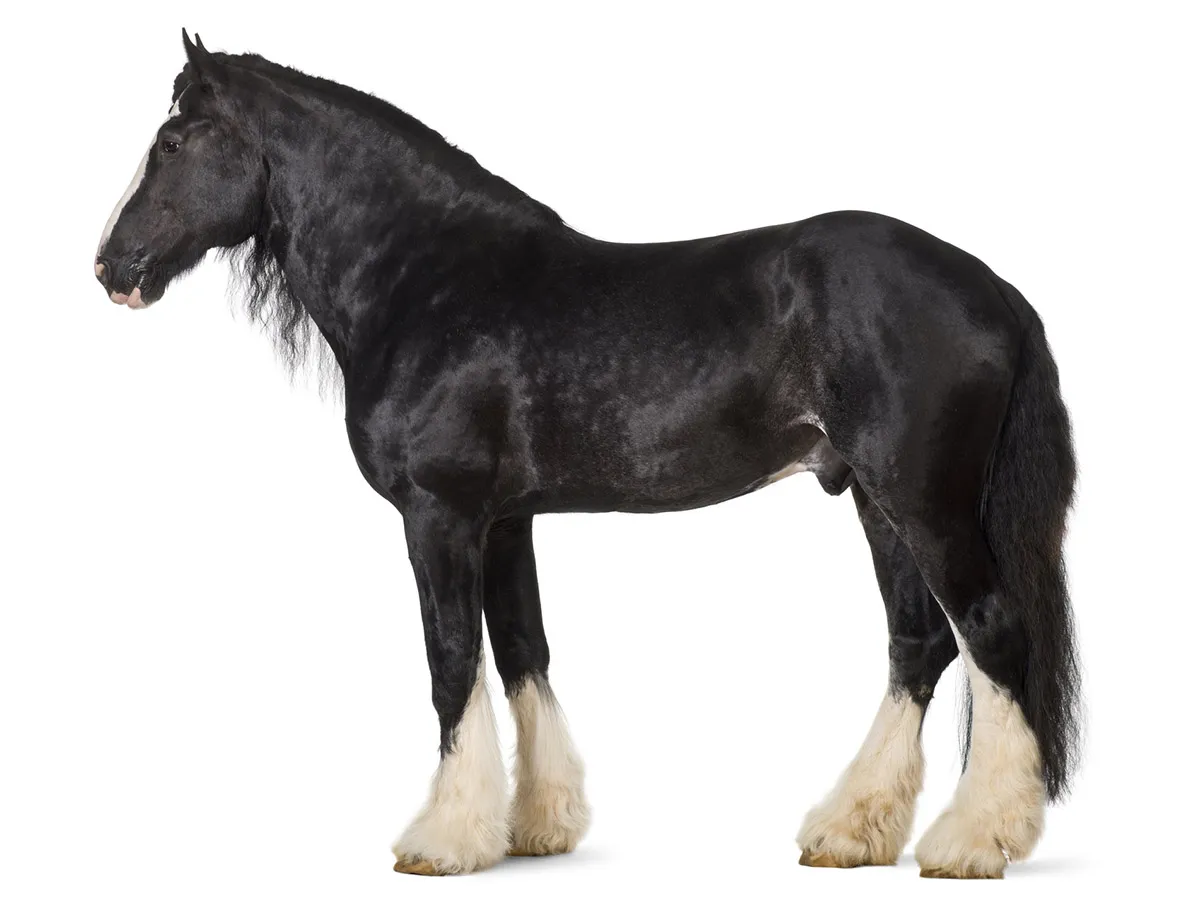 The silhouette of a black shire horse standing against a white background.
Each of these hardy horse breeds possesses unique characteristics that facilitate their adaptation and survival in winter environments. A common thread among them is the presence of thick coats, sturdy body types, and efficient metabolisms. For owners seeking peace of mind that their horse will remain healthy and comfortable throughout the winter, selecting a breed with these inherent qualities is highly recommended.
