
Getting started with a new sporting puppy is an exciting journey, but equipping yourself with the right tools is crucial for success. The world of Gun Dog Training Products can seem overwhelming at first, with countless gadgets and gizmos all promising to turn your pup into a world-class retriever. But don’t worry. At its core, successful training relies on a few key essentials that build a strong foundation of obedience, retrieving desire, and control. This guide will walk you through the must-have items to invest in, explaining their purpose and how to choose the best options for you and your canine partner.
Building a solid training regimen is about clear communication and consistency. While basic obedience is fundamental, certain specialized tools are designed to simulate hunting scenarios and refine your dog’s natural instincts. Much like teaching foundational commands, this process requires patience and the right equipment. For instance, creating a calm home environment is key, which can be related to addressing issues like nuisance barking, a concept explored in our guide on how to get dog to stop barking at night, as a well-behaved dog at home is often more focused in the field.
The Cornerstone of Retrieving: Dummies and Bumpers
The single most important piece of equipment you will buy is the training dummy, also known as a bumper. These are not toys; they are tools designed to simulate a downed bird. They teach your dog how to properly search for, pick up, and carry game back to you.
Types of Dummies
You’ll encounter a variety of dummies, each with a specific purpose:
- Canvas Dummies: These are the classic, all-purpose choice. They are durable, hold scent well, and are perfect for everyday drills on both land and water. They typically come in white for visibility or orange for blind retrieves.
- Plastic/Rubber Dummies: Ideal for water training, these float high and are easy for dogs to see and grip. Many have a knobby texture that encourages a soft mouth.
- Bird-Like Dummies: Many manufacturers now produce dummies designed to simulate the look and feel of real birds, complete with wings or a lifelike shape. These are excellent for transitioning a dog from bumpers to actual game.
“The goal is to make the transition from a synthetic dummy to a real bird as seamless as possible,” notes Dr. Sarah Miller, a leading expert in sporting dog behavior. “Using a variety of textures and shapes early on prevents a dog from becoming dependent on one specific feel.”
When starting, a few 2-inch or 3-inch white canvas dummies are all you need. As your dog progresses, you can introduce different types and colors to increase the difficulty and prepare them for more complex retrieving scenarios.
 A collection of various gun dog training products including canvas dummies, plastic bumpers, and a whistle on a wooden surface
The Sound of Command: Training Whistles
A whistle is your long-distance voice in the field. A dog’s hearing is far superior to ours, and a whistle blast cuts through wind and noise much more effectively than a verbal command. Consistency is key, so you’ll use specific pip sequences for commands like “sit,” “come,” and “change direction.”
How to Choose the Right Whistle
The most common and trusted brand is Acme, with the 210.5 and 211.5 models being favorites among retriever trainers. The 210.5 has a higher pitch, which travels far and is great for spaniels, while the 211.5 has a lower tone preferred by many retriever handlers. The most important factor is choosing one tone and sticking with it. Your dog will learn to associate that specific sound with your commands. Always keep your whistle on a lanyard around your neck so it’s readily available and won’t get lost.
Gaining Control in the Field: Check Cords and Leads
Before you can trust your dog to work off-leash hundreds of yards away, you need to build absolute control at closer distances. A check cord is essentially a long rope or leash, typically 20 to 50 feet long, that allows the dog to range out while you still maintain a physical connection.
A check cord is invaluable for:
- Enforcing the “Here” Command: It allows you to gently guide the dog back to you, preventing them from ignoring the command and reinforcing compliance.
- Steadying: It helps teach a dog to remain steady (staying put) while a bird or dummy is thrown.
- Quartering Drills: For upland training, it helps guide the dog to work in a zig-zag pattern in front of the handler.
A simple, durable rope check cord that won’t snag easily is the best choice. Avoid materials that absorb a lot of water or have handles that can get caught on brush. This foundational control work is critical before moving on to more complex behaviors, similar to how you must master basic commands before teaching fun tasks. If you’re interested in building that bond through training, you might enjoy reading about tricks you should teach your dog.
Advancing the Retrieve: Dummy Launchers
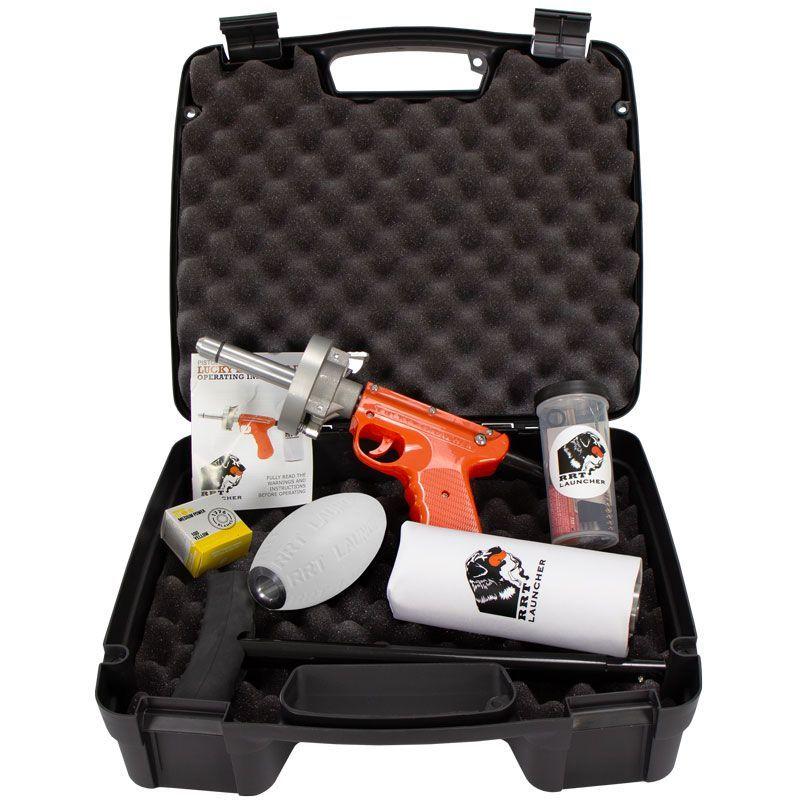
As training progresses, you’ll need to simulate the distance and arc of a real shot bird. This is where dummy launchers come in. These devices use a .22 blank cartridge to propel a dummy hundreds of feet, providing a loud “bang” to accustom the dog to the sound of a gun and creating a long-distance mark.
Hand-held launchers are the most common for amateur trainers. They are excellent tools for teaching marking skills and building a dog’s confidence in retrieving at a distance. Always introduce the launcher carefully, starting from a distance to ensure your dog is not gun-shy. Safety is paramount, so treat a dummy launcher with the same respect you would a firearm.
 A handler in a field using a whistle to command a Labrador retriever during a gun dog training session
The Role of E-Collars in Modern Training
Electronic collars, or e-collars, are one of the most misunderstood gun dog training products. When used correctly, they are not punishment devices but rather a communication tool, much like a long-distance check cord. Modern e-collars provide stimulation that can range from a gentle vibration (like a pager) to a mild nick, used to reinforce known commands at a distance.
The key to using an e-collar ethically and effectively is to first teach the command thoroughly with positive reinforcement. The collar is then used to ensure compliance when the dog is far away or highly distracted. It is a tool for advanced training and should only be used after seeking guidance from an experienced professional. Responsible use is non-negotiable. Using treats is a great way to reinforce positive behavior, and you can learn more about the best healthy dog treats for training to complement your program.
Frequently Asked Questions (FAQ)
What is the first gun dog training product I should buy?
The very first item you should purchase is a basic set of 2-3 canvas training dummies. Retrieving is the core of the gun dog’s job, and you can start teaching fun retrieves and proper holding techniques from a very young age.
Do I really need a whistle for my dog?
Yes, a whistle is considered essential. Your voice can convey emotion and will not carry as far or as clearly as a whistle. A whistle provides a consistent, unemotional command that your dog can hear and understand from great distances, which is critical for safety and control in the field.
At what age can I start using these training products with my puppy?
You can start introducing a small, soft dummy for fun retrieves as early as 8-10 weeks old. Basic obedience with a lead can also start immediately. Hold off on more advanced tools like launchers and e-collars until the dog is more mature (typically 6-8 months or older) and has mastered foundational commands.
Are launchers loud enough to make a dog gun-shy?
Yes, they can be if introduced improperly. Always start with the launcher at a significant distance from the dog, ideally having another person operate it while you are with your puppy. Make the experience positive with a fun retrieve afterward. Gradually decrease the distance as the dog shows comfort and excitement for the “bang.”
How many dummies do I need for training?
To start, 3-4 dummies are sufficient for basic drills. As you advance to more complex marking drills like doubles or triples (simulating multiple downed birds), you will need more. Most amateur trainers find that a collection of 6-10 dummies of various types is plenty for their needs.
Your Path to a Great Gun Dog
Building a skilled and reliable gun dog is a marathon, not a sprint. It’s a rewarding process that forges an incredible bond between you and your animal. By investing in the right gun dog training products from the start, you are setting yourself up for success. Begin with the basics—dummies, a whistle, and a check cord—and focus on building a strong foundation of enthusiasm and obedience. As your skills and your dog’s abilities grow, you can expand your toolkit to tackle the most challenging scenarios the field has to offer.
