
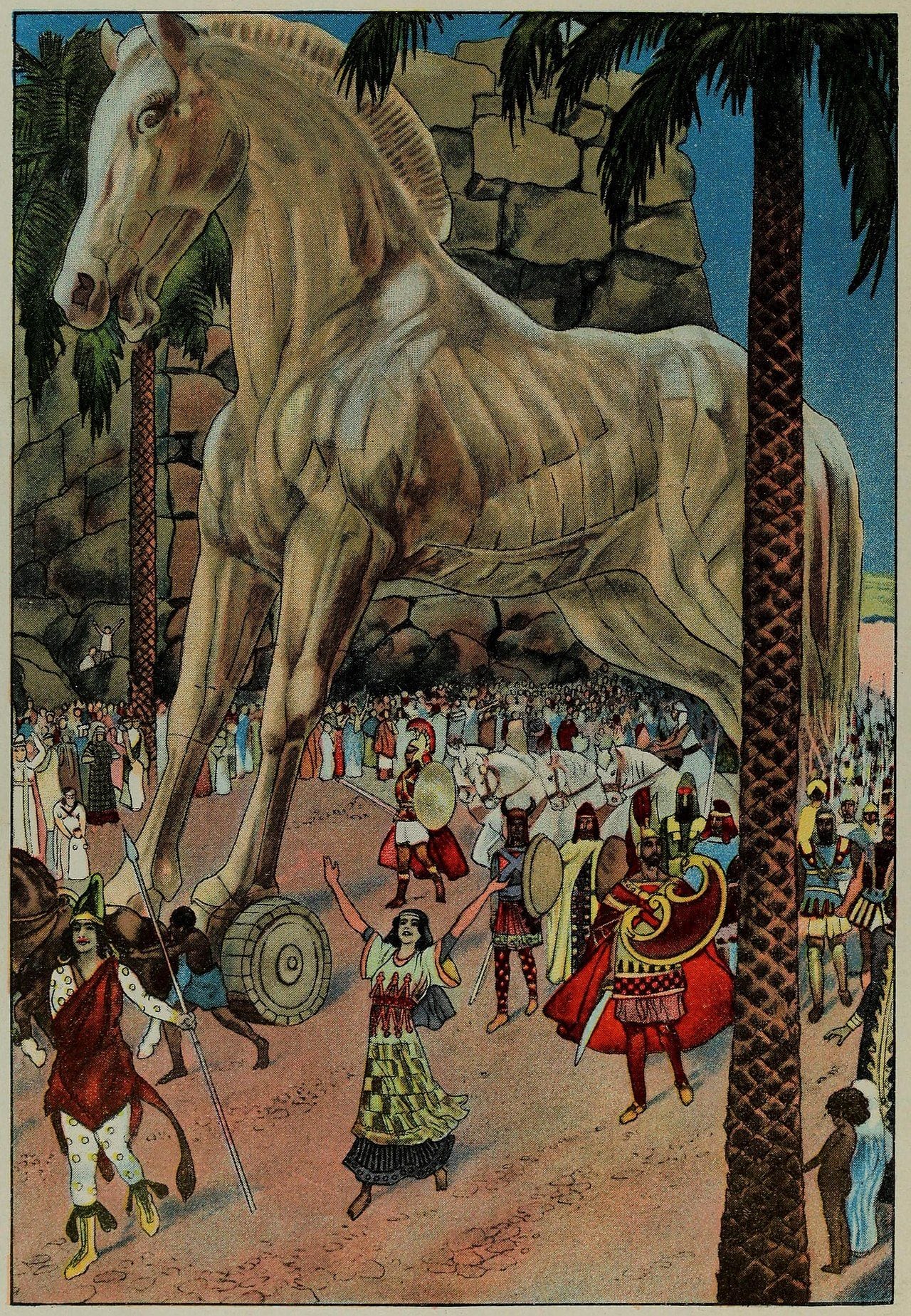
The tale of the Trojan Horse is one of the most enduring and dramatic stories from Greek mythology, a pivotal moment in the legendary Trojan War. It’s a narrative steeped in cunning, bravery, and the ultimate downfall of a seemingly impregnable city. This story, often recounted and reinterpreted, highlights the strategic brilliance and perhaps the desperate measures employed by the Achaeans (Greeks) to achieve victory after years of futile siege. To truly grasp the impact of this deception, one must delve into the events that led to its conception and the ingenious execution that followed. Understanding the story of the trojan horse provides a fascinating glimpse into ancient warfare and storytelling.
The Trojan War itself was a conflict of epic proportions, said to have lasted for ten long years. It began as a consequence of the abduction of Helen, the wife of Spartan King Menelaus, by the Trojan prince Paris. Menelaus, with his brother Agamemnon, King of Mycenae, led a vast coalition of Greek forces to Troy to reclaim Helen and exact revenge. Despite numerous battles, heroic duels, and the intervention of gods and goddesses, the Greeks could not breach the formidable walls of Troy. The war dragged on, a brutal stalemate that tested the endurance and resolve of both sides. This prolonged struggle set the stage for a solution that was as unconventional as it was effective.
The Genesis of a Devious Plan
Frustrated by the unyielding defenses of Troy and weary from years of combat, the Achaean leaders, including the wily Odysseus, King of Ithaca, devised a daring plan. Odysseus, renowned for his intellect and cunning, is credited with conceiving the idea of the Trojan Horse. The strategy was not to assault the city walls directly but to infiltrate them through a carefully orchestrated ruse. The plan involved feigning a retreat, leaving behind a massive wooden horse as a supposed offering to the goddess Athena, a deity who had favored the Greeks in battle. This monumental gift, however, concealed a contingent of elite Greek warriors within its hollow belly.
The Wooden Gift and its Hidden Cargo
Under the cover of darkness, a select group of the bravest Greek soldiers, led by Odysseus himself, hid inside the giant wooden horse. The rest of the Greek army then sailed away, making it appear as though they had abandoned the siege and were returning home. They hid their ships behind the nearby island of Tenedos, awaiting the opportune moment to strike. The construction of the horse was a marvel of ancient engineering, hollowed out and crafted with such precision that it could hold dozens of warriors. The Trojans, having endured a decade of war, were desperate for peace and were thus susceptible to such a deceptive offering. The trojan horse story board vividly illustrates the scale and complexity of this undertaking.
The Trojan Acceptance and the Seeds of Destruction
When the Trojans awoke to find the Greek camp empty and the colossal wooden horse standing outside their gates, they were overjoyed. They saw it as a sign that the war was finally over and that the gods were on their side. However, not everyone was convinced. The priest Laocoön famously warned his countrymen, “Do not trust the horse, Trojans. Whatever it is, I fear the Greeks even when they bring gifts.” He even hurled a spear at the horse’s side, which reportedly echoed with the sounds of the hidden soldiers within. But his warnings went unheeded, perhaps due to divine intervention or the overwhelming desire for peace.
The Trojans, celebrating their apparent victory, decided to bring the horse into the city as a trophy and a testament to their triumph. This act of bringing the “gift” past their impenetrable walls sealed their fate. They celebrated throughout the night, indulging in feasting and revelry, their guard down, completely unaware of the deadly secret harbored within the wooden structure. The acceptance of the horse marked the beginning of the end for Troy.
The Fall of Troy
As the city slept, the hidden Greek warriors emerged from the horse. They silently opened the city gates from within, allowing the returning Greek army, who had sailed back under the cover of darkness, to pour into Troy. The ensuing battle was a brutal and swift massacre. The Trojans, caught completely by surprise and deep in their celebratory stupor, were overwhelmed. The city was sacked, its temples desecrated, and its people, including King Priam, were slain. Helen was recovered by Menelaus, and the victorious Greeks began their long journeys home, their arduous quest finally complete. This dramatic turn of events solidified the horse’s place in history and legend, raising the question, “is the horse of troy a true story?”.
Legacy and Symbolism
The story of the Trojan Horse has transcended its mythological origins to become a potent symbol of deception and infiltration. The phrase “Trojan Horse” is now commonly used to describe any trick or strategy that causes a target to invite an enemy into a securely protected place. In the digital age, a “Trojan horse” is a type of malware that disguises itself as legitimate software to trick users into installing it, highlighting the enduring relevance of this ancient tale. The narrative serves as a timeless reminder that victory can sometimes be achieved not through brute force, but through intelligence, strategy, and a deep understanding of one’s adversary. For those curious about the historical context, understanding where did the story of the trojan horse come from is key.
While the historical accuracy of the Trojan War and the horse itself remains a subject of debate among scholars, the story’s cultural impact is undeniable. It has inspired countless works of art, literature, and film, continuing to captivate audiences with its dramatic narrative of strategy and consequence. The tale underscores the ancient Greek appreciation for metis, or cunning intelligence, and its crucial role in warfare and life. The enduring power of this story lies in its exploration of human nature – our desires, our fears, and our capacity for both great bravery and profound deception. It remains a powerful testament to the idea that sometimes, the greatest battles are won not on the battlefield, but in the minds of men. The question of whether is the story of the trojan horse true continues to fuel fascination.
Frequently Asked Questions about the Trojan Horse
Q1: Who came up with the idea of the Trojan Horse?
A1: The strategist most credited with the idea of the Trojan Horse is Odysseus, the clever king of Ithaca.
Q2: Why did the Trojans bring the horse into their city?
A2: The Trojans believed the horse was a gift and a sign that the war was over. They wanted it as a trophy to commemorate their victory and appease the gods.
Q3: Did the Trojan Horse really exist?
A3: While the Trojan War is believed to have historical roots, the existence of the giant wooden horse as described in the myths is debated by historians. It may be a symbolic representation of a siege tactic.
Q4: What happened to the Greek soldiers inside the horse?
A4: The soldiers emerged from the horse at night, opened the city gates for the returning Greek army, and participated in the sacking of Troy.
Q5: What is the modern meaning of a “Trojan Horse”?
A5: In modern terms, a “Trojan Horse” refers to a deceptive tactic or piece of malware that appears harmless but contains a hidden malicious payload.
Q6: How long did the Trojan War last?
A6: According to mythology, the Trojan War lasted for ten years.
Q7: What was the primary goal of the Greeks in the Trojan War?
A7: The main objective was to reclaim Helen, the wife of King Menelaus, who had been taken by the Trojan prince Paris, and to conquer the city of Troy.
In conclusion, the story of the Trojan Horse is a compelling narrative of strategic brilliance and devastating deception that led to the fall of Troy. It remains a powerful symbol in Western culture, illustrating how cunning can overcome even the mightiest defenses. The legacy of the Trojan Horse continues to resonate, reminding us of the enduring power of stories and the complex nature of human conflict and ingenuity.
