
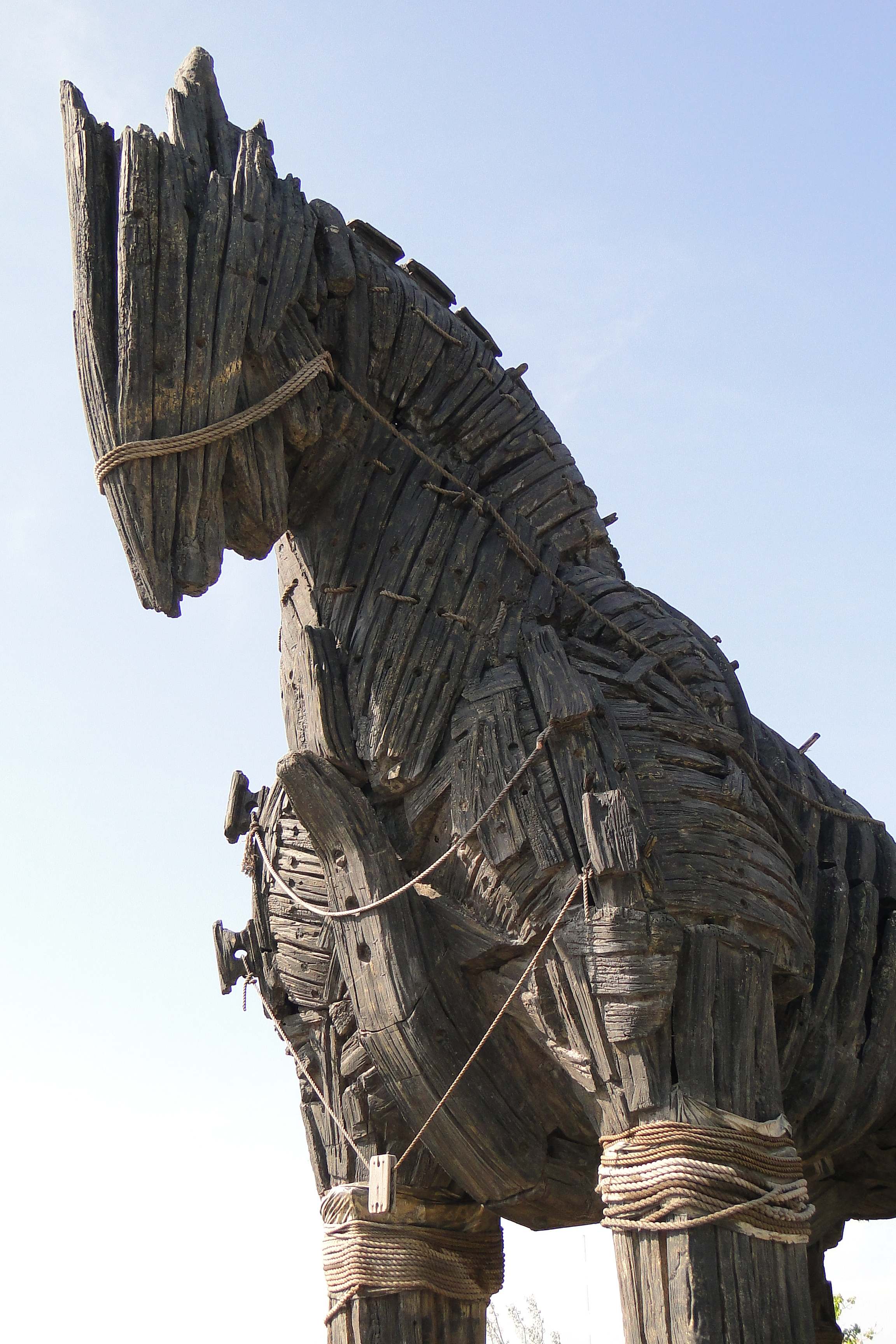
The annals of history are filled with epic tales of conquest, heroism, and deception, but few are as enduring and iconic as the Greek Horse Story. This is not just a myth; it’s a powerful narrative of ingenuity and warfare that has captivated audiences for millennia, a testament to the idea that the sharpest weapon is the mind. The story of the Trojan Horse marks the dramatic conclusion to the decade-long Trojan War, a conflict steeped in passion, pride, and divine intervention. It revolves around a colossal wooden horse, an offering of peace that concealed a belly full of destruction, ultimately leading to the fall of the impregnable city of Troy. This article delves deep into the layers of this legendary tale, exploring its origins, the masterminds behind it, and its lasting legacy in our modern world. Understanding this narrative provides a window into the ancient world’s strategic thinking, a concept deeply explored in the story of the trojan horse greek mythology.
The Seeds of Conflict: Why the Trojan War Began
To fully appreciate the cunning behind the wooden horse, one must first understand the conflict that necessitated such a desperate and brilliant measure. The Trojan War was not a simple battle for territory; it was a war sparked by love, betrayal, and a divine pact. It all began with the “Judgment of Paris.”
At the wedding of the hero Peleus and the sea-nymph Thetis, Eris, the goddess of discord, tossed a golden apple into the crowd, inscribed “For the Fairest.” Three goddesses—Hera, Athena, and Aphrodite—claimed the prize. Zeus, wisely refusing to judge, appointed Paris, a prince of Troy, to decide the winner. Each goddess offered him a bribe: Hera promised power, Athena offered wisdom and victory in battle, and Aphrodite tempted him with the most beautiful woman in the world, Helen of Sparta. Paris chose Aphrodite, a decision that would seal his city’s fate.
Helen was already married to Menelaus, the king of Sparta. When Paris visited Sparta on a diplomatic mission, he abducted Helen (or she willingly eloped, depending on the account) and took her back to Troy. Enraged, Menelaus invoked a sacred oath sworn by all of Helen’s former suitors to defend her marriage. His brother, Agamemnon, king of Mycenae, rallied the Achaean (Greek) forces, launching a thousand ships to bring Helen back and exact revenge upon Troy. This set the stage for a brutal, ten-year siege.
A Decade of Stalemate: The Siege of Troy
The city of Troy was a formidable fortress. Protected by massive, impenetrable walls, it withstood the Greek army’s assault for ten long years. The war was a brutal grind, characterized by skirmishes, duels, and immense losses on both sides. It was a war of heroes: the mighty Achilles, the noble Hector, the wise Odysseus, and the valiant Ajax. Despite the Greeks’ superior military might and the presence of legendary warriors, they could not breach Troy’s defenses.
The conflict saw countless tragedies. The death of Hector, Troy’s greatest defender, at the hands of Achilles was a devastating blow to the Trojans. Yet, even this did not end the war. Soon after, Achilles himself was killed by an arrow to his heel, his only vulnerability, shot by Paris. The war had reached a bitter impasse. The Greeks were exhausted, their morale was low, and it seemed the great city of Troy would never fall. It became clear that brute force was not the answer. They needed a new strategy—something clever, unexpected, and utterly deceptive.
Odysseus’s Gambit: The Birth of the Greek Horse Story
The turning point came from the mind of Odysseus, the cunning king of Ithaca. Known for his intellect and silver tongue, Odysseus proposed a plan so audacious it bordered on madness. He suggested the Greeks build a giant, hollow wooden horse as a supposed offering to the goddess Athena, hoping she would grant them a safe voyage home.
Building the Deceptive Gift
The construction was overseen by Epeius, a master carpenter, using fir planks from the sacred grove of Apollo. The structure was immense, a marvel of engineering designed to inspire awe and curiosity. Inside its hollow belly, Odysseus and a select group of the fiercest Greek warriors, including Menelaus, would hide. The rest of the Greek army would pretend to abandon the siege, sailing their ships away from the coast and hiding behind the nearby island of Tenedos, waiting for a signal.
The Art of Persuasion
To sell the deception, a Greek soldier named Sinon was chosen to stay behind. His role was crucial: he had to convince the Trojans that the Greeks had truly given up and that the horse was a genuine offering. When the Trojans discovered the deserted Greek camp and the colossal horse, they found Sinon, who claimed to have deserted the Greeks after a bitter falling out with Odysseus.
He spun a masterful tale of woe, explaining that the horse was an atonement to Athena for the desecration of her temple in Troy. He claimed the horse was made deliberately large so the Trojans could not bring it into their city, because if they did, the city would become invincible and blessed by the goddess. This intricate piece of storytelling, central to the greek trojan horse story, played perfectly on the Trojans’ piety and pride.
“Beware of Greeks bearing gifts.” This famous warning, uttered by the Trojan priest Laocoön, has echoed through the ages. He suspected a trick and hurled his spear at the horse’s side, which rang hollow. He and his sons were then suddenly attacked and killed by giant sea serpents sent by the gods (either Poseidon or Athena, siding with the Greeks), an event the Trojans tragically misinterpreted as a sign of divine disapproval of Laocoön’s sacrilege.
The Fall of a Great City
Convinced by Sinon’s story and the fate of Laocoön, the Trojans celebrated their apparent victory. They tore down a section of their mighty walls to bring the monumental horse inside, sealing their own doom. That night, as the city rejoiced with feasting and wine, the course of history was about to change forever. This event has been retold countless times, standing as one of the most compelling fiction horse stories ever conceived.
Under the cover of darkness, as the Trojans slept in a drunken stupor, the hidden soldiers emerged. Sinon lit a signal fire, and the Greek fleet, which had been hiding just out of sight, sailed back to the shores of Troy. The soldiers from the horse opened the city gates from within, allowing the entire Greek army to swarm into the unsuspecting city.
What followed was a night of unparalleled carnage and destruction. The city was sacked, its buildings burned, its treasures looted, and its people slaughtered or enslaved. King Priam was killed at his own altar, and the royal family was decimated. By dawn, the magnificent city of Troy, which had stood unconquered for a decade, was reduced to smoldering ruins. The Trojan War was finally over, not by the strength of arms, but by the power of a single, brilliant idea encapsulated in the greek horse story.
Is the Greek Horse Story Historically Accurate?
A lingering question for historians and enthusiasts alike is whether the Trojan Horse was a real artifact of war or a powerful metaphor created by the epic poet Homer. The primary sources for the Trojan War are the Iliad and the Odyssey, but interestingly, the Iliad ends before the story of the horse, which is recounted in the Odyssey and later detailed in Virgil’s Aeneid.
Archaeological Evidence
For centuries, Troy was believed to be a purely mythical city. However, in the 19th century, archaeologist Heinrich Schliemann excavated a site in modern-day Turkey, at a place called Hisarlik, which is now widely accepted as the historical location of Troy. The excavations revealed multiple layers of a city that had been destroyed and rebuilt several times, including a layer (Troy VIIa) that shows evidence of a violent destruction consistent with the timeframe of the Trojan War (around 1200 BCE).
While there is no direct archaeological evidence of a giant wooden horse, many scholars propose a more plausible theory. The horse may have been a metaphor for a type of siege engine, perhaps a battering ram with a horse-head carving, which was used to break down the city gates. Others suggest it could represent an earthquake that destroyed the walls, as the god Poseidon, who was associated with both horses and earthquakes, had a hand in the city’s fate. The narrative of the troy horse story is rich with such symbolic possibilities.
The Verdict: Myth or Reality?
Ultimately, whether the horse was a literal wooden structure filled with soldiers or a poetic symbol for military cunning, its impact is undeniable. As Dr. Alistair Finch, a historian specializing in ancient warfare, explains, “The power of the Trojan Horse story lies not in its literal truth, but in its symbolic representation of strategic deception. It teaches a timeless lesson: that intellect can triumph over brute strength, and the most effective weapon is the one your enemy never sees coming.” The tale’s allegorical power is so profound that some have even sought parallels in other mythologies, though it’s important to clarify that there is no such thing as a trojan horse bible story.
Frequently Asked Questions about the Greek Horse Story
What is the main message of the Trojan Horse story?
The primary message is a cautionary tale about deception and the danger of accepting things at face value, encapsulated in the phrase “beware of Greeks bearing gifts.” It also highlights the triumph of intelligence and strategy over sheer military power.
Who was inside the Trojan Horse?
While accounts vary, key Greek heroes were hidden inside. The most prominent figure was Odysseus, the mastermind of the plan. He was joined by Menelaus (the husband of Helen), Diomedes, and a select band of other elite warriors, numbering between 30 and 50 men.
How long did the Trojan War last?
The Trojan War was a long and arduous conflict that lasted for ten years. The Trojan Horse was the final, decisive act that brought the protracted siege to an end in a single night of destruction.
Did the Trojans have any warning about the horse?
Yes, they had two significant warnings. The priest Laocoön explicitly warned them not to trust the Greek offering and struck the horse with a spear. Additionally, Cassandra, a princess of Troy cursed with the gift of prophecy that no one would ever believe, also foresaw the city’s destruction but was ignored.
What does the term “Trojan Horse” mean today?
Today, “Trojan Horse” is a widely used metaphor for any trick or strategy that causes a target to invite a foe into a securely protected bastion or place. In computing, a “Trojan horse” is a type of malicious software disguised as a legitimate program to breach security.
The Enduring Legacy of a Wooden Beast
The greek horse story has transcended its origins as an ancient war tale to become a cornerstone of Western culture and language. It is a narrative of immense depth, exploring themes of hubris, deception, ingenuity, and the tragic consequences of war. It serves as a timeless reminder that appearances can be deceiving and that victory often hinges on the ability to think differently. From the pages of Homer and Virgil to modern-day computer security, the shadow of that colossal wooden horse looms large, a powerful symbol of a plan so brilliant and so devastating that it brought a mighty city to its knees and ended one of the most legendary wars in history.
