
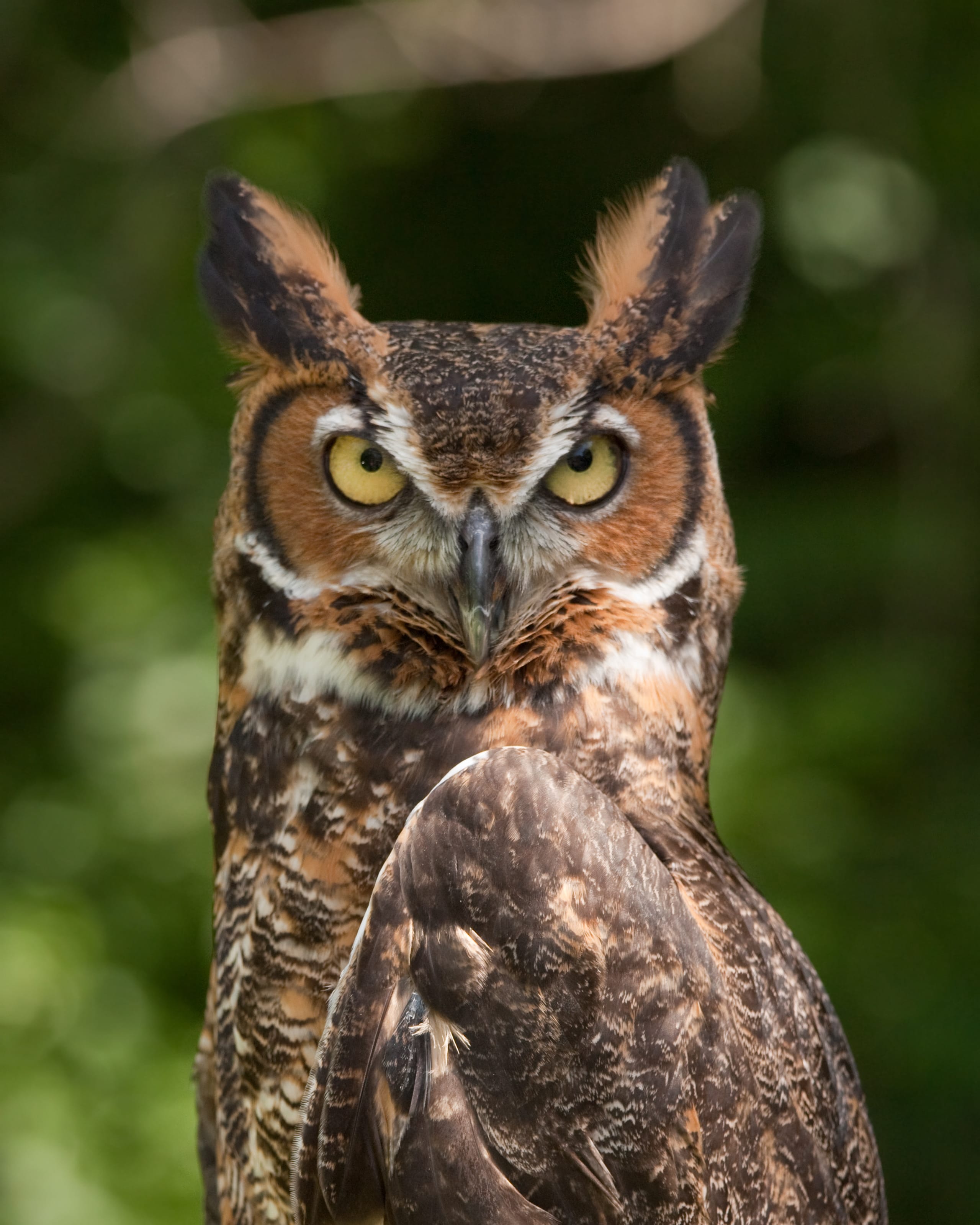
As the days begin to lengthen and winter’s chill settles in, a remarkable phenomenon occurs in the avian world: the great horned owl initiates its breeding season. Unlike most birds that await the warmer spring months, these formidable predators are already establishing territories and courting mates as early as the fall. Their dominance is asserted under the cloak of moon and starlight, making them a captivating subject for any nature enthusiast.
The courtship ritual of the great horned owl is a fascinating display, beginning with intense hooting in late December and early January. Males dedicate up to six weeks to vigorous vocalizations, hoping to attract a female. For a brief period, typically a week or two towards the end of this six-week span, females respond with their own calls. Eventually, a pair forms, and their courtship escalates into a visual spectacle involving tail-bobbing, head-jerking, and deep vocalizations. This elaborate dance culminates in copulation, often accompanied by high-pitched screeching and rapid hooting, a process that can last several seconds and is repeated to maximize fertilization chances.
Great horned owl pairs typically form lifelong bonds, reinforced throughout the night and at twilight with synchronized hooting duets. These duets not only strengthen their connection but also serve as a clear declaration of their territory to other owls. Much like royalty asserting their reign, their distinctive songs, characterized by low-pitched hoots, establish their presence and dominance within their domain.
These owls are opportunistic nesters, preferring to inhabit ready-made structures rather than build their own. They frequently occupy abandoned nests of red-tailed hawks and ravens, benefiting from the “early bird gets the nest” advantage. Their choice of nesting sites also includes tree cavities, dead snags, deserted buildings, cliff ledges, and even human-made platforms. Once a suitable location is secured, the female lays one to four round, white eggs. The incubation period, lasting 30 to 37 days, takes place during the winter. The female undertakes the majority of the incubation, while her mate diligently guards her and provides sustenance. He will even take over incubation duties if she needs to hunt.
The newly hatched owlets are born covered in delicate white down, with their eyes still closed. The initial weeks are critical for their survival, as they lack the ability to regulate their own body temperature. Continuous parental warmth, a process known as brooding, is essential for the first month. By four weeks old, the owlets develop darker, warmer down feathers that also provide superior camouflage.
Around four to five weeks of age, the young owls begin to explore their surroundings outside the nest. True flight is achieved at approximately 10 weeks of age. The extended nesting period, from courtship to fledging, can span several months, a stark contrast to the roughly one-month cycle of smaller songbirds like robins. This extended timeline is necessary to ensure that the owlets have ample food resources as they develop their flight capabilities, even amidst frigid temperatures.
Observing great horned owls is a truly memorable experience. Their large, piercing yellow eyes are often the only discernible feature when they are expertly camouflaged against the bark of a cottonwood tree. Their silent flight is astonishing; the ability to fly directly overhead without a sound speaks to their incredible predatory adaptations. The mystique surrounding these owls has deeply influenced cultural folklore and mythology worldwide, and it’s easy to understand why. By keeping your ears attuned during early mornings and late evenings, you might just catch the haunting call of the great horned owl, a testament to the enduring wildness that can exist even in familiar landscapes.
For those eager to deepen their understanding of these magnificent creatures, consider attending an owl walk or talk at a local nature center.
This article was contributed by Fendi Depres. The Plains Conservation Center, managed by Denver Botanic Gardens in cooperation with the City of Aurora, is dedicated to enhancing knowledge and appreciation of the prairie ecosystem and Colorado’s cultural history through diverse educational programs.
