
Grey cats, often referred to as “blue” in feline circles, captivate with their soft, sleek, and stunning appearances. Whether you’re a seasoned grey cat enthusiast or considering welcoming one into your family, this guide delves into the fascinating world of grey feline companions. From their diverse breeds and unique personalities to tips on identifying their lineage, discover what makes these elegant cats so special.
Popular Grey Cat Breeds
The allure of the grey coat extends across numerous cat breeds, each with its own charm and characteristics. Here are some of the most well-known and beloved grey cat breeds:
Russian Blue
The Russian Blue is characterized by its long, slender, and muscular build, complemented by a plush, silky blue-grey double coat. Their eyes, which start yellow as kittens, mature into a vivid green. These cats are known for being playful yet reserved, often forming a strong bond with one person while being wary of strangers. They are also exceptionally particular about hygiene, especially their clean litter box. Originating from Russia, their thick coat suggests an adaptation to cold climates.
Korat
Considered one of the oldest and purest cat breeds, the Korat boasts a blue-grey coat tipped with silver, giving it a unique glow. Their eyes transition from bright blue in kittenhood to a striking amber and finally a bright green. These small to medium-sized, muscular cats are social and attention-seeking, thriving on snuggles and play. While generally amiable with other animals, they can display jealousy if they feel neglected. The Korat hails from Thailand, historically revered as a symbol of prosperity and good luck.
Chartreux
Often described as a “potato on toothpicks” due to their robust bodies and slender legs, Chartreux cats possess a dense, water-repellent blue-grey coat. They are energetic and well-muscled, living up to their reputation as excellent mousers. While natural hunters, they are also good-tempered, loyal, and quiet. These playful cats may even enjoy games like fetch and can recognize their names. Legend has it they were bred by monks in the French Alps, possibly trained to have quiet voices.
Nebelung
The Nebelung shares similarities with the Russian Blue, featuring a dense blue-grey coat and bright green eyes. However, the Nebelung’s fur is semi-long, with silver-tipped guard hairs. These graceful, muscular cats are mild-tempered, soft-spoken, affectionate, and playful. They form devoted and loyal companions but can be shy around unfamiliar people. The Nebelung is an American cat breed, originating from a cross between a Domestic Shorthair and a Russian Blue.
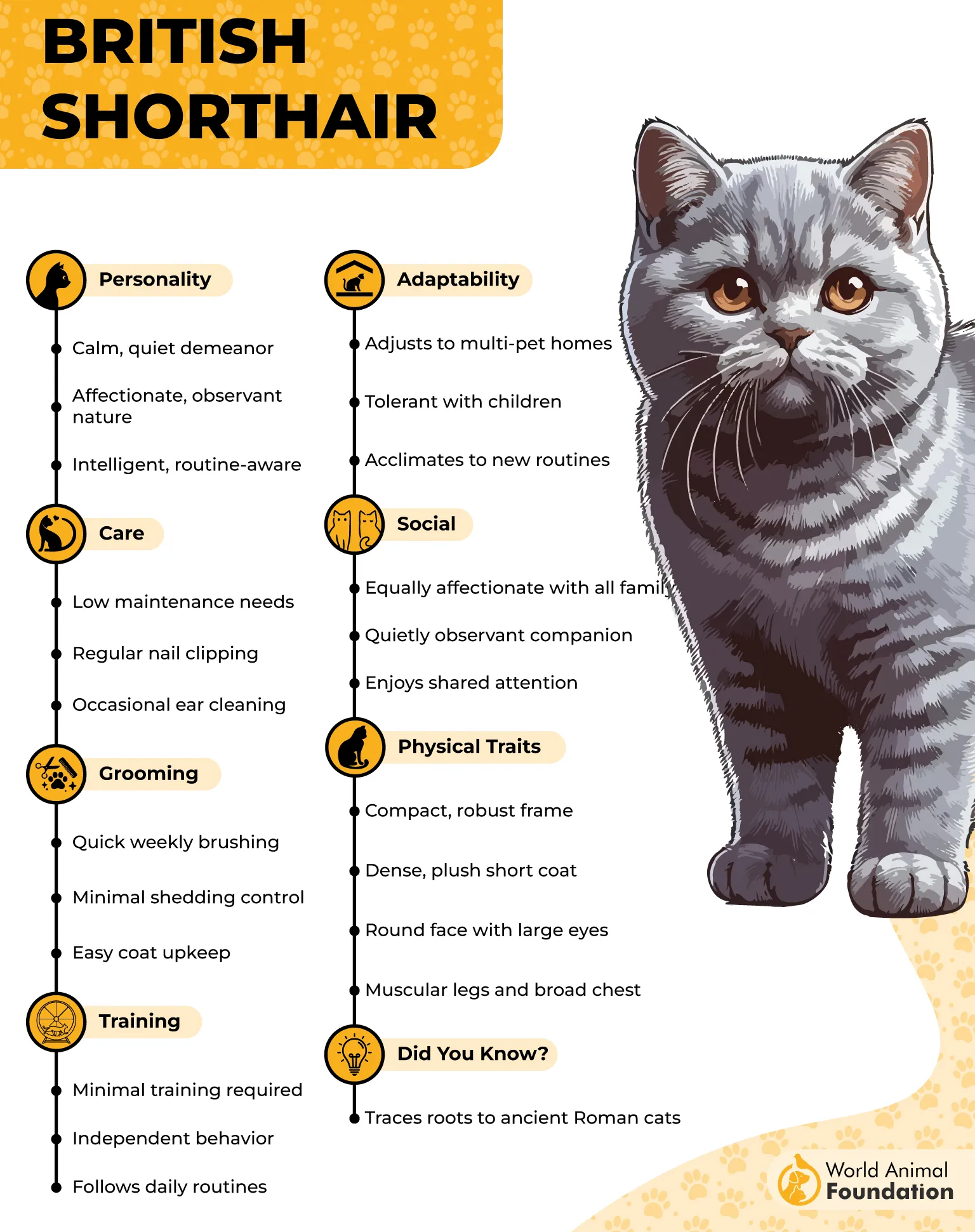
British Shorthair
Formerly known as the British Blue, this breed sports a crisp, dense, and waterproof coat over a compact, cobby body. They are medium to large in size, with a distinctive massive, round head and a short, thick neck, earning them the nickname “bulldog of the feline world.” While primarily recognized for their blue-grey color, they can be found in other shades. British Shorthairs are quiet and initially hesitant but warm up to become affectionate and patient companions, especially good with children. They are considered the first official show cat.
Blue Persian
While Persians are famous for their silky coats, the Blue Persian is a handsome grey variant of this ancient breed. Believed to have originated from a mix of Turkish Angora cats and others from various regions, Persians are known for their long periods of inactivity. They possess a sweet, gentle nature and prefer calm environments. Though content with grooming and petting, some playtime is still essential for their well-being.
Scottish Fold
Scottish Folds have plush, dense fur—either short or long—often in grey. These sweet, laid-back cats have sturdy bodies and are popular in America and Europe. They are known for their unique “Buddha sit,” where they sit upright like a human. All Scottish Folds trace their ancestry back to Susie, a barn cat discovered in Scotland in 1961 with distinctive folded ears. Approximately 50% of kittens in a litter are born with folded ears, a trait that appears 18 to 24 days after birth.
Sphynx
The Sphynx cat is famously hairless, though it may possess a fine down on its body. Many Sphynx cats have grey skin or down and require regular bathing to prevent their skin from becoming sticky and to avoid skin issues. This breed originated in Ontario, Canada, in 1966, with a hairless kitten named Prune. Through selective breeding, the Sphynx was developed. Despite their unique appearance, they are highly social, attention-loving, and inquisitive companions.
Domestic Shorthair
The Domestic Shorthair, also known as a “moggy,” “mutt,” or mixed-breed cat, refers to any non-pedigreed shorthair feline. They are the most common cat type in the United States, coming in all sizes, shapes, patterns, and colors, including various shades of grey. A Domestic Shorthair can be solid grey, a grey tabby, a grey colorpoint, or a grey tuxedo.
Typical Personalities of Grey Cats
Grey cat breeds often share a delightful set of characteristics. While individual personalities vary, many grey felines exhibit:
- Calm and Serene: Many are known for their composed nature, bringing tranquility and enjoying quiet observation.
- Playful and Curious: Despite their calm demeanor, they possess a mischievous, playful side and a keen curiosity, loving to explore and engage in interactive play.
- Intelligent and Sociable: Grey cats are often reported to be highly intelligent and enjoy interacting with their families, often following them around and observing their activities.
- Varied Communication Styles: Some are vocal with meows and purrs, while others communicate more through subtle body language.
Identifying Your Grey Cat’s Breed
Determining a grey cat’s breed can be a fascinating process. While the grey coat itself isn’t a sole identifier, certain physical traits and personality markers can offer clues:
- Russian Blue: Look for a plush double coat, vivid green eyes, and a strong preference for cleanliness.
- Korat: Silver-tipped fur and a social, attention-seeking personality are common indicators.
- Chartreux: A robust body, slender legs, and a playful, good-tempered disposition might point to this breed.
- Nebelung: An affectionate, playful cat with semi-long fur and bright green eyes could be a Nebelung.
- British Shorthair: Dense, plush coats, round heads, and thick necks are characteristic.
- Sphynx: If your cat is hairless and requires regular bathing, it’s likely a Sphynx.
- Domestic Shorthair: A grey coat with tabby, colorpoint, or tuxedo patterns typically indicates this common mixed breed.
Regardless of breed, your grey cat is sure to bring joy and beauty into your home.
Other Grey Cat Breeds
The grey coat color appears in a multitude of other cat breeds as well, adding to the diversity and charm of feline companions.
Whether you have a specific preference or simply appreciate the beauty of these elegant felines, grey cats undeniably bring a unique spirit to the world of pets.
