
Embarking on a training journey with your dog is one of the most rewarding experiences a pet parent can have. It builds communication, strengthens your bond, and establishes a foundation of trust. At the heart of this process, especially when using positive reinforcement, is the humble treat. But not just any biscuit will do. Finding Good Training Treats For Dogs is a critical step that can significantly impact the effectiveness of your sessions and your dog’s overall health and motivation. The right treat can turn a distracted puppy into an eager student, ready to learn the next cue.
The world of dog treats is vast and varied, which can feel overwhelming. From soft chews to crunchy bites, the options are endless. So, what separates a mediocre snack from a truly effective training tool? It’s a combination of factors including size, calorie count, ingredients, and most importantly, your dog’s personal preference. This guide will walk you through everything you need to know to select the perfect treat to make your training sessions successful, fun, and healthy. For those looking to enhance their training routine, exploring resources like dog training app reviews can provide valuable insights into modern training techniques.
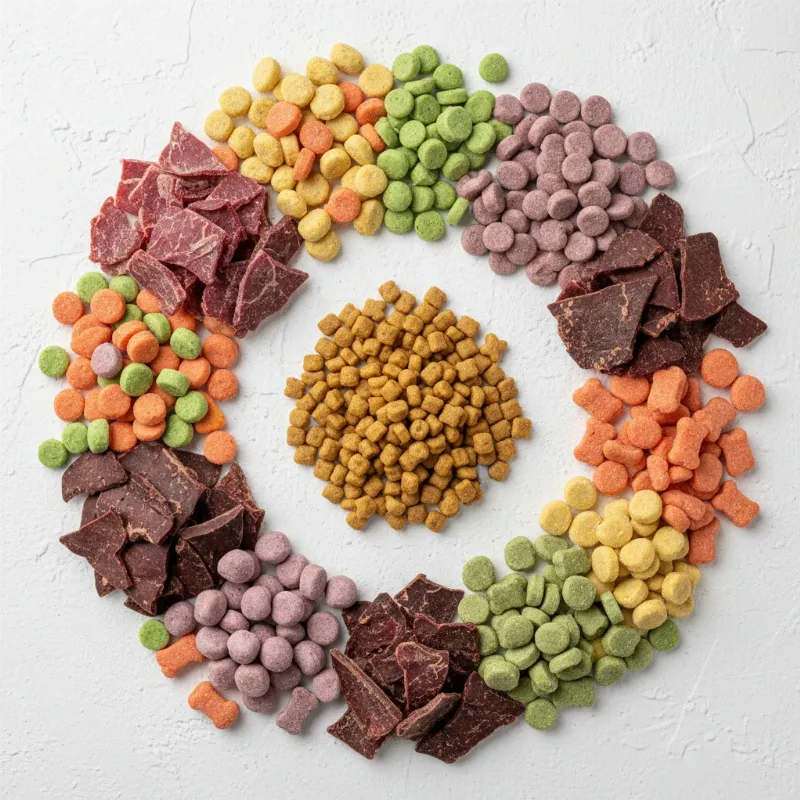 A colorful flat lay of various good training treats for dogs, including small biscuits, freeze-dried meats, and soft chews arranged on a clean, white background.
What Makes a Training Treat “Good”?
Before you can pick the perfect reward, it’s essential to understand the criteria that define good training treats for dogs. An effective treat is more than just tasty; it’s a tool designed for a specific purpose. Think of it as currency for good behavior—it needs to be valuable enough to hold your dog’s attention and practical enough for repeated use during a training session.
Size and Texture Matter
During a typical 10-15 minute training session, you could be rewarding your dog dozens of time. Because of this high frequency, training treats should be small, ideally no larger than a pea. This allows your dog to swallow the reward quickly without getting distracted by prolonged chewing. A small size ensures the training flow isn’t interrupted. The texture is also important; soft, chewy treats are often preferred as they are consumed faster than crunchy ones and are generally more aromatic and enticing for the dog.
The Calorie Question
One of the biggest concerns for dedicated owners is overfeeding. It’s easy for calories to add up quickly with treat-based training. The golden rule is that treats should make up no more than 10% of your dog’s total daily caloric intake. Look for low-calorie options, often between 1 to 3 calories per treat. This allows you to be generous with rewards during training without compromising your dog’s weight and health. Always remember to adjust their main meals if you’ve had a particularly treat-heavy training day.
High-Value Ingredients for High-Value Rewards
A “high-value” treat is something your dog finds absolutely irresistible. This is often tied to the ingredients. Treats with a high meat content, such as single-ingredient freeze-dried liver, chicken, or salmon, are usually big winners. The strong aroma of these treats helps keep your dog focused on you and the task at hand. Check the ingredient list for whole foods and avoid treats packed with fillers like corn, wheat, or soy, as well as artificial colors, flavors, and preservatives. The cleaner the ingredient panel, the better it will be for your dog’s health.
Convenience for the Trainer
Finally, a good training treat should be easy for you to handle. They shouldn’t be greasy or crumbly, which can create a mess in your pocket or treat pouch. You want something you can grab quickly and deliver instantly the moment your dog performs the desired behavior. This immediate reinforcement is key to helping your dog understand what they are being rewarded for.
Types of Dog Training Treats to Consider
With a clear understanding of what to look for, you can now explore the different categories of training treats available. Each type has its own set of benefits, and what works best may depend on your dog’s preferences and the training context. It’s often a good idea to have a variety on hand to keep your dog engaged.
Soft and Chewy Treats
These are often the go-to for trainers, and for good reason. They are highly palatable, easy to break into smaller pieces, and quick for dogs to eat. Their strong scent is excellent for capturing a dog’s attention, making them perfect for teaching new or complex behaviors. Many commercial soft treats are specifically designed for training and come in low-calorie formulas.
Freeze-Dried Treats
For a healthy, high-value option, freeze-dried treats are an excellent choice. Typically made from a single ingredient, like beef liver, chicken breast, or salmon, these treats are nutrient-dense and highly motivating for most dogs. The freeze-drying process preserves the nutritional value and intense flavor of the meat, making them an aromatic and exciting reward. While they can be more expensive, their effectiveness often makes them worth the investment, especially for challenging training situations.
Crunchy Treats and Kibble
While not always the first choice for rapid-fire rewarding, small, crunchy treats or even your dog’s own kibble can be effective for training. Using their daily kibble is a great way to control calorie intake and is perfectly suitable for reinforcing known commands or for dogs who are highly food-motivated. You can make their regular food feel more special by mixing in a few higher-value treats, creating a “jackpot” effect that keeps them guessing.
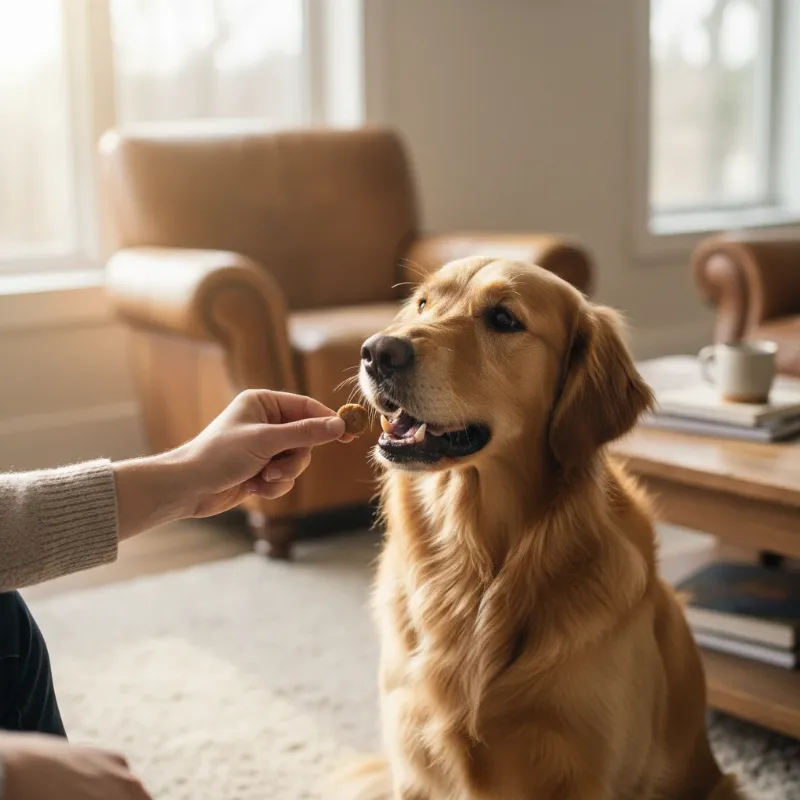 A close-up shot of a person's hand giving a small, healthy training treat to an attentive golden retriever, capturing the moment of positive reinforcement. The background is a bright, airy living room.
How to Use Training Treats Effectively
Having the best treats is only half the battle; knowing how to use them correctly is what truly drives training success. Positive reinforcement is a science, and a few key principles can help you maximize the power of your rewards. Sometimes, behavioral issues persist despite good training, and understanding things like potty training regression dog behavior can be crucial for a holistic approach.
According to canine behaviorist Dr. Emily Carter, “The magic of a treat is not in the treat itself, but in its timing. The reward must mark the exact moment the desired behavior occurs. This precise delivery is what builds a clear line of communication between you and your dog, turning a simple snack into a powerful learning tool.”
Timing is Everything
The reward must be given immediately—within a second or two—after your dog performs the desired action. If you’re teaching “sit” and you reward them after they’ve already stood back up, you’re reinforcing the standing, not the sitting. Using a marker word like “Yes!” or a clicker the instant the behavior happens, followed immediately by the treat, can help you pinpoint the exact moment for your dog.
Keep Sessions Short and Positive
Dogs, especially puppies, have short attention spans. It’s far more effective to have several short, 5-10 minute training sessions throughout the day than one long, frustrating 30-minute session. Always end on a positive note with a behavior your dog knows well. This keeps them enthusiastic and eager for the next session.
Don’t Bribe, Reward
There’s a fine line between a bribe and a reward. A bribe is showing the dog the treat to lure them into performing a behavior. While this can be useful for teaching a new behavior (luring), it should be phased out as quickly as possible. A reward, on the other hand, appears after the dog has performed the behavior. The goal is for your dog to perform the command because you asked, not because they see a treat in your hand.
Mix It Up
Don’t let your dog become solely dependent on treats. Remember to use other forms of rewards as well, such as verbal praise (“Good boy!”), petting, or a quick game of tug-of-war. Varying your rewards keeps the training exciting and unpredictable, which can strengthen the behavior over time. For more advanced goals, such as training for specific roles, you might consider looking into programs like certified therapy dog training which require a high level of obedience and connection.
Can You Make Your Own Dog Training Treats?
Absolutely! Making your own good training treats for dogs is a fantastic way to control the ingredients, save money, and provide your pup with a healthy, homemade reward. You don’t need to be a master chef; many recipes are incredibly simple and require just a few dog-safe ingredients you may already have in your kitchen.
A simple go-to recipe involves just three ingredients:
- 1 cup of whole wheat flour (or oat flour for a grain-free option)
- 1/2 cup of unsweetened applesauce or pure pumpkin puree
- 1/4 cup of peanut butter (ensure it does NOT contain xylitol, which is toxic to dogs)
Simply mix the ingredients into a thick dough, roll it out thin, and use a knife or pizza cutter to slice it into tiny, pea-sized squares. Bake at 350°F (175°C) for about 20-25 minutes, or until firm. Let them cool completely before using. These can be stored in an airtight container in the refrigerator for a couple of weeks.
Frequently Asked Questions (FAQ)
How many training treats can I give my dog a day?
This depends on the calorie content of the treats and your dog’s daily caloric needs. As a general guideline, treats should not exceed 10% of their total daily food intake. If a treat has 3 calories, and your dog eats 500 calories a day, they could have around 16 treats.
Can I use human food for dog training?
Some human foods are safe and highly motivating for dogs. Small pieces of boiled chicken, lean meat, cheese, carrots, or green beans can make excellent high-value rewards. However, you must avoid toxic foods like grapes, onions, garlic, chocolate, and anything containing xylitol.
What’s the difference between a training treat and a regular dog biscuit?
Training treats are specifically designed for frequent rewarding during training sessions. They are smaller, lower in calories, and often have a stronger aroma to keep a dog’s focus. Regular dog biscuits are typically larger and higher in calories, making them better suited as an occasional special snack rather than for repetitive training rewards.
My dog is a picky eater. What are the best treats for them?
For picky dogs, you’ll need to experiment to find what they consider “high-value.” Freeze-dried meats, such as salmon or lamb, often win over even the fussiest eaters due to their intense aroma and flavor. Small pieces of cheese or a commercial treat with a soft, meaty texture are also good options to try.
Are grain-free treats a better choice for training?
Not necessarily. Grain-free treats are essential for dogs with specific grain allergies or sensitivities. However, for most dogs, grains are a healthy part of their diet. The most important factor is the overall quality of the ingredients, whether the treat contains grain or not. Focus on treats with whole-food ingredients and avoid artificial additives.
Conclusion: Fueling Success with the Right Rewards
Choosing good training treats for dogs is a simple yet powerful way to enhance your training and deepen the bond with your companion. The ideal treat is small, low-calorie, made with high-quality ingredients, and, above all, something your dog loves. By understanding what makes a treat effective and how to use it wisely, you transform a simple snack into an invaluable communication tool. Remember that positive reinforcement is about building a joyful and trusting relationship. So, stock your pouch with healthy, delicious rewards, and get ready to celebrate every small success on your training journey together.
