
Teaching your puppy to walk politely on a leash is a fundamental aspect of responsible dog ownership and a cornerstone of successful dog training. While it might seem intuitive, this crucial skill doesn’t come naturally to dogs; it requires patient and consistent guidance. As a professional dog trainer and expert, I understand the importance of building a strong foundation for enjoyable walks, and this guide will equip you with the essential steps to achieve just that. From introducing the very first gear to navigating common leash-walking challenges, we’ll explore how to foster a positive and cooperative walking experience for you and your furry companion.
To set your puppy up for success on future walks, a structured approach is key. This involves a gradual introduction to the equipment and positive reinforcement to build their confidence and understanding.
Gradual Introduction to Collar/Harness and Leash
Begin by familiarizing your puppy with wearing a collar or harness and a leash. Let them wear these items for short durations around the house, associating them with positive experiences like playtime and receiving treats. The goal is for your puppy to view collar-and-leash time as an exciting precursor to rewards and fun activities. This positive association is vital for creating a relaxed attitude towards being leashed.
Establishing a Positive Cue
Introduce your puppy to a sound cue that signals an upcoming reward. Many trainers utilize a clicker for a distinct “click and treat” method, while others prefer verbal cues like “yes” or even a tongue click. The principle remains the same: in a calm environment free from distractions, with your puppy wearing their collar and leash, make your chosen sound. The moment your puppy acknowledges the cue by turning towards you or making eye contact, immediately reward them with a high-value treat. With consistent repetition, your puppy will learn to not only look at you but also to eagerly approach you for their reward.
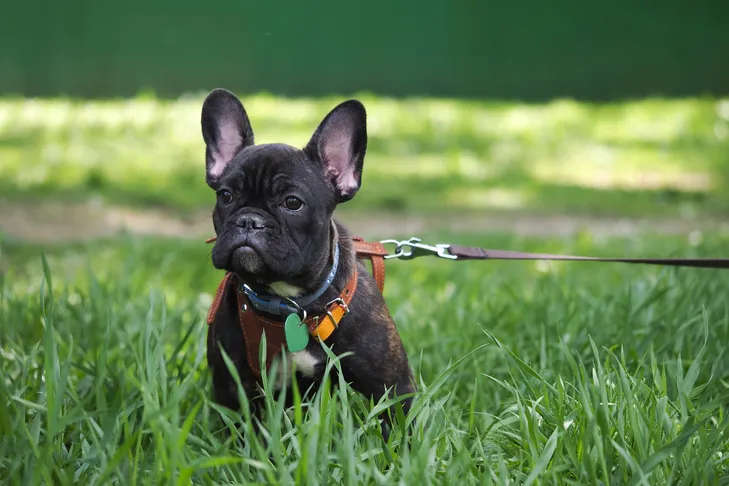 A playful French bulldog puppy in a green harness sits attentively in tall, lush grass, its leash held loosely, ready for a walk.
Encouraging Your Puppy to Come to You
As your puppy begins to respond to the cue and moves towards you while still wearing their leash and collar, take a few steps backward. Reward them when they reach you. Gradually increase the distance you back up, reinforcing their movement towards you. The objective is to reach a point where your puppy, upon hearing the cue, will not only come to you but also happily walk alongside you for a few paces. Remember that puppies have limited attention spans. Keep training sessions brief and always end on a positive note, when your puppy is still engaged and eager, rather than when they are showing signs of fatigue.
Practicing Indoors
Once your puppy reliably comes to you with the leash on, it’s time to practice walking a few steps within a low-distraction environment indoors. The sensation of the leash and collar around them will be a new experience. Continue to offer treats and verbal praise as your puppy learns to follow you with the leash attached, reinforcing their understanding and building confidence. This controlled environment helps solidify the basics before introducing more complex situations.
Transitioning to the Outdoors
With indoor practice completed, your puppy is ready to explore the outdoors. This is where new and exciting challenges arise, from novel sounds and smells to interesting sights that will capture your puppy’s attention. Patience is paramount during these initial outdoor excursions. Keep the first walks short and focus on reinforcing positive behavior. If you notice your puppy becoming overly fixated on something or appearing on the verge of being distracted, use your cue sound and move a few steps away, rewarding them for following you. Staying observant and anticipating your puppy’s reactions is key to managing distractions.
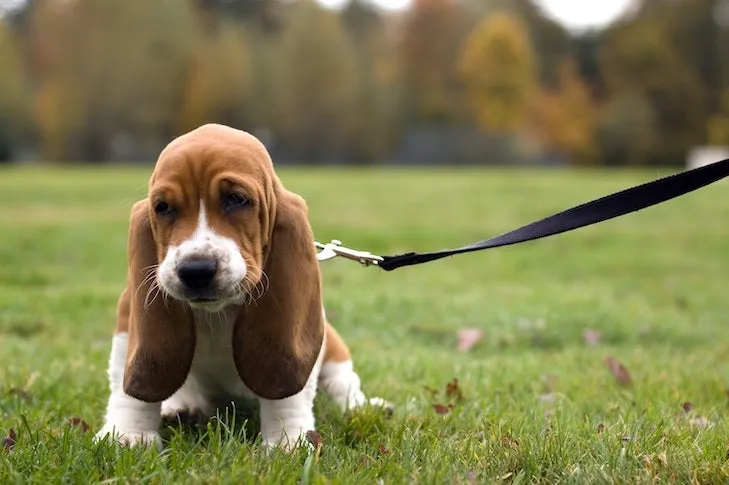 A Basset Hound puppy sits calmly on a green lawn, wearing a lead, looking alert and relaxed.
Troubleshooting Leash-Training Challenges
Even with consistent training, you might encounter specific issues as your puppy grows and encounters new environments and stimuli. Teaching your dog loose-leash walking will make your outings far more enjoyable for both of you and can be a stepping stone towards achieving titles like the Canine Good Citizen. Here are some effective strategies for common leash-training hurdles, provided by experts.
Addressing Pulling Behavior
If your puppy begins to pull away from you, adopt the “living tree” technique. Stand completely still and refuse to move until your puppy returns to your side. Avoid yanking, jerking the leash, or forcibly dragging your dog. For persistent pullers, consider using specialized training tools like front-hook harnesses or head halters, which are designed to discourage pulling by redirecting the dog’s momentum.
Managing Lunging and Reactivity
When your dog fixates on something during a walk – whether it’s another dog, a passing car, or a cyclist – proactive intervention is crucial. Attempt to redirect their attention with a treat before they have a chance to lunge. Increasing the distance between your dog and the object of their attention can also be very effective. Remaining vigilant and prepared can help you manage potential triggers before they escalate. While certain breeds, like those in the herding group, might exhibit this behavior more readily due to their inherent instincts, any dog can be startled or overexcited by unfamiliar or stimulating elements. Learning how commands to teach a german shepherd can also help redirect focus.
Reducing Barking on Walks
Barking at other dogs during walks can be a learned habit, often stemming from insufficient exercise or a lack of confidence. Ensure your dog receives adequate mental and physical stimulation tailored to their age and breed. If barking persists, employ a similar strategy to managing lunging: create distance and offer treats proactively before the barking commences. Each time your puppy sees another dog, reinforcing their focus on you will help them associate the presence of other dogs with positive interactions and redirection towards you, rather than reactive barking. You may also find it helpful to understand how can i teach my dog to poop outside, as establishing routines can contribute to overall good behavior.
With consistent practice and positive reinforcement, you’ll gradually reduce the reliance on treats and interventions. It’s always a good practice to keep treats handy to randomly reward good leash-walking behavior, reinforcing the desired actions and maintaining progress.
References
- AKC Family Dog Magazine. (n.d.). AKC. Retrieved from https://www.akc.org/products-services/magazines/
- AKC GoodDog! Helpline. (n.d.). AKC. Retrieved from https://www.akc.org/products-services/akc-gooddog-helpline/
- Kathy Santo Dog Training. (n.d.). Kathy Santo Dog Training. Retrieved from https://www.kathysantodogtraining.com/
