
Navigating the world of puppy parenthood comes with its unique set of challenges, and one of the most common is patiently waiting for your furry friend to relieve themselves outdoors. Many new dog owners find themselves standing outside, enduring the elements, as their puppy takes what feels like an eternity to find the perfect spot. While this can be a frustrating routine, the good news is you can effectively train your puppy for Getting Puppy To Poop Outside on cue, making your life and theirs much easier.
Teaching your puppy to potty on cue is an invaluable skill. Beyond simply saving you time during inclement weather, it’s incredibly practical for various situations, such as when traveling, needing a quick potty break before entering a public building, or even for specific needs like collecting samples for a vet visit. This trained behavior ensures that your puppy understands where and when it’s appropriate to eliminate, reducing accidents and establishing a clear routine. Mastering the art of teaching your puppy to poop outside is a foundational step in responsible puppy ownership.
Selecting Effective Cues for Your Puppy
It might seem ambitious, but teaching your puppy to pee or poop on command is entirely achievable, allowing them to eliminate almost anywhere, anytime. To maximize clarity and prevent confusion, it’s highly recommended to use distinct verbal cues for peeing and pooping. You have the freedom to choose any words you prefer, as long as you use them consistently. Common and effective examples include straightforward terms like “pee” and “poop,” or more subtle options such as “showtime,” “go potty,” or “do your business.” The key is consistency in your chosen vocabulary.
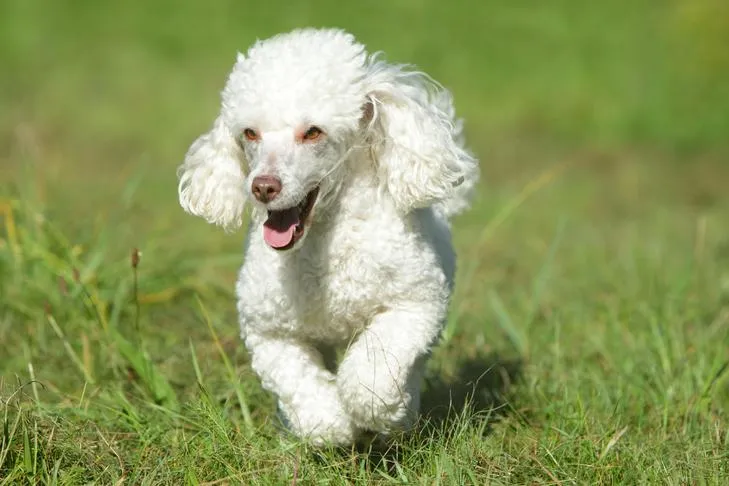 An adorable Toy Poodle puppy joyfully running through a lush green field.
Step-by-Step: Teaching Your Puppy to Poop Outside on Cue
The beauty of teaching your puppy to eliminate on cue lies in the fact that you’re essentially attaching a verbal marker to a behavior they already perform naturally and regularly. This makes the training process considerably simpler because you’ll have numerous opportunities to practice throughout each day. This method is often referred to as “capturing,” where you introduce a verbal cue as your puppy is already in the act of eliminating. You’ll combine an audible marker, such as a verbal cue or a clicker, with a reward, like a tasty treat, to reinforce the desired behavior.
Step 1: Be Prepared for Potty Breaks
Anticipate when your puppy will most likely need to go potty, typically after waking up, eating, drinking, or playing. Always have high-value treats readily available and be prepared to take your puppy outside immediately during these key times.
Step 2: Observe Without Interruption
When you take your puppy outside, allow them to freely explore and sniff around for their ideal spot to pee or poop. During this initial search, refrain from speaking or interacting with them. Let them focus on the task at hand.
Step 3: Cue as They Begin to Eliminate
As soon as your puppy begins the act of peeing or pooping, get ready to introduce your chosen cue and prepare for praise and reward. It’s crucial to time this precisely.
Step 4: Praise and Reward Upon Completion
Once your puppy is nearly finished eliminating, gently introduce your verbal cue (e.g., “poop” or “showtime”) while offering immediate praise or a click (if you’re clicker training) followed by a treat. Waiting until they are almost done helps prevent them from stopping prematurely when they hear the cue.
Step 5: Introduce the Cue Earlier
After several successful repetitions where your puppy starts to associate the cue with the act of elimination, you can begin to use the cue just as they are about to go. For instance, as your puppy stops circling and squats, say “poop” or “business.” Once they finish, reinforce with enthusiastic praise and a treat. This helps them understand the cue before the action.
Step 6: Test the Cue in a Quiet Environment
After consistent practice over several days or weeks, when you’re confident your puppy understands the association, it’s time to test the cue intentionally. Take your puppy to a calm, familiar potty spot and give your cue. When they successfully eliminate, reward them generously with praise and treats. This is a big step towards them being reliable in teach your dog to come and stay as well.
Consistency is Key for Puppy Potty Training Success
Consistency is paramount in all aspects of dog training, and especially when teaching your puppy to poop outside on cue. You must be unwavering in pairing your puppy’s elimination with your chosen verbal cue and a positive reward. To make this easier, consider keeping a small pouch of treats near your door or in your pocket so you’re always ready to reward successful potty breaks. This also applies to addressing other training challenges, like teaching appropriate greetings or how to stop your dog from jumping.
When your puppy truly grasps the cue, they may even “try” to go anytime they hear it, even if they don’t genuinely need to. This might manifest as a quick squat or a leg lift, attempting to squeeze out a small amount. It’s crucial to reward these efforts highly, as they are clear indicators that your puppy understands the “potty on cue” behavior.
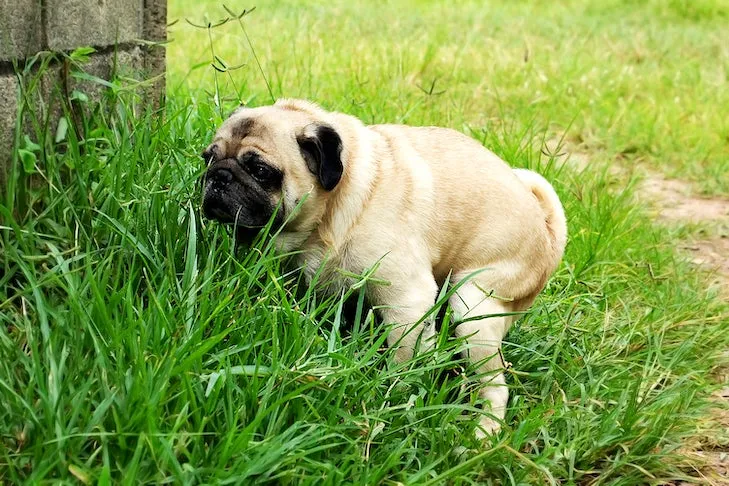 A small, wrinkly Pug dog is captured in the act of pooping outdoors amidst tall green grass.
Make Outdoor Potty Training Enjoyable for Your Puppy
While the primary motivation for most owners in getting puppy to poop outside on cue is to avoid prolonged waits, especially in cold or wet weather, it’s important to understand why your puppy might have been taking their time previously. For many puppies, being outdoors in the yard or on a walk is a highly enriching experience. They naturally want to prolong this fun time.
As you are teaching the potty on cue behavior, continue to reward your puppy with treats and praise. However, avoid rushing back into the house immediately after they eliminate. If you do, your puppy might associate the cue and the act of going potty with the end of their enjoyable outdoor time. This can inadvertently create a negative association with the cue or make your puppy reluctant to perform the desired behavior. To prevent this, in addition to verbal praise and treats, extend their outdoor time slightly. Let them sniff around, continue your walk, or engage in a short play session, perhaps even practicing teach your dog to lay down with them. These environmental rewards reinforce that listening to your cue leads to good things, not just an immediate end to fun.
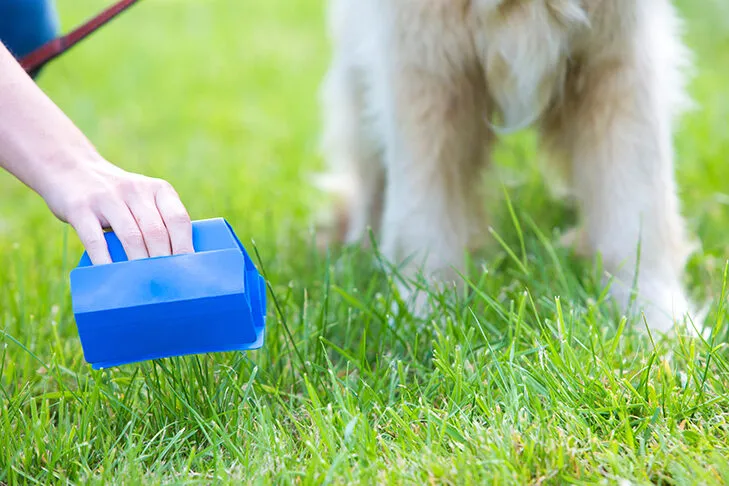 A hand holds a plastic bag, ready to scoop up dog waste from the ground.
Diversify Potty Locations for Generalization
To ensure your puppy is reliably going potty on cue in any situation, it’s essential to practice this skill in a variety of different locations. Start in your puppy’s most comfortable and usual spots, like your backyard or a familiar patch of grass near your home. Once they are consistent there, gradually introduce new environments, such as a new park, a different neighborhood during a walk, or even a friend’s yard. This is a critical step in their overall training and can even be considered part of more advanced training like if you wanted to train your dog as a therapy dog.
Puppies, like all dogs, are situational learners. If you only practice a new skill in one setting, they may struggle to perform that behavior in an unfamiliar environment later on. By practicing the potty cue in diverse circumstances, your puppy will learn to generalize the skill, understanding that the cue means “go potty” regardless of their surroundings. This broadens their understanding and makes them adaptable, which is especially helpful if they ever need to go on a potty pad indoors due to bad weather or illness, or in any other novel place.
Ultimately, successfully training your puppy to poop outside on cue is a testament to patience, consistency, and positive reinforcement. By implementing these steps, you’ll foster a well-behaved companion and enjoy a more harmonious relationship, free from the stress of unpredictable potty breaks.
