
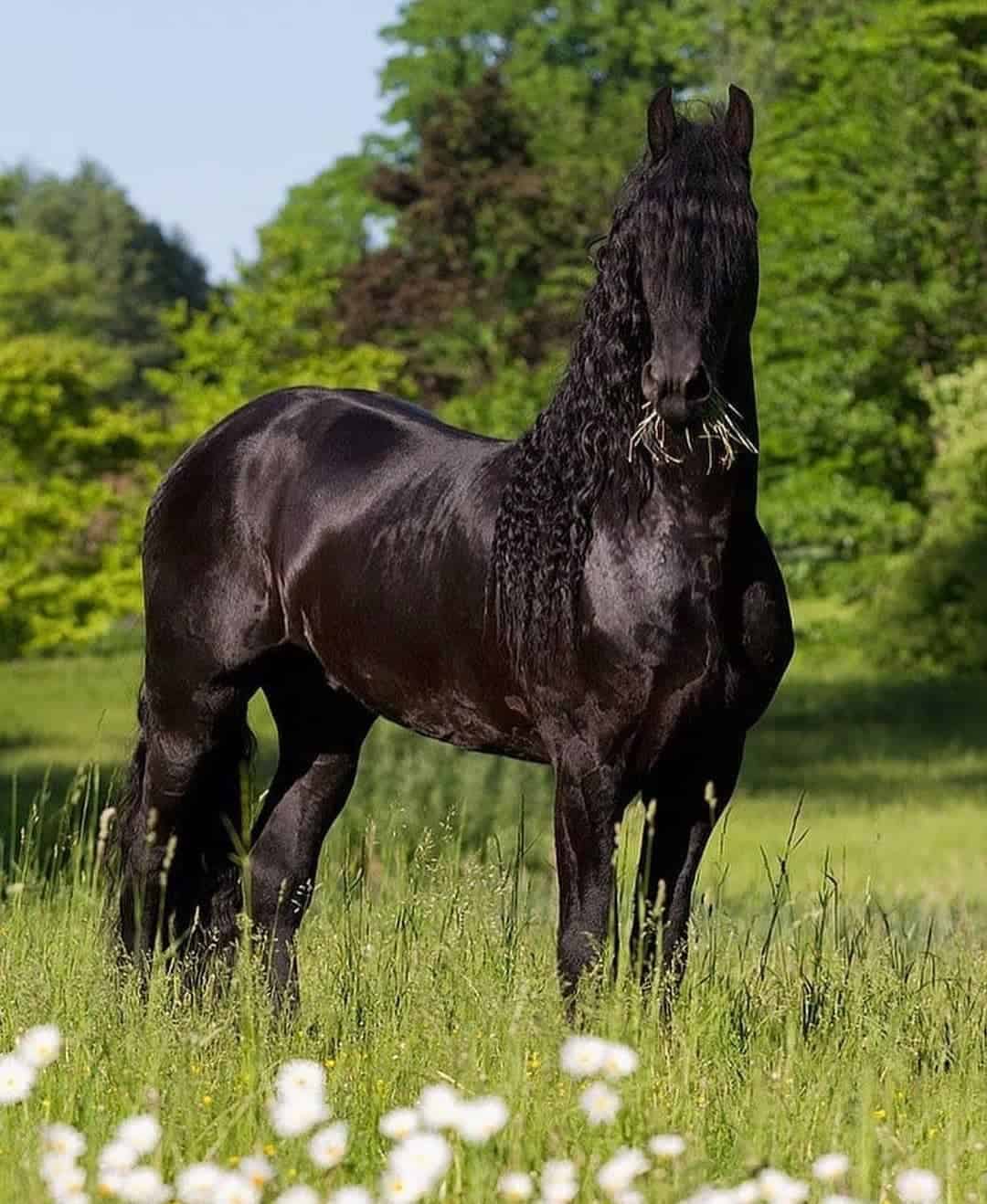
The Friesian horse, a breed steeped in history and renowned for its striking beauty, has captivated admirers for centuries. Often gracing Hollywood screens, these horses from Friesland in the Netherlands possess a fairytale charm that has cemented their popularity. Descended from formidable war horses of the Middle Ages, the Friesian’s journey has seen them travel worldwide, though a period of rampant crossbreeding in the 20th century nearly led to the extinction of the purebred lineage. This near-loss has contributed to a higher incidence of certain genetic diseases within the breed, making informed care and management crucial for their well-being. This article delves into the rich history, distinctive characteristics, potential health concerns, and specific nutritional requirements of the Friesian horse.
A Glimpse into Friesian Horse History
With a lineage stretching back to at least the 11th century, Friesian horses are one of the oldest distinct breeds, maintaining a recognizable type throughout their history. Early Friesians were versatile working and riding horses, later evolving into the powerful mounts of medieval knights. Their elegance also made them favored coach horses for European nobility.
Influences from Arabian and Andalusian horses were introduced during the Middle Ages and later, respectively. However, genetic studies indicate that modern Friesians are largely distinct from other European breeds and do not trace back to English Thoroughbred blood. The breed as it is known today is rooted in a native landrace that developed over millennia, primarily shaped by its environment rather than intensive selective breeding. The official registry for the breed was established in 1879.
Historic Roles and Decline
Initially serving as all-around working and riding horses, Friesians gained renown as war mounts. They later became popular as trotting and harness horses across Europe in the 18th and 19th centuries. However, a decline in popularity in the late 19th century, with only 15 approved stallions remaining in Friesland by 1902, brought the breed close to extinction. While Dutch settlers introduced Friesians to North America, crossbreeding significantly reduced the purebred population. The breed’s reintroduction in the 1970s and subsequent efforts by organizations like the Friesian Horse Association of North America (FHANA), the exclusive North American affiliate of the Dutch KFPS (Koninklijke Vereniging “Het Friesch Paarden-Stamboek”), have helped to preserve and promote the breed. FHANA and KFPS maintain strict standards, with registration requiring lineage tracing back to the original Dutch studbook and rigorous evaluations for approved stallions and breeding stock.
Defining Characteristics of the Friesian Breed
Friesian horses are instantly recognizable by their majestic appearance, characterized by an elegant build and distinctive features.
Conformation and Build
Standing between 15.2 to 16 hands tall on average, Friesians possess a generally rectangular and well-balanced physique. Mares and geldings must meet a minimum height of 15 hands for studbook entry, while stallions must be at least 15.3 hands at four years old. They typically exhibit an expressive head with small ears, large eyes, and wide nostrils, flowing into a high-set, arched, and powerfully muscled neck. Their backs are muscular and moderate in length, supported by strong loins and broad, sloping croups. The shoulders are long and sloping, leading to a well-sprung chest. Their legs are correct and straight, ending in wide, sound hooves. The breed’s gaits are known for being light-footed and elevated, with good stride length and powerful hindquarter engagement.
Coloration and Coat
The modern Friesian breed is exclusively black, though grey and bay variations existed in earlier periods. A small white star on the forehead is the only permitted white marking; any other white markings on the body or legs are not allowed. A defining feature is their long, heavy black mane and tail, complemented by thick fetlock feathering.
Temperament and Suitability
Friesians are generally known for their genuine character and strong work ethic. They possess excellent stamina and energy without being overly spooky, demonstrating intelligence and a quick learning ability when properly trained. Their typically friendly and easy-going nature makes them suitable for a wide range of riders, though individual temperaments can vary.
Preferred Disciplines
The Friesian’s elegant appearance and movement make them highly sought-after in various disciplines. They excel in harness shows and driving due to their high-action trots and inherent pulling power. While warmbloods often dominate elite dressage competitions, Friesians are popular mounts for riders at all levels of the sport.
Understanding Friesian Horse Health
The Friesian breed’s history of a limited founding population has unfortunately led to increased inbreeding and a predisposition to several genetic health issues. However, with diligent breeding practices and attentive management, Friesian horses can lead healthy lives.
Genetic Predispositions
- Dwarfism: This autosomal recessive disorder results in disproportionately short limbs and a broad chest. DNA testing can identify carriers, allowing breeders to avoid mating two carriers to prevent affected foals. Dwarf Friesians often experience tendon laxity and fetlock hyperextension.
- Hydrocephalus: An excess of fluid in the brain, this condition can lead to severe head distention and is often associated with stillbirth or difficult foaling. DNA testing is available to identify the gene responsible for this autosomal recessive disorder.
- Connective Tissue Abnormalities: Many health issues in Friesians are linked to abnormalities in connective tissue, potentially stemming from the selection for high-stepping gaits and increased tendon laxity. Studies suggest Friesians have a higher rate of collagen breakdown, predisposing them to connective tissue disorders.
Specific Health Concerns
- Megaesophagus: Characterized by an enlarged and poorly motile esophagus, this condition can cause swallowing difficulties, weight loss, and aspiration pneumonia. It is thought to be related to collagen abnormalities, leading to chronic dilation and muscle tone loss in the esophagus.
- Aortic Rupture: This serious condition, also linked to collagen disorders, can result in sudden death. Preceding symptoms may include recurrent colic, increased resting heart rate, and elevated body temperature.
- Skin Disorders: Friesians are prone to pastern dermatitis (mud fever) due to their dense feathering. Insect bite hypersensitivity (sweet itch) is also prevalent, affecting approximately 18% of the breed.
- Retained Placenta: Friesian mares exhibit a significantly higher incidence of retained fetal membranes after foaling, occurring in up to 54% of births compared to less than 10% in the general equine population.
- Equine Metabolic Syndrome (EMS): While formal research is ongoing, Friesians are recognized as being at risk for EMS, potentially due to their evolutionary environment and breed influences. This can lead to obesity and laminitis.
Essential Care and Management for Friesians
Providing proper care tailored to the Friesian’s unique needs is paramount for their health and longevity. Collaborating with a veterinarian, farrier, and other equine professionals is key to developing a comprehensive wellness plan.
Veterinary and Farrier Care
Regular hoof care is crucial, especially given the breed’s predisposition to connective tissue issues. Consistent trimming and corrective shoeing can help maintain soundness and prevent strain on tendons, ligaments, and joints.
Exercise and Turnout
Ample free exercise through turnout is vital for bone and connective tissue health. Minimizing stall confinement and maximizing turnout time not only benefits physical health but also reduces stress and allows horses to engage in natural behaviors.
Grooming Routines
Friesians require extensive grooming due to their long, heavy manes and tails. Keeping the thick fetlock feathering dry and clean is particularly important to prevent pastern dermatitis.
Training and Performance Monitoring
While many Friesians have successful sports careers, they may fatigue more quickly than other breeds. Owners should work with trainers and veterinarians to establish appropriate training programs and consistently monitor for signs of poor performance or potential heart issues. Immediate veterinary attention is advised if an abnormal heart rate is detected, due to the risk of aortic rupture.
Nutritional Considerations for Friesian Horses
A balanced diet is fundamental to the Friesian horse’s overall health, playing a significant role in preventing common ailments and supporting their performance capabilities.
Weight Management and Diet
Given their propensity for connective tissue disorders, meticulous weight management is essential to avoid undue stress on their musculoskeletal system. Many Friesians are “easy keepers,” meaning they maintain weight easily, but this also increases their susceptibility to obesity and related health problems like EMS and laminitis. A key indicator for EMS is a “cresty neck,” which should not be confused with the breed’s natural arched neck.
Body condition scoring (BCS) using the Henneke scale is a vital tool for owners to track their horse’s weight. An ideal BCS is 5, with higher scores indicating excessive fat, often correlated with insulin resistance.
Sample Diet and Supplementation
For a mature 590 kg (1,300 lb) Friesian at maintenance, a diet focused on free-choice, mid-quality hay (around 8% crude protein) is a starting point. Supplementation with salt (30g daily) and a comprehensive vitamin and mineral supplement is crucial, as hay alone often lacks essential nutrients.
Mad Barn’s Omneity® Pellets are designed to fill these nutritional gaps, providing key nutrients that support hoof health, digestion, coat condition, and overall performance.
Sample Diet for a Mature 590 kg (1,300 lb) Friesian Horse at Maintenance:
| Feed | Amount per day |
|---|---|
| Mid-Quality Hay (8% crude protein) | Free-choice |
| Salt | 30 g (2 tbsps) |
| Omneity® Pellets | 225 g (2.25 scoops) |
This provides approximately 105% of required digestible energy and 127% of required protein, with a Non-Structural Carbohydrate (NSC) level of 8.8%. It is always recommended to submit forage for analysis and consult with an equine nutritionist for a personalized feeding plan.
