
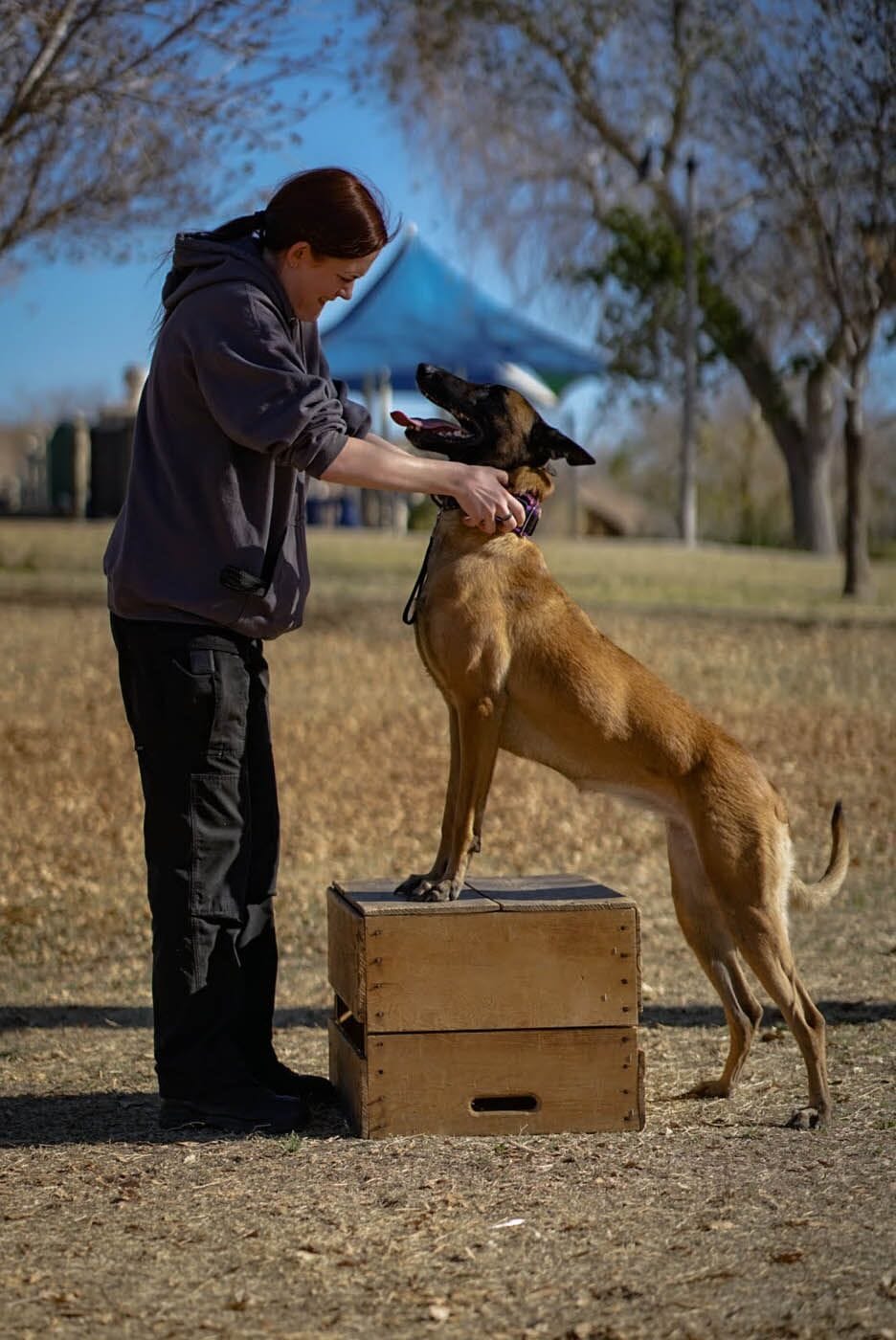
Have you ever watched a dog learn a new trick with pure fascination, seemingly understanding complex commands with ease? It might be that their human is using a brilliant technique called free shaping. Free Shaping Dog Training is a powerful, positive method that empowers your canine companion to offer behaviors and essentially “train themselves,” with you acting as the rewarding guide. It’s a journey of discovery for both you and your dog, building an incredible bond based on clear communication and mutual understanding.
What Exactly is Free Shaping in Dog Training?
At its core, free shaping, often referred to as “shaping” or “opportunity-based training,” is a method where you reward any small movement or behavior that a dog offers that is in the general direction of a desired final action. Instead of luring or guiding the dog into a position, you wait for them to offer behaviors and then reinforce the ones you like. This process is broken down into tiny steps, gradually building up to the complete behavior you want to see.
Think of it like sculpting. You don’t force the clay into shape; you chip away at it, refining and molding until the desired form emerges. In free shaping, the dog is the sculptor, and you are the appreciative observer who rewards each refined chip. This method fosters a dog’s natural curiosity and problem-solving skills, making learning an enjoyable and engaging experience for them.
The Science Behind the Success: How Free Shaping Works
Free shaping is rooted in the principles of operant conditioning, specifically positive reinforcement. When a dog performs a behavior that you mark with a clicker or a verbal cue (like “yes!”) and then reward with a treat, they learn to associate that behavior with a positive outcome. Over time, they begin to understand what earns them rewards, and they will offer more of those behaviors.
The “free” aspect comes from allowing the dog to offer behaviors voluntarily. You’re not dictating their every move. Instead, you create an environment where they are motivated to explore and experiment. This approach is incredibly effective because it taps into a dog’s intrinsic desire to please and their natural drive to explore their environment.
Key Principles of Free Shaping:
- Observation: You must be a keen observer, noticing even the slightest movements your dog makes.
- Reinforcement: Rewarding the desired behaviors with high-value treats, praise, or toys.
- Capturing: Rewarding a behavior that the dog offers spontaneously.
- Lifting Criteria: Gradually increasing the requirements for what earns a reward as the dog progresses.
- Patience: Understanding that this process takes time and consistency.
This method encourages a dog to think critically and problem-solve. They learn to experiment with different actions to see which ones result in a reward. This cognitive engagement is highly beneficial for their mental well-being and can prevent boredom-related behavioral issues.
Getting Started: Your First Steps into Free Shaping
Embarking on the journey of free shaping with your dog can be incredibly rewarding. It requires a shift in perspective from directing your dog to observing and responding to them. Here’s how to begin:
Essential Tools for Free Shaping:
- High-Value Treats: Small, soft, and incredibly tasty treats that your dog loves. These should be more desirable than their regular kibble.
- A Clicker (Optional but Recommended): A clicker provides a precise marker for the exact moment the dog performs the desired behavior. The click bridges the gap between the behavior and the reward. If not using a clicker, a short, distinct verbal marker like “yes!” or “good!” works too.
- A Quiet Environment: Start in a place with minimal distractions to help your dog focus.
Step-by-Step Guide to Your First Free Shaping Session:
- Step 1: Choose a Simple Behavior: Begin with something very basic. For instance, you might want to shape your dog to touch a target stick with their nose, lie down, or even just look at a specific object.
- Step 2: Observe and Wait: Simply sit with your dog and observe them. Let them explore their environment. Don’t ask them to do anything.
- Step 3: Mark and Reward: The moment your dog performs any behavior that vaguely resembles what you’re aiming for, mark it with your clicker or verbal cue. For example, if you want them to touch a target stick, you might mark them for looking at it, then for taking a step towards it, then for sniffing it, and finally for touching it with their nose.
- Step 4: Reward Generously: Immediately after marking, give your dog a high-value treat.
- Step 5: Repeat and Gradually Increase Criteria: Continue this process. As your dog starts to understand what earns rewards, you can gradually increase your expectations. For instance, if they’re touching the target, you might start waiting for them to hold the touch for a second longer before marking and rewarding.
Pro Tip: Keep training sessions short, typically 5-10 minutes, several times a day. This prevents your dog from becoming fatigued or bored and keeps the learning experience positive.
Common Behaviors You Can Free Shape:
The beauty of free shaping is its versatility. You can apply it to a vast array of behaviors, from simple cues to complex tricks and even everyday manners.
- “Go to Mat” or “Place”: Reward your dog for looking at the mat, stepping onto it, lying down on it, and staying there.
- Targeting: Teaching your dog to touch an object (like a target stick or your hand) with their nose or paw. This is a foundational skill for many other behaviors.
- “Spin” or “Twirl”: Reward any movement of the head or body in a circular motion, gradually shaping it into a full spin.
- “Bow”: Reward your dog for lowering their front end while keeping their rear end up.
- “Fetch”: You can shape this by rewarding your dog for looking at the ball, moving towards it, sniffing it, picking it up, and eventually bringing it back to you.
- “Leave It”: Reward your dog for disengaging from an item.
When teaching more advanced behaviors or addressing specific challenges, consider resources like positive training methods for dogs or exploring advanced obedience training for dogs.
When to Use Free Shaping vs. Other Training Methods
While free shaping is a fantastic tool, it’s not always the only tool you need. Understanding when to employ it versus other methods is key to effective dog training.
Free Shaping Shines When:
- Teaching Novel Behaviors: When you want your dog to learn a trick or behavior they’ve never done before.
- Encouraging Problem-Solving: You want your dog to think independently and actively participate in training.
- Building Confidence: For shy or hesitant dogs, it can be a gentle way to build their confidence as they succeed on their own terms.
- Enhancing Engagement: It creates a highly engaging and fun training session for both dog and owner.
- Addressing Certain Behavioral Issues: In some cases, it can be used to teach alternative behaviors to unwanted ones.
When Other Methods Might Be More Appropriate:
- Immediate Safety Needs: For critical safety cues like a strong recall or a reliable “leave it” around dangerous items, you might start with luring or physical guidance to ensure rapid learning and reliability. However, free shaping can be used to refine these behaviors once the initial safety is established.
- Teaching Complex Sequences: While you can shape complex behaviors, breaking them down into very small parts can be time-consuming. Sometimes, a combination of luring and then shaping is more efficient for sequences.
- Very High Drive Dogs: For dogs with exceptionally high prey drives or energy levels, initial management might be needed before introducing purely free-shaping sessions.
- Owner Limitations: Some owners may find it challenging to observe and mark subtle behaviors accurately, especially at first. In such cases, working with in house dog trainer or starting with simpler shaping exercises under guidance can be beneficial.
It’s often most effective to use a blend of training techniques. For instance, you might lure a dog into a basic down-stay and then use free shaping to add duration, distractions, or even a specific paw position.
Troubleshooting Common Challenges in Free Shaping
Even with the best intentions, you might encounter a few bumps in the road. Here’s how to navigate them:
- My dog isn’t offering any behaviors:
- Problem: Your criteria might be too high, or the environment too distracting.
- Solution: Lower your criteria significantly. Reward any movement that’s even remotely related to what you want. Reduce distractions. Ensure your treats are high-value enough.
- My dog is just staring at me:
- Problem: They might be confused or waiting for you to prompt them.
- Solution: Ensure your marker (clicker/word) is clearly associated with a reward. Try a very small, easy-to-offer behavior to get them started again, like a head turn.
- My dog is getting frustrated:
- Problem: The task is too difficult, or the sessions are too long.
- Solution: End the session on a positive note with an easy win. Take a break. Shorten sessions. Re-evaluate your criteria – break the behavior down even further.
- I’m not sure what to reward:
- Problem: You need to refine your observation skills.
- Solution: Watch videos of experienced trainers free shaping. Practice marking and rewarding random movements your dog makes even when you’re not specifically training. This sharpens your timing.
Remember, consistency and patience are your greatest allies. Every dog learns at their own pace. Celebrate the small victories! You can find additional insights into specific training challenges and solutions in resources that cover sit means sit aggressive dog training, which often involves advanced behavioral modification techniques that can inform free shaping strategies.
The Long-Term Benefits of Free Shaping for Your Dog
Free shaping is more than just a training technique; it’s a philosophy that fosters a deeper connection and understanding between you and your dog.
- Enhanced Cognitive Skills: Dogs trained with free shaping become better problem-solvers and critical thinkers.
- Increased Confidence: Successfully figuring out what earns rewards boosts a dog’s self-esteem.
- Stronger Bond: The collaborative nature of free shaping builds trust and a unique communication system between owner and dog.
- Reduced Boredom and Destructive Behaviors: Mentally stimulated dogs are happier, calmer dogs.
- Improved Communication: You learn to read your dog’s subtle cues, and they learn to communicate their offers to you.
By embracing free shaping, you’re not just teaching your dog tricks; you’re empowering them, respecting their intelligence, and building a partnership based on mutual respect and joy. It’s a testament to the incredible capacity dogs have to learn and engage with us when given the opportunity.
Conclusion: The Art of Shaping Your Dog’s World
Free shaping dog training is a dynamic, engaging, and incredibly effective way to teach your dog a wide variety of behaviors. It shifts the focus from your dog simply obeying commands to them actively participating in their own learning process. By observing, marking, and rewarding, you unlock your dog’s potential, fostering their intelligence, confidence, and your bond. Whether you’re teaching a simple cue or a complex trick, the principles of free shaping offer a rewarding path to a better-trained, happier, and more connected canine companion. Start small, be patient, and enjoy the incredible journey of discovery with your dog.
