
Bringing a new dog into your life is an incredibly rewarding experience, filled with wagging tails, sloppy kisses, and endless loyalty. However, for that bond to truly flourish, effective communication and understanding are key. This is where basic dog training comes in. It’s not just about teaching tricks; it’s about building a foundation of trust and mutual respect, ensuring your furry friend is a well-behaved member of your family and society. Thankfully, you don’t need a professional trainer or a hefty budget to get started. There are a wealth of Free Basic Dog Training Tips and resources available to help you shape your dog’s behavior.
The journey of training your dog should be an enjoyable one, focusing on positive reinforcement and understanding your dog’s perspective. Remember, every dog learns at their own pace, and consistency is more important than intensity. This guide will walk you through essential free basic dog training tips that empower you to guide your canine companion towards good behavior, strengthening your relationship every step of the way.
Understanding the ‘Why’ Behind Basic Dog Training
Before diving into the ‘how,’ it’s crucial to grasp why basic dog training is so vital. A well-trained dog is a happy dog, and a happy dog makes for a happy owner. Training addresses several key areas:
- Safety: Essential commands like “come” and “stay” can prevent your dog from running into dangerous situations.
- Socialization: Training helps dogs understand appropriate behavior around people and other animals, making them more confident and less anxious in various social settings.
- Bonding: The process of training itself strengthens the connection between you and your dog, fostering trust and clear communication.
- Mental Stimulation: Dogs, like humans, need mental exercise. Training provides this, preventing boredom and potential destructive behaviors that can arise from it.
- Household Harmony: Basic manners, like potty training and not jumping on furniture, ensure your dog integrates smoothly into your home environment.
It’s often said that dogs want to please their owners, and this is largely true. When you establish clear expectations and reward desired behaviors, your dog will naturally gravitate towards them.
Essential Commands to Start With
When you’re looking for free basic dog training tips, mastering a few core commands is your first priority. These form the building blocks for more complex training and everyday management.
1. Sit
This is often the very first command dogs learn. It’s a fundamental way to gain your dog’s attention and establish control.
- How to teach:
- Hold a treat near your dog’s nose.
- Slowly move the treat up and back over their head. As their nose follows the treat, their rear end will naturally lower.
- The moment their bottom touches the floor, say “Sit” and give them the treat and praise.
- Repeat this several times in short, positive sessions.
2. Stay
“Stay” teaches impulse control and is crucial for safety. It requires patience from both you and your dog.
- How to teach:
- Ask your dog to “Sit.”
- Hold your hand up in a flat palm towards their face (like a stop sign) and say “Stay.”
- Take just one step back. If they remain seated, step back towards them, praise, and give a treat.
- Gradually increase the distance and duration you ask them to stay. If they move, gently put them back in the sit position and try again from a shorter distance.
3. Come (Recall)
A reliable recall is arguably the most important command for your dog’s safety. It needs to be a positive experience every time.
- How to teach:
- Start in a quiet, enclosed area. Get excited and call your dog’s name followed by “Come!”
- As they run to you, back away slightly to encourage them to chase you.
- When they reach you, offer enthusiastic praise and a high-value treat. Make it a party!
- Never punish your dog if they eventually come to you after a delay; always reward them for coming, even if it took a while.
4. Down
Similar to “sit,” the “down” command helps calm your dog and is useful in many situations, like settling them during meal preparation or when guests arrive.
- How to teach:
- Ask your dog to “Sit.”
- Hold a treat near their nose and lower it towards the floor between their front paws.
- Slowly drag the treat along the floor, away from them. Most dogs will follow the treat and lie down.
- As they lower into a down position, say “Down” and reward them.
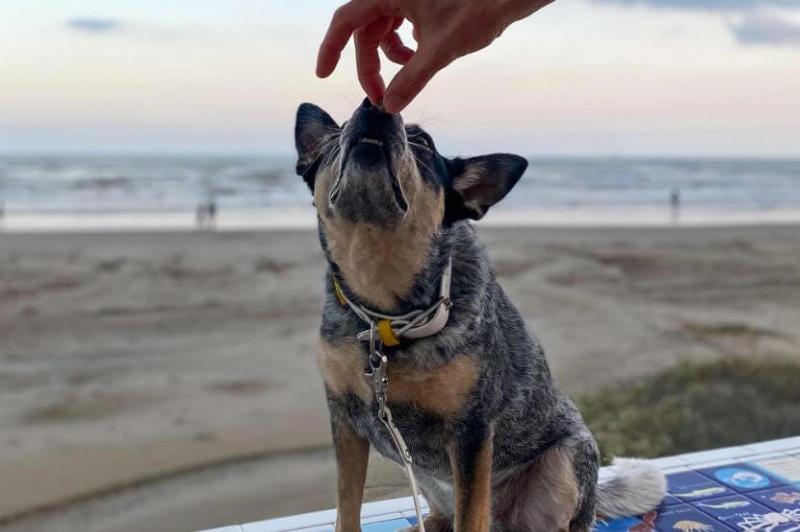 A dog happily performing the 'down' command with its owner, a clear illustration of basic dog training.
Positive Reinforcement: The Cornerstone of Effective Training
The most effective and humane approach to dog training is positive reinforcement. This means rewarding behaviors you like, making it more likely that your dog will repeat them. Forget punishment-based methods; they can create fear, anxiety, and aggression.
What are Rewards?
- Treats: Small, high-value treats (like pieces of chicken, cheese, or commercial training treats) are excellent motivators. Reserve the highest value treats for the most challenging commands or when first introducing a new behavior.
- Praise: Enthusiastic verbal praise (“Good boy!”, “Yes!”, “Great job!”) delivered in a happy tone is essential.
- Petting: A good scratch behind the ears or a belly rub can be very rewarding for many dogs.
- Toys: For some dogs, a quick game of tug or fetch can be the ultimate reward.
Timing is Everything: Deliver the reward immediately (within 1-2 seconds) after the desired behavior occurs. This helps your dog clearly connect their action with the positive outcome. A clicker can be a helpful tool here; the click marks the exact moment of the correct behavior, followed by a treat.
Consistency is Key: Everyone in the household should use the same commands and reward system. Inconsistency confuses dogs and slows down the learning process.
Addressing Common Behavioral Issues with Free Tips
Beyond basic commands, many dog owners face common behavioral challenges. Here are some free basic dog training tips to tackle them:
Potty Training
Patience and a consistent schedule are paramount.
- Schedule: Take your puppy out frequently – first thing in the morning, after waking from naps, after playing, after eating, and before bed.
- Supervision: Keep a close eye on your puppy when they are inside. If you see them sniffing around or circling, immediately take them outside.
- Reward: When they eliminate outside, praise them enthusiastically and offer a treat.
- Accidents: If an accident happens indoors, don’t scold. Clean it up thoroughly with an enzymatic cleaner to eliminate odors that might attract them back to the same spot. Briefly confine your puppy or supervise them more closely.
Chewing
Chewing is a natural dog behavior, especially for puppies. The key is to redirect it appropriately.
- Provide Appropriate Chew Toys: Offer a variety of safe chew toys with different textures.
- Management: When you can’t supervise, confine your dog to a safe space (like a crate or puppy-proofed room) with their toys.
- Redirection: If you catch your dog chewing something they shouldn’t, calmly interrupt them and offer an appropriate chew toy. Praise them when they take the toy.
- Bitter Sprays: For persistent chewing on furniture or household items, consider using a pet-safe bitter spray.
Jumping Up
Dogs often jump to greet people, seeking attention. The goal is to teach them that polite greetings get rewarded.
- Ignore the Jump: When your dog jumps on you or guests, turn away, cross your arms, and ignore them. Do not make eye contact or speak.
- Reward Calmness: The moment all four paws are on the floor, turn back and offer praise or a treat.
- Train an Alternative Behavior: Teach your dog to sit for greetings. Ask them to sit when a person approaches, and then have the person greet them.
Integrating Training into Daily Life
The most successful training happens when it’s woven into your everyday routine. You don’t need to set aside long, formal training sessions every day, though those are beneficial.
- Incorporate Commands into Daily Activities: Ask your dog to “Sit” before putting down their food bowl, before going out the door, or before receiving a pat. Ask for a “Stay” while you prepare their meal.
- Practice Recall Randomly: Call your dog to you throughout the day, even when they are close by, and reward them. This keeps their recall sharp.
- Socialization Opportunities: Safely expose your dog to various environments, people, and other well-behaved dogs. This helps them generalize their training to different situations. Websites like dog basic obedience training offer insights into socialization.
- Short, Fun Sessions: Aim for multiple short training sessions (5-10 minutes) throughout the day rather than one long, tedious one. Keep it light and fun!
Advanced Steps and Resources
Once you’ve mastered the basics, you might be interested in exploring more advanced training. Resources like basic dog obedience training youtube channels can offer visual guidance. Understanding the costs associated with training, like the basic dog training cost, can also help you budget for future needs if required, although many fundamental skills can be learned for free. If you’re looking for local support, searching for basic obedience dog training in columbus can connect you with nearby resources. For a comprehensive overview, explore basic training commands for dogs.
Conclusion: The Rewarding Journey of Training
Embarking on the journey of free basic dog training tips is one of the most rewarding investments you can make in your relationship with your canine companion. It requires patience, consistency, and a positive attitude, but the results – a well-behaved, confident, and happy dog – are invaluable. By understanding your dog, using positive reinforcement, and integrating training into your daily life, you pave the way for a lifetime of companionship and joy. Remember, every small success is a step forward in building a stronger, more harmonious life together.
