
In the world of equestrian arts, few names evoke as much reverence and wonder as Frederic Pignon. More than just a trainer, he is an artist, a philosopher, and a pioneer who has redefined the very essence of the human-horse relationship. For decades, the Frederic Pignon Horse Trainer approach has captivated audiences and inspired countless equestrians to seek a more harmonious, joyful, and profound partnership with their horses. It’s a journey away from force and into a dialogue built on trust, play, and a deep understanding of the horse’s nature.
This article explores the philosophy and methods of Frederic Pignon, the legendary co-founder of the equestrian spectacle Cavalia. We will delve into the principles that guide his work, his partnership with his equally talented wife, Magali Delgado, and how their approach offers a transformative path for any horse lover. Prepare to see the world of horse training not as a set of commands, but as a beautiful dance of two willing partners.
The Philosophy: More Than Natural Horsemanship
At its core, the Frederic Pignon horse trainer philosophy is a holistic one, centered on communication and mutual respect. While it shares common ground with “Natural Horsemanship,” Pignon and Delgado’s approach is uniquely their own. They prefer not to be called “trainers,” as the term can imply an imposition of a human agenda onto the animal. Instead, they see themselves as guides, partners, and even students of the horse.
Their work is founded on a few key pillars:
- Understanding the Horse’s Nature: Pignon emphasizes the importance of observing and listening to the horse. Every flick of an ear, change in the eye, or shift in posture is a form of communication. By learning to “read” the horse, a person can understand its thoughts and feelings, preventing misunderstandings that create barriers.
- The Power of Play: Improvisation and play are central to their method. Pignon has found that allowing horses the freedom to express themselves and even make choices during a session keeps them relaxed, happy, and engaged. It turns training from a chore into a joyful collaboration.
- Building a Bond of Trust: The ultimate goal is to become a “safe haven” for the horse. This involves establishing clear, fair boundaries without resorting to force. The horse learns that the human is a reliable leader who ensures its safety and well-being, fostering a deep and unbreakable connection.
“Misunderstanding produces an even greater barrier between us than ill treatment,” Pignon has stated. “Understanding will, on the other hand, begin to forge a link between the two of us.” This simple yet profound idea is the cornerstone of his entire approach.
Who is Frederic Pignon?
Born in the Camargue region of France, Frederic Pignon’s love for animals, especially horses, was nurtured from a very young age by his parents. His journey led him through dressage and even stunt riding, but his true calling was in developing a deeper, more intuitive connection with horses. This path led him to create, alongside his wife Magali Delgado, the world-renowned show Cavalia. This Cirque du Soleil-style performance, featuring dozens of free-running stallions, showcased their philosophy to millions, proving that spectacular results could be achieved through kindness and liberty.
The Unspoken Language of Liberty Work
Perhaps the most visually stunning aspect of the Frederic Pignon horse trainer method is his mastery of liberty work. Watching him in an arena with multiple stallions, all without ropes or reins, is like witnessing magic. The horses remain connected to him, attentive and willing, even amidst the distractions of a large audience, bright lights, and music.
This isn’t a result of tricks or secret commands. It’s the culmination of a relationship built on trust. The horses choose to be with him because he has made himself the most interesting and safest place to be. He uses his body language and energy to communicate, inviting the horses to participate rather than demanding their obedience. Whips, if used at all, are merely extensions of his arm, tools for direction, not punishment. The focus is on keeping the horse’s mind and body soft, encouraging them to play and express themselves freely.
Magali Delgado: The Perfect Partner
It’s impossible to discuss Frederic Pignon without mentioning his wife, Magali Delgado. A masterful Grand Prix dressage rider and equestrian artist in her own right, Magali shares Frederic’s philosophy and is an integral part of their success. While Pignon is renowned for his liberty work, Magali brings an incredible artistry and technical skill to their ridden work.
Together, they demonstrate that this heart-centered approach is not limited to groundwork. It translates seamlessly into the saddle, creating a ridden performance that is both technically brilliant and emotionally resonant. Their partnership is a testament to how two individuals, united by a shared passion and philosophy, can elevate their art to new heights.
Learning from the Masters
For those inspired by the Frederic Pignon horse trainer philosophy, there are several avenues to learn more. Pignon and Delgado have shared their knowledge through various channels over the years.
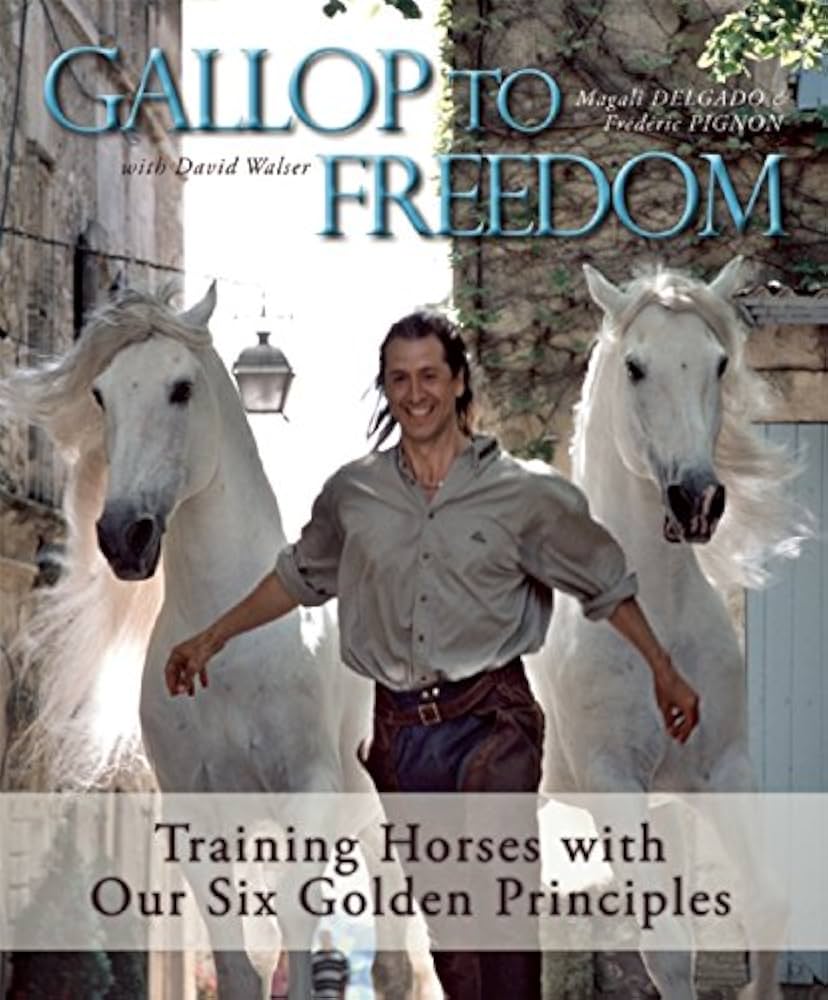
- Books: Their international bestseller, “Gallop to Freedom,” provides a deep dive into their philosophy and personal journey. It details their “six golden principles,” offering readers a framework for building a better relationship with their own horses.
- Clinics: Though they now focus on their own shows in France, they occasionally teach a limited number of clinics. Participating in or auditing one of these sessions offers an invaluable opportunity to see their methods in practice.
- Shows: From the grand scale of Cavalia to their current, more intimate show “Sueno,” their live performances are the ultimate expression of their work. They are a powerful and moving demonstration of what is possible when the human-horse bond is nurtured with respect and love.
According to Dr. Alistair Finch, a leading equine behavioral specialist, “The work of Pignon and Delgado represents a paradigm shift in horse training. They moved beyond the mechanics of behavior modification and into the realm of interspecies communication. Their success proves that true partnership yields results that dominance and control never can.”
Frequently Asked Questions about Frederic Pignon
What is the core of Frederic Pignon’s training philosophy?
The core of his philosophy is building a relationship based on mutual trust, respect, and communication. He focuses on understanding the horse’s nature, using play as a teaching tool, and becoming a “safe haven” for the horse, rather than using force or dominance.
What is Cavalia?
Cavalia was a grand-scale equestrian show co-founded by Frederic Pignon and Magali Delgado. It was famous for its artistic combination of acrobatics and horsemanship, particularly featuring large groups of stallions performing at liberty, and it toured the world for many years, showcasing their unique training philosophy to millions.
Does Frederic Pignon use tools like whips or round pens?
Yes, he may use tools like whips and round pens, but their purpose is different from traditional training. Whips are used as extensions of the arm for signaling, not for punishment. The round pen is used to create focus and interest, not to chase the horse into submission.
How is his method different from other “Natural Horsemanship” methods?
While sharing the principle of working without force, Pignon’s style is often described as more focused on artistry, play, and improvisation. He doesn’t adhere to a rigid system, but rather encourages a fluid dialogue where the horse has a degree of choice, allowing each performance or session to be unique.
Can anyone apply Frederic Pignon’s methods?
Absolutely. The principles of his philosophy—patience, observation, clear communication, and building trust—are universal and can be applied by any horse owner, regardless of their discipline or experience level, to improve their relationship with their horse.
A Legacy of Love and Connection
The Frederic Pignon horse trainer legacy is not about a specific set of techniques or a rigid system. It is a testament to a different way of being with horses—one that honors their intelligence, sensitivity, and spirit. He and Magali Delgado have shown the world that the most breathtaking performances and the strongest bonds are not born from control, but from connection.
By encouraging us to listen more, to play more, and to lead with our hearts, they have inspired a generation of equestrians to put the relationship first. The ultimate lesson from Frederic Pignon is that when you offer a horse understanding, respect, and friendship, they will give you their whole heart in return, willingly and joyfully. This profound partnership is the true essence of equine excellence.
