
The Alexandrine parrot, also known as the Alexandrine parakeet or epauletted parakeet, is a striking bird native to South and Southeast Asia. Renowned for their intelligence and vibrant plumage, these parrots can reach up to 60 cm in length and live for up to 30 years. They inhabit a diverse range of environments, from dense rainforests to palm plantations, with a key requirement being the availability of tree cavities for nesting. Beyond their natural range, feral populations have established themselves in various regions, often originating from escaped or released pets.
Natural Habitat and Distribution
Alexandrine parrots are widespread across South and Southeast Asia, with their westernmost presence in Pakistan and extending east to Cambodia. Their adaptability allows them to thrive in various habitats, provided suitable nesting sites are available. The species has also established non-native populations in areas like the Arabian Peninsula and Turkey due to the pet trade.
Intelligence, Personality, and Social Needs
Parrots are celebrated for their high intelligence, and Alexandrines are no exception. Their advanced problem-solving abilities, while fascinating, also mean they require significant mental stimulation to prevent boredom. Signs of boredom can include excessive vocalization, feather plucking, and aggression. Owners must provide a variety of toys that encourage both physical activity and cognitive engagement, such as foraging toys.
Well-socialized Alexandrines enjoy interacting with their human families. While not always overtly cuddly, many appreciate gentle neck scratches and may snuggle on their owner’s shoulder. They are known for being charming, playful, and trainable. Engaging in activities like teaching them to step up or wave can strengthen the bond and combat boredom. Alexandrines are needy birds and may require a companion if their owner works long hours. It’s important to establish and maintain a consistent routine, as changes can distress these birds.
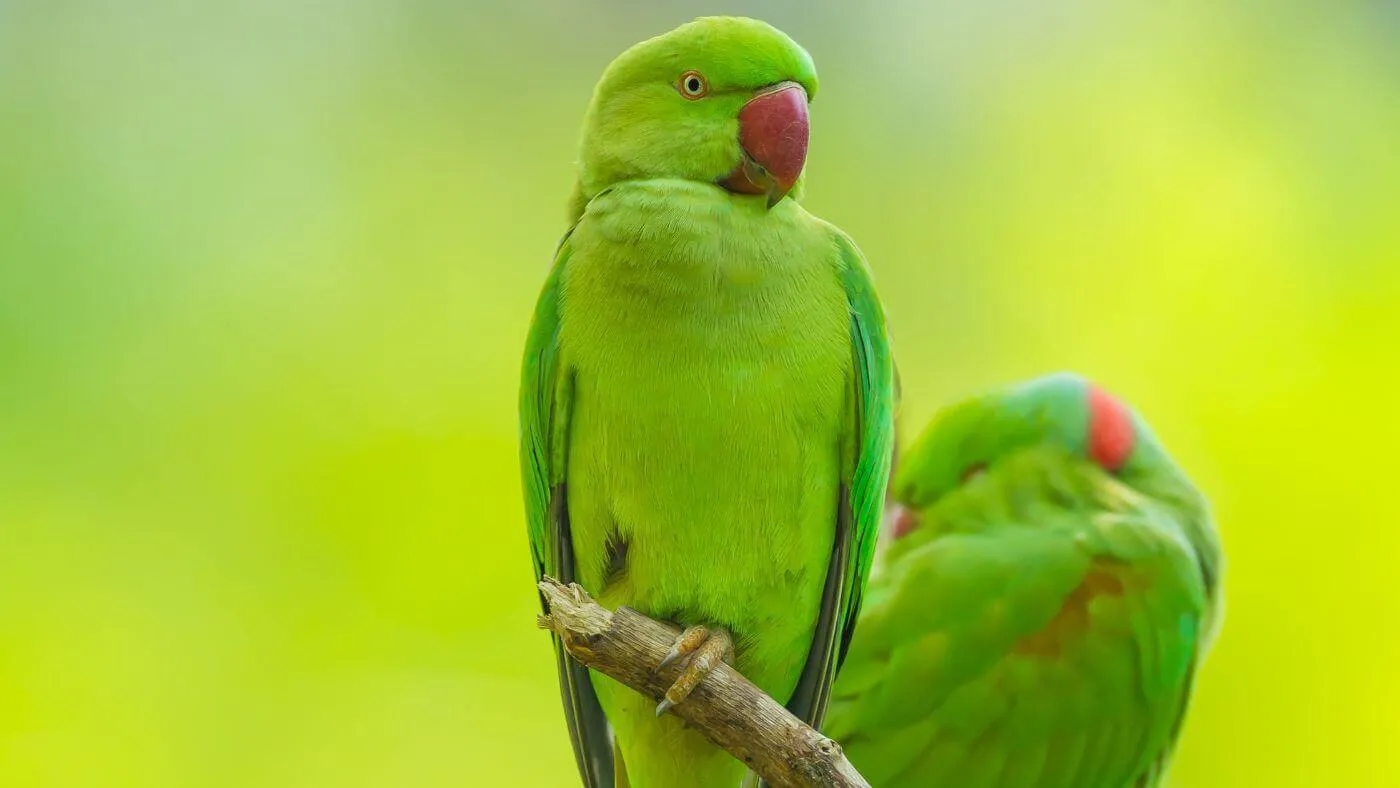 Alexandrine Parrot looking attentively
Vocalizations and Talking Ability
The intelligence of Alexandrine parrots is mirrored in their vocalizations. They possess excellent mimicking skills, with individuals learning to imitate a wide range of words and sounds. Consistent repetition during training sessions can help them acquire new vocabulary. However, Alexandrines can also be quite noisy, with moderate noise levels for a parrot species. Their attention-seeking flock calls can be piercing, and they also produce softer chirps and squawks throughout the day. A quiet parrot might be a sign of mischief, as they are often plotting their next adventure when not vocalizing.
Diet and Nutrition
In the wild, Alexandrine parrots consume a varied diet of seeds, fruits, nuts, flowers, buds, vegetables, legumes, nectar, and insects. Pet owners should aim to replicate this diversity. A high-quality parrot pellet should form the staple of their diet, supplemented with fresh vegetables daily, fresh fruit weekly, sprouted seeds, cooked grains, and occasional sources of protein like boiled egg or mealworms. Parrot-safe branches can also be offered as a foraging opportunity. A calcium block or cuttlebone is essential for their calcium intake, and fresh water should always be readily available.
Housing and Cage Requirements
A parrot’s cage is its sanctuary and should be spacious enough for movement. Alexandrines require a minimum cage length of 40 inches if they are allowed significant time outside the cage. For birds that remain primarily caged, a full-sized aviary of at least 15 feet is recommended. The cage should be equipped with a variety of natural wood perches of different textures and diameters. A diverse selection of safe toys is crucial for their mental well-being, and multiple food and water stations are beneficial, especially for multi-bird households. Creating a dedicated play area with perches and toys, often on top of the cage, provides an additional space for enrichment. It is vital to ensure that any area accessible to the parrot is free from hazards such as open windows, toxic plants, and electrical cords.
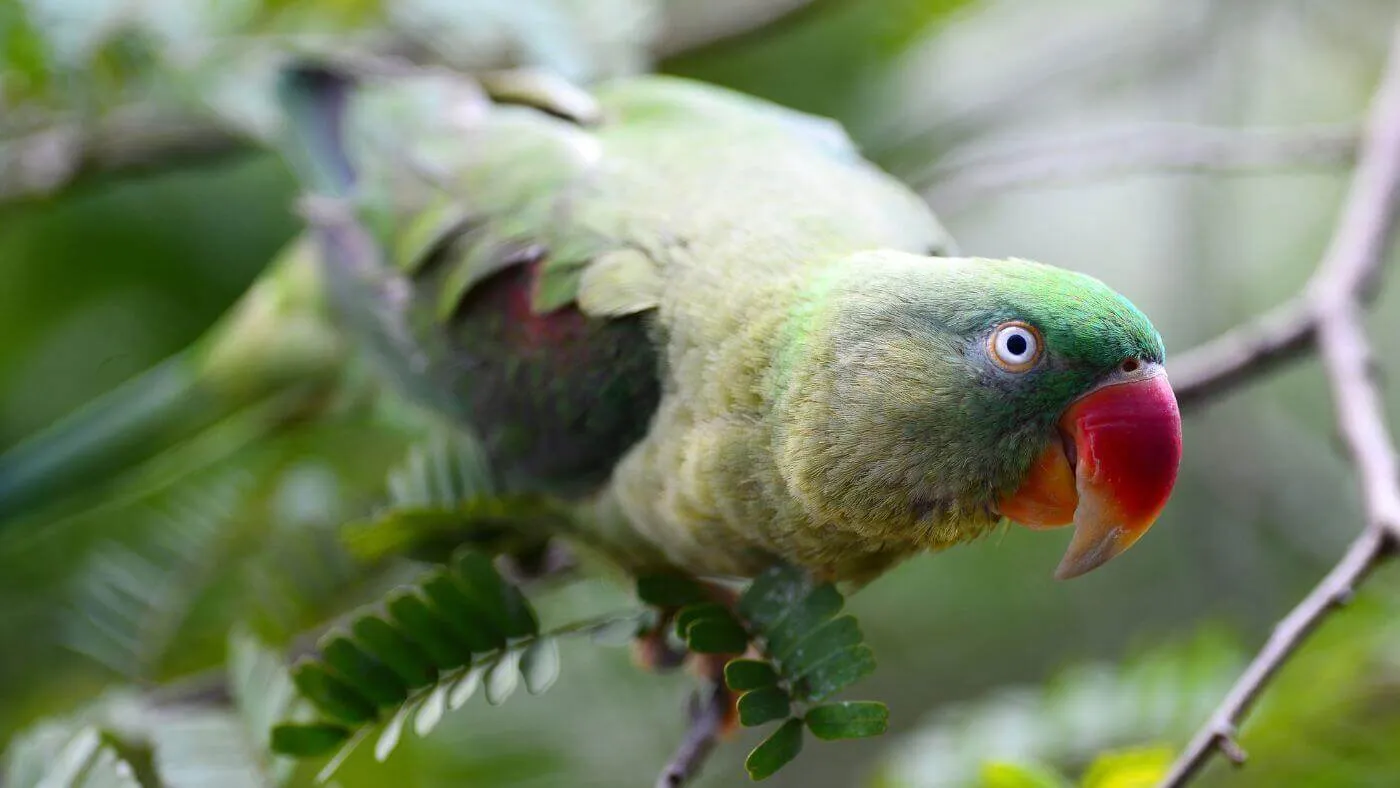 Alexandrine Parrots perched on a branch
Addressing Feather Plucking
Feather plucking and other self-mutilation behaviors are moderately common in Alexandrine parrots, often stemming from boredom or underlying medical issues. Over-preening can escalate into feather removal or even skin damage. If feather plucking is observed, owners should carefully review the bird’s living conditions and daily routine. Consulting an avian veterinarian is highly recommended to diagnose and address both medical and psychological causes, preventing the behavior from becoming ingrained.
Interesting Facts About Alexandrine Parrots
- Alexandrine parrots are larger than Indian ringneck parrots, with heavier heads and beaks, and a distinctive red shoulder patch.
- The species was moved to the genus Palaeornis in 2019, a genus that also included the extinct Seychelles parakeet.
- There are five recognized subspecies, with minor differences in size and coloration.
- The Alexandrine parrot is listed as Near Threatened by the IUCN due to habitat loss and human persecution.
- They are considered crop pests in their native range, feeding on agricultural products, which leads to conflict with farmers.
- Historically, Alexandrine parrots were kept as pets by royalty, with Alexander the Great reportedly introducing them to Europe.
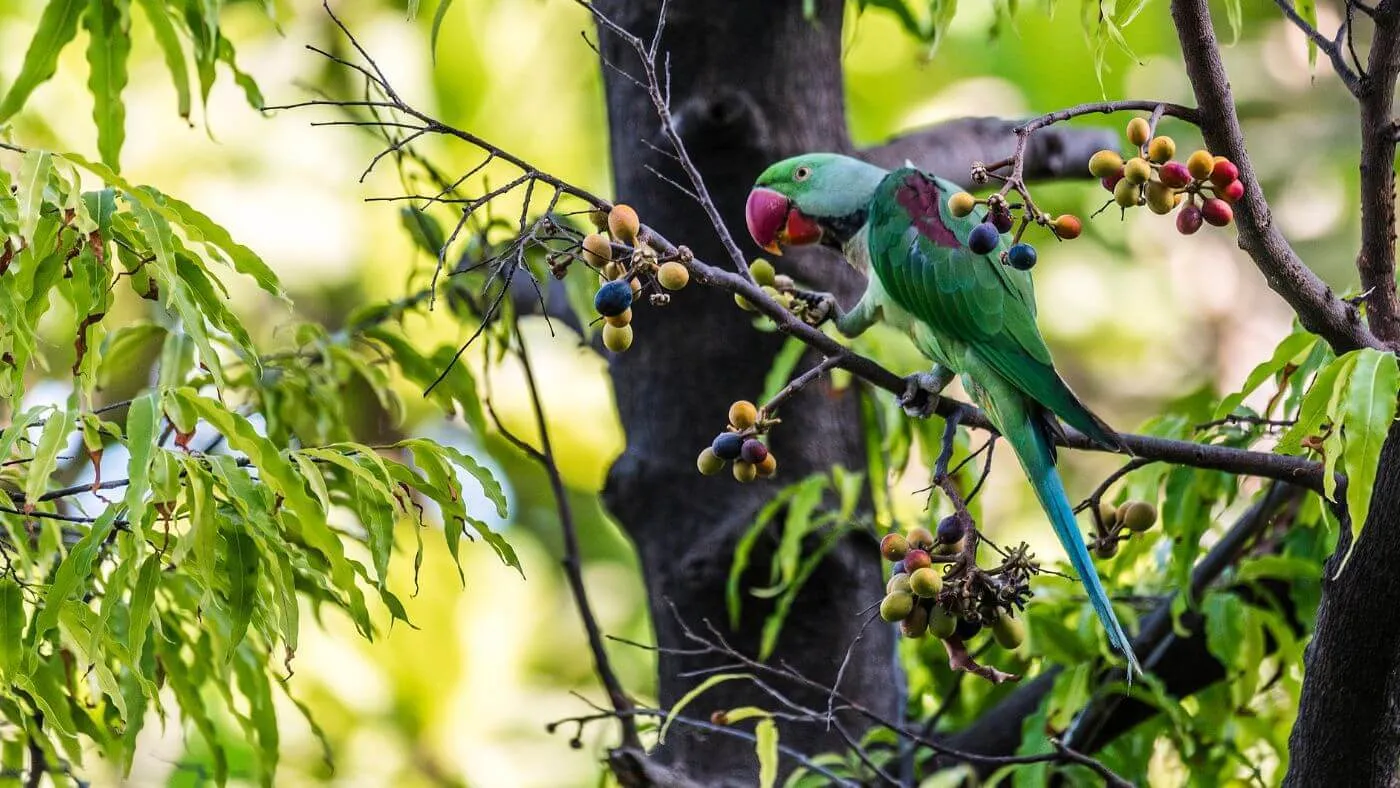 Alexandrine Parrot captured in a close-up shot
Conclusion
The Alexandrine parrot can be a rewarding companion for the dedicated owner who can provide specialized care and abundant attention. Their need for mental stimulation, social interaction, and a varied diet means potential owners must carefully consider their ability to meet these demands long-term.
For more Parrot Profiles & Care Guides, please visit our Alphabetical list of Parrot Fact Sheets.
References:
Braun, M. P., Datzmann, T., Arndt, T., Reinschmidt, M., Schnitker, H., Bahr, N., … & Wink, M. (2019). A molecular phylogeny of the genus Psittacula sensu lato (Aves: Psittaciformes: Psittacidae: Psittacula, Psittinus, Tanygnathus,† Mascarinus) with taxonomic implications. Zootaxa, 4563(3), zootaxa-4563.
Parr, M., & Juniper, T. (2010). Parrots: a guide to parrots of the world. Bloomsbury Publishing.
