
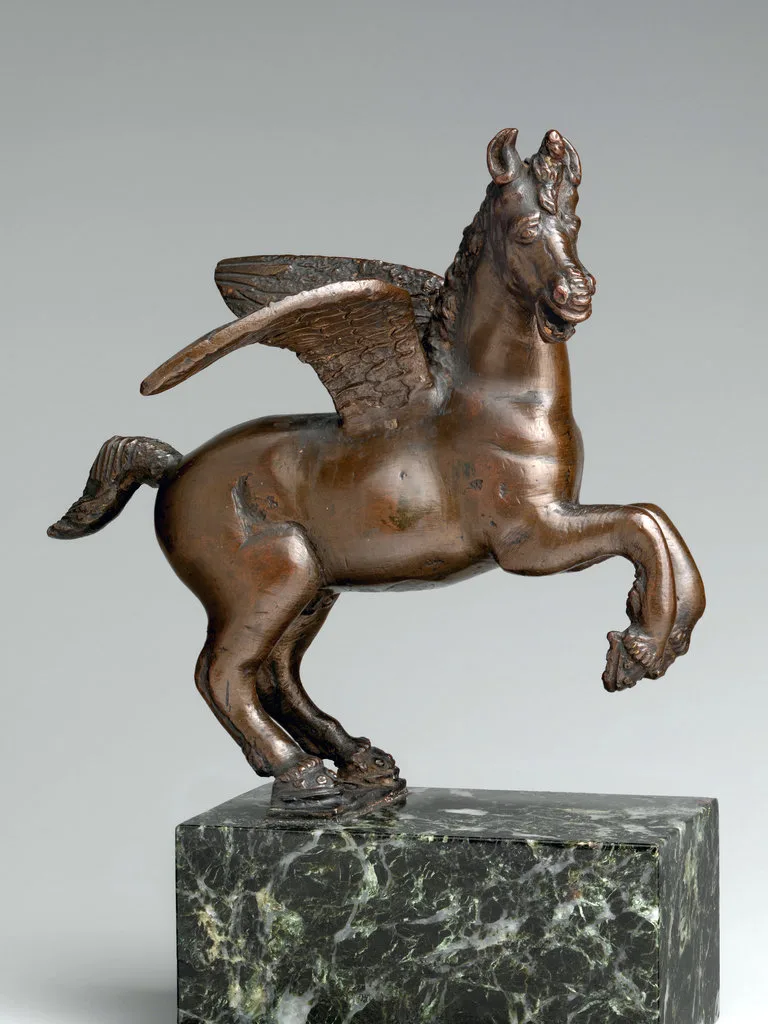
The image is instantly recognizable, a powerful symbol etched into our collective consciousness: a magnificent horse, muscles coiled, with a great pair of feathered wings unfurled against the sky. This is the heart of the Flying Horse Story, a myth that has galloped through centuries of human imagination without losing its power. It speaks to a fundamental desire for freedom, for transcendence, and for the kind of beauty that bridges the gap between the earthly and the divine. While many cultures have tales of winged steeds, the most iconic of them all is Pegasus, the dazzling white stallion of Greek mythology whose legend is a cornerstone of this enduring archetype.
The tale of Pegasus is more than a simple fantasy; it’s a rich narrative woven with themes of heroism, creativity, and divine power. It represents our ability to rise above our origins and to harness incredible forces, not just in the world around us, but within ourselves. This exploration into the world of winged horses begins with Pegasus, the definitive flying horse, but it also touches upon the universal appeal of this powerful symbol across different cultures and eras. Understanding the story of pegasus the flying horse is to understand a core part of our mythological heritage.
The Birth of a Legend: The Myth of Pegasus
Unlike many creatures of myth born in serene or majestic settings, the origin of Pegasus is one of violent paradox. His story begins not in a sunlit meadow, but from the tragic end of one of mythology’s most feared monsters.
An Unlikely Origin: From Medusa’s Blood
Pegasus was the offspring of two powerful and wildly different beings: Poseidon, the mighty god of the sea, and Medusa, the Gorgon with snakes for hair whose gaze turned mortals to stone. In a sacred temple of Athena, Poseidon took the form of a horse and lay with the beautiful priestess Medusa. Enraged by the desecration of her temple, Athena cursed Medusa, transforming her into the horrifying creature we know today.
Years later, the hero Perseus was sent on a quest to slay Medusa. When he beheaded the Gorgon, from her spilled blood sprang two immortal beings: the warrior Chrysaor and the winged horse, Pegasus. His name is believed to derive from the Greek word pēgē, meaning “spring,” as he was born near the “springs” of the Ocean. In this dramatic birth, Pegasus represents a kind of divine alchemy—beauty born from horror, and life emerging from death. He was an immortal creature from his first breath, untainted by the monstrous fate of his mother.
The Hero’s Steed: Bellerophon and the Chimera
While often mistakenly associated with Perseus or Hercules, the primary rider of Pegasus was another Greek hero named Bellerophon. A handsome but exiled prince from Corinth, Bellerophon was tasked with an impossible mission: to slay the Chimera, a terrifying fire-breathing monster with the head of a lion, the body of a goat, and the tail of a serpent.
Bellerophon knew he could not defeat such a beast on foot. A seer advised him that his only hope was to capture and tame the untamable Pegasus. The hero found the winged stallion drinking peacefully from the Peirene spring in Corinth. With the help of the goddess Athena, who gifted him a magical golden bridle, Bellerophon was able to approach and subdue the gentle creature.
Mounted on Pegasus, Bellerophon became a force of nature. He soared into the sky, dodging the Chimera’s fiery breath and attacking it from above, ultimately defeating the monster with a lead-tipped spear. The partnership between Bellerophon and Pegasus became legendary, a perfect fusion of human courage and divine power. Together, they accomplished many other great feats. Yet, this success would eventually lead to the hero’s downfall. Bellerophon’s pride swelled, and in an act of supreme arrogance, he attempted to ride Pegasus to the summit of Mount Olympus, believing he deserved a seat among the gods. This hubris angered Zeus, who sent a gadfly to sting Pegasus. The winged horse bucked in pain, throwing the mortal Bellerophon from his back. He fell ignominiously back to earth, destined to wander the rest of his days as a crippled outcast, forever humbled.
What Does the Flying Horse Symbolize?
The flying horse story is not just an adventure tale; it is a vessel for profound symbolism that resonates deeply with the human spirit. Pegasus, as the ultimate embodiment of this archetype, carries multiple layers of meaning that have inspired artists, poets, and thinkers for millennia.
Freedom and Unbridled Spirit
At its very core, the image of a flying horse is the ultimate expression of freedom. It combines the earthly power and grace of a horse, itself a symbol of spirit and forward momentum, with the boundless liberty of a bird. Pegasus represents the breaking of terrestrial chains, the ability to soar above the limitations and obstacles of the physical world. This powerful symbolism speaks to our own desire to overcome challenges, escape confinement, and achieve a higher state of being. The spirit of Pegasus is wild and untamed, a reminder that true freedom is a natural state, not something to be granted but something to be realized.
Inspiration, Creativity, and the Poetic Muse
One of the most enduring symbolic roles of Pegasus is that of the poetic muse. According to legend, after being thrown by Bellerophon, Pegasus continued his flight to Mount Olympus. But before he settled there, his hoof struck the ground of Mount Helicon, the home of the Muses. From that spot, a spring of water burst forth, known as the Hippocrene, or “Horse’s Spring.”
This spring became sacred to the nine Muses, the goddesses of art, literature, and science. It was said that anyone who drank from its waters would be blessed with poetic inspiration. Because of this, Pegasus became inextricably linked with creativity, artistic genius, and the sudden flash of insight that fuels great works. To “take wing on Pegasus” became a metaphor for letting one’s imagination soar to create poetry and art.
“The flying horse represents the power of the creative mind to ascend beyond the mundane. It is the leap of imagination that connects the known to the unknown, giving birth to art and innovation,” says Dr. Alistair Finch, a mythology expert.
Power, Speed, and a Higher Perspective
As Zeus’s chosen steed, Pegasus was given the honor of carrying the god’s thunder and lightning. In this role, he symbolizes immense power, speed, and divine authority. He is not merely a creature of gentle inspiration but also a being capable of wielding the very forces of nature. Riding Pegasus grants a hero a literal and figurative higher perspective—the ability to see the bigger picture, to understand challenges from a vantage point that those on the ground cannot. This represents strategic thinking, wisdom, and the clarity that comes from rising above the chaos of conflict. Much like the complex tales found in horse & pony stories, the narrative of Pegasus is layered with meaning.
Winged Steeds Across Cultures
While Pegasus is the most famous, the concept of a winged or celestial horse is not unique to Greek mythology. The idea of a divine equine that can traverse the heavens appears in various forms across the globe, highlighting its universal appeal.
Al-Buraq in Islamic Tradition
In Islamic tradition, the Buraq is a magnificent, otherworldly creature that transported the Prophet Muhammad during his Night Journey from Mecca to Jerusalem and then to the heavens. Described as being larger than a donkey but smaller than a mule, with a face like a human and a body like a horse, the Buraq is often depicted with wings. The name “Buraq” is derived from the Arabic word for lightning, signifying its incredible speed. Like Pegasus, the Buraq is a divine messenger and a vehicle for spiritual ascent, bridging the gap between the mortal realm and the divine.
The Heavenly Horses of China
Chinese mythology features the Tianma, or “Heavenly Horse.” These were not typically depicted with physical wings but were believed to be divine steeds capable of flight, often associated with dragons. They were considered superior breeds of horses, swift and powerful, believed to have descended from dragons. Emperors sought these celestial horses as a sign of their divine mandate to rule. The Tianma represents power, prestige, and a connection to the divine authority of Heaven.
The Flying Horse Story in Modern Pop Culture
The allure of the flying horse story has not faded with time. This powerful archetype continues to be a source of inspiration in modern books, films, and video games, proving its timeless appeal. The idea of a heroic steed isn’t limited to ancient myths; it’s a recurring theme, seen even in modern narratives like the best war horse rdr2 story, which highlights the profound bond between human and horse.
From Fantasia to Wonder Woman
Disney’s 1940 animated classic Fantasia features a segment with a family of pegasi, beautifully rendered with pastel colors, who soar and play in a mythological landscape. This portrayal solidified the image of Pegasus as a gentle, majestic, and family-oriented creature for generations of viewers. More recently, the character of Wonder Woman has been associated with Pegasus, riding a winged horse into battle in comics and other media, echoing the ancient partnership of Bellerophon and his steed. Similarly, the bond between a child and their horse, a recurring theme, is explored in many forms, sometimes even as toys, like the beloved toy story bullseye horse doll.
In Video Games and Fantasy Novels
In the world of fantasy, winged horses are a common and beloved feature. From the Dungeons & Dragons universe to video game series like God of War and Final Fantasy, pegasi and other winged steeds serve as powerful mounts for heroes, granting them the gift of flight and a significant advantage in their quests. In literature, authors continue to draw upon the symbolism of Pegasus, using flying horses to represent magic, freedom, and the extraordinary potential that lies within their characters.
Why Do We Still Love the Flying Horse Story?
The enduring fascination with the flying horse story stems from its ability to tap into our deepest aspirations. It is a myth that works on multiple levels, offering both thrilling adventure and profound meaning.
The Ultimate Escape from the Mundane
At its simplest, the story of a flying horse is a story of escape. It is a vehicle for the imagination, allowing us to break free from the laws of physics and the routines of daily life. The idea of climbing onto the back of a winged steed and soaring into the clouds is an incredibly liberating fantasy. It promises adventure, discovery, and a view of the world that is utterly transformative. This concept shares a thematic root with other fantastical journeys, such as the surreal race in the horse and snail story.
A Symbol of Hope and Limitless Possibility
Ultimately, the flying horse is a powerful symbol of hope. It represents the belief that we are not bound by our circumstances. Like Pegasus, born from a monstrous end, we too can rise above our origins to achieve something beautiful and divine. The flying horse story tells us that our potential is limitless, that our creativity can build new worlds, and that our spirit, if we let it, can truly soar. It is a timeless reminder that within every one of us lies the capacity for flight.
