
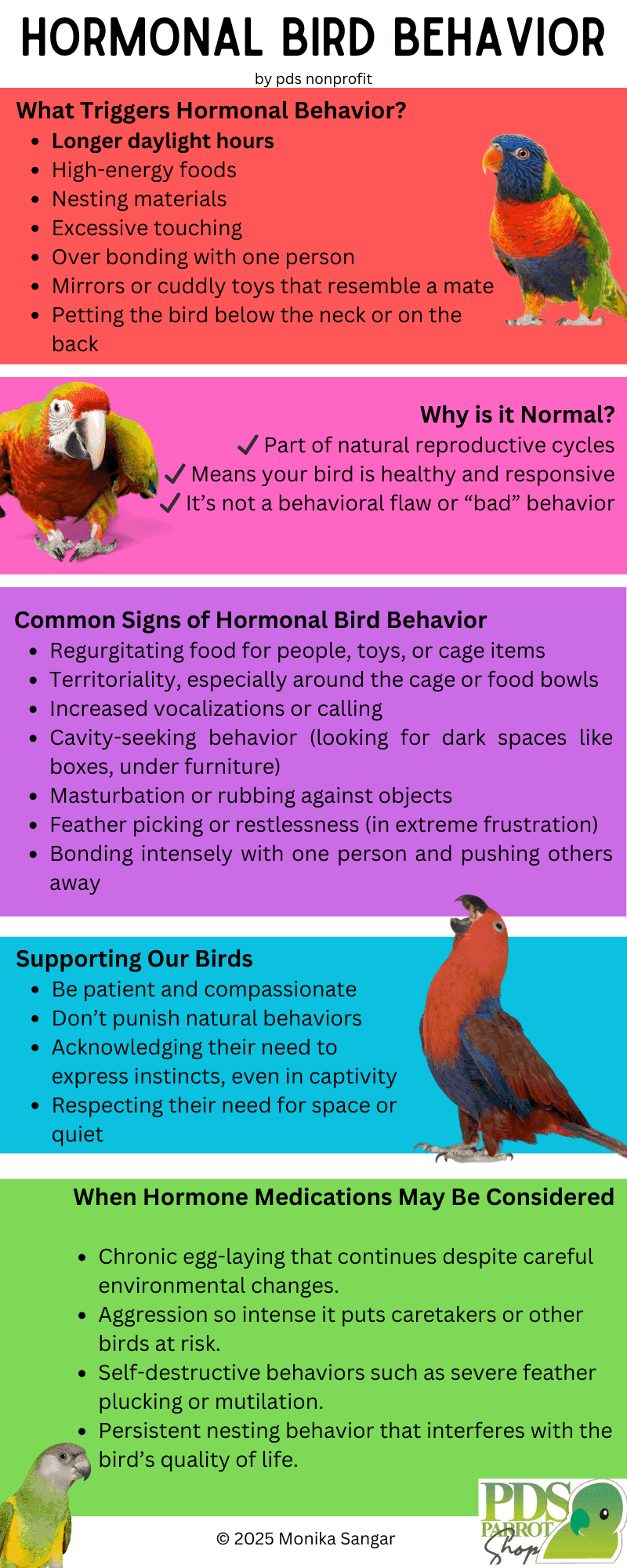
As the seasons change, many companion parrot owners find themselves asking, “What is happening to my sweet bird?” Spring often brings hormonal changes that can lead to undesirable behaviors. It’s crucial to understand that your bird is not being “bad”; this is a natural process. Your role is to manage these behaviors effectively to maintain a strong relationship with your feathered friend. Managing hormonal behaviors requires patience and understanding.
Preventing Nesting Behaviors
Birds are naturally inclined to seek out dark, hidden areas for nesting. During their hormonal periods, even dimly lit corners can be perceived as potential nest sites. Activities like playing inside paper bags, boxes, or beneath cage covers can encourage territorial behavior and heighten their hormonal state. It’s important to prevent your bird from engaging in such activities, as they can exacerbate hormonal displays. For instance, a paper bag can be mistaken for a nest, leading your bird into a frenzy if allowed.
When it comes to your bird’s cage, it’s essential to be highly respectful. The cage is considered the bird’s home and, by extension, its nest, which it will defend fiercely, even from you. To clean or change toys, it’s best to temporarily move your larger birds to a carrier with some foot toys and a treat in another room. This way, they are less aware of your presence inside their “nest.”
Limiting Out-of-Cage Time and Food Choices
If your parrot begins to exhibit “beaky” or “nesty” behaviors, it’s advisable to return them to their cage. This should be done proactively, before the behavior escalates into a problem. Attempting to extract a bird from under a couch, for example, is likely to result in a bite. Remember that even the crook of your arm can be perceived as a nesting spot by a bird with a vivid imagination. Consider allowing your bird out of the cage for shorter, more frequent periods.
Furthermore, avoid feeding warm, mushy foods, as these can trigger hormonal behavior. During this time of year, it’s recommended to offer more raw vegetables and limit mashes.
Mindful Touch and Daylight Hours
Be cautious about where you touch your bird. Limit your touch to the head and neck only. Avoid touching them under the wing, on their back and tail, and particularly the vent area. If your bird rests its rear end on your hand while you are holding it, gently place it down on a perch. It’s generally advised to keep birds off your shoulder and away from your face, but this caution is especially important during the spring hormonal season.
Limiting daylight hours is also beneficial. Ensure your birds get at least 12 hours of covered sleep during the spring months. Excessive light can stimulate breeding behaviors and may lead to persistent egg-laying in females. If you don’t cover your birds at night, make sure the room they sleep in is completely dark.
If you are experiencing a challenging time with your hormonal bird, remember that each day presents a new opportunity. Last year, one of my male umbrella cockatoos seemed to believe he was solely responsible for the continuation of his species and acted accordingly. There were days when his aggression was so intense that I questioned if our relationship would ever recover. However, the following day, he would often surprise me with a sweet disposition.
The key to navigating this period lies in respect and patience. Allow your bird its natural instincts without becoming angry. Be observant of any behaviors that could escalate into problems and redirect your bird’s attention before issues arise.
Patty Jourgensen specializes in avian health, behavior, and nutrition and has been working with and caring for rescue birds since 1987.
