
For devoted cat enthusiasts, the allure of felines resembling tigers, leopards, lions, and bobcats is undeniable. Imagine transforming your home into a personal, safe zoo where you can cuddle with majestic creatures daily. This guide explores some of the most captivating and adoptable exotic cat breeds that bring a touch of the wild into your domestic life.
Before delving into our curated list of these extraordinary felines, it’s crucial to understand that owning an exotic cat breed is a distinct experience compared to caring for typical house cats. These aren’t just rare cat breeds; they often come with unique needs and considerations that prospective owners must be prepared for. rare exotic cat breeds are captivating, but their care requires special attention.
Essential Considerations for Exotic Cat Breeds
Adopting an exotic cat involves more than just admiring their stunning appearance. Their wild ancestry means they often possess traits and requirements that differentiate them from common domestic breeds. Here’s what you need to know:
Legal and Community Regulations
The first step before welcoming an exotic feline into your home is to clarify the legal landscape. Specific exotic cat breeds, particularly those with strong wild lineage like the Savannah cat, are subject to various rules and regulations. For instance, in the U.S., many states mandate that Savannah cats must be at least four generations removed from their wild African serval ancestors to be legally kept as pets.
Furthermore, if you reside in a rental property or a homeowners’ association, there might be additional restrictions on certain breeds due to their size, energy levels, or behavior. It’s imperative to conduct thorough research into local and community-specific ordinances to avoid any unexpected complications or legal issues.
Activity and Mental Stimulation Needs
Exotic cat breeds are not merely striking to look at; they possess an energetic spirit that demands ample activity and mental engagement. Their inherent wild instincts drive a strong desire to play, explore, and remain intellectually stimulated. Therefore, prospective owners should be well-equipped with a variety of interactive toys, challenging puzzle games, and even consider leash training for supervised outdoor excursions. Breeds such as the Bengal and Chausie thrive on this level of engagement.
Mental stimulation is equally vital for these intelligent felines. Engaging them with puzzle feeders, regular training sessions, or even cat-friendly interactive apps can keep them occupied and prevent destructive behaviors. A bored cat, especially one with wild instincts, can lead to scratched furniture and other undesirable mischief. Therefore, if you plan to adopt an exotic breed, be ready to commit to frequent playtimes and provide a stimulating environment, ensuring plenty of purrs and contentment.
Litter Box Preferences and Cleaning Protocols
When it comes to their designated restroom areas, exotic cat breeds can exhibit particular preferences. Many of these felines, including the Savannah, Chausie, Highlander, and Bengal, tend to be larger than average. Consequently, a spacious cat litter box is crucial to ensure their comfort and ease of use. Maintaining impeccable cleanliness is non-negotiable for these breeds. Frequent cleaning is an absolute must to prevent odors and maintain a hygienic environment.
Beyond size and frequency, some discerning exotic cats may prefer a specific type of litter, whether it’s unscented or possesses a particular texture. Given their larger size and active metabolism, they might visit the litter box more frequently, leading to a quicker accumulation of waste. This necessitates not only more frequent scooping but also regular refreshing of the entire litter contents to uphold optimal hygiene. To significantly reduce daily scooping chores and effectively minimize unwanted cat litter smell, a self-cleaning litter box like Litter-Robot 4 can be an invaluable solution. It stands out as one of the best cat litter boxes for odor control, automatically removing waste after each use and ensuring the box remains fresh between deeper cleans. Truly, a luxurious feline deserves a luxurious and consistently clean bathroom environment.
Cats That Resemble Tigers
For those captivated by the majestic stripes of a tiger, these domestic breeds offer a miniature, cuddle-friendly version of the wild’s largest feline.
Toyger
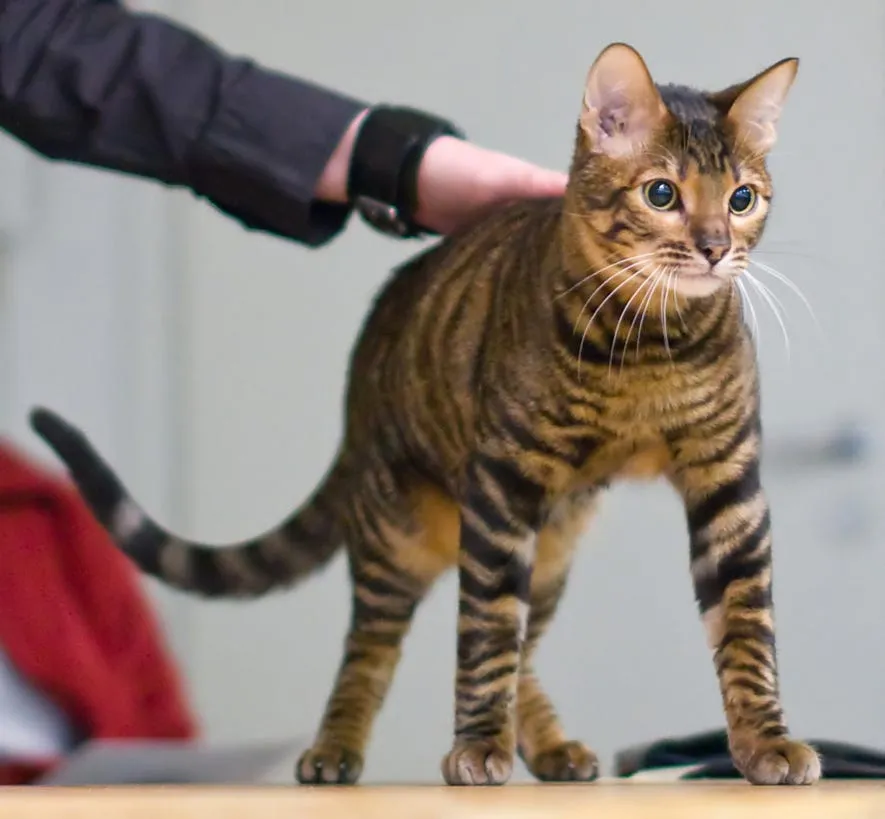 Toyger exotic cat breed
The Toyger, aptly named for its striking resemblance to a toy tiger, boasts a dapper appearance with its distinctive orange and black stripes. Despite their fierce look, there’s no wild blood in their lineage; this breed was developed in the 1980s by crossing a Bengal with a striped Domestic Shorthair cat. A true miniature tiger, the Toyger can weigh up to 15 pounds. Unlike their formidable namesake, Toygers are renowned for being incredibly friendly and affectionate pets. This high-energy breed is also highly trainable and can even learn various tricks, making them an engaging companion.
Cats That Resemble Leopards
With their captivating spotted coats, these breeds evoke the grace and stealth of a leopard, bringing an exotic flair to your home.
Bengal
In contrast to the Toyger, the Bengal cat carries a distinct wild heritage, being a cross between an Asian Leopard Cat and a domestic shorthair. Bengals are remarkable felines, known for their high intelligence, fondness for water play, ability to learn tricks, and willingness to walk on a leash. Most importantly, they form deep bonds with their human companions. Bengals are muscular cats, capable of reaching weights up to 18 pounds. Their adventurous spirit and strong need for attention make them an ideal choice for owners who have ample time and desire an active, entertaining pet.
Ocicat
The Ocicat, a devoted and energetic breed, emerged serendipitously in the 1960s during efforts to develop a Siamese cat with Abyssinian-colored points. Their intriguing spotted appearance caught the eye of a geneticist, leading to further breeding with an American Shorthair to introduce a wider range of coat colors. Ocicats can weigh up to 15 pounds and exhibit various spotted patterns, with the tawny spotted variety most closely resembling a leopard. Despite their wild aesthetics, Ocicats are celebrated for their friendly and outgoing personalities, loving to be an integral part of their humans’ daily routines.
Cheetoh
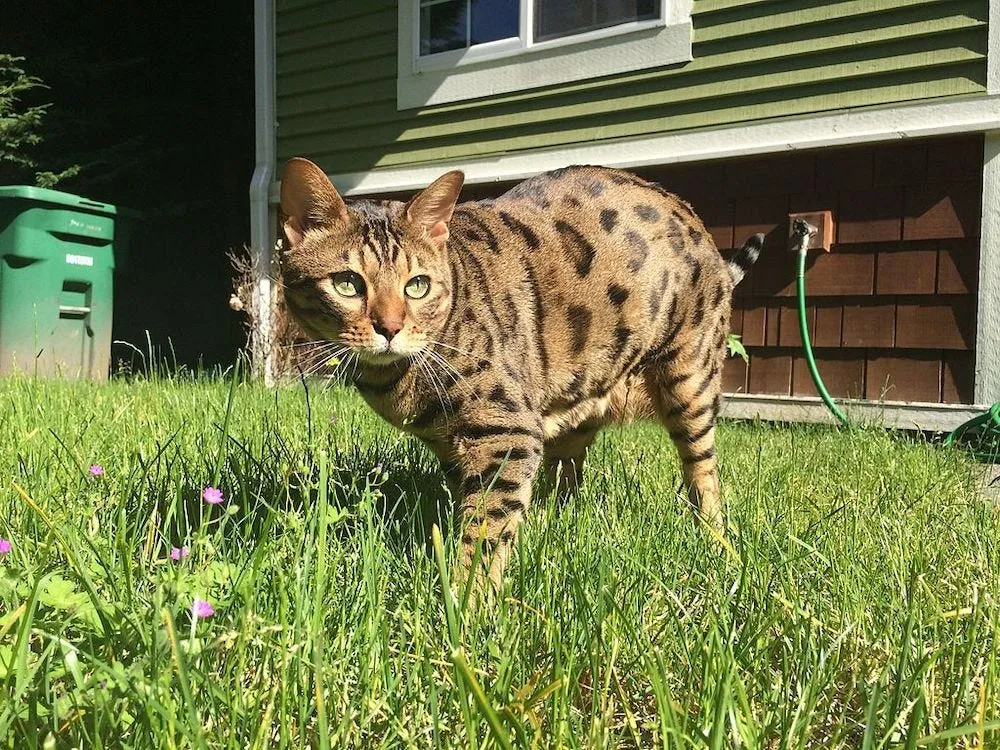 Cheetoh exotic cat breed
The Cheetoh cat, a fascinating blend of the Ocicat and Bengal breeds, is a muscular, large feline that moves with a stealthy, stalking gait, reminiscent of a predator on the hunt. Fortunately, these impressive cats are also known for their playful, fun-loving nature and penchant for snuggles. The Cheetoh is one of the rarest breeds on our list, being among the newest cat breeds to be developed, and is not yet widely recognized by many cat associations. This uncommon kitty can exceed 20 pounds, making it one of the largest exotic cat breeds. They are highly trainable and enjoy outdoor leash walks.
Egyptian Mau
Among all the cats that look like leopards, the Egyptian Mau arguably bears the closest resemblance to the snow leopard. These exotic cats are unique as the only naturally spotted breed of domestic cat, boasting an incredible speed of up to 30 mph! Their ancestors are prominently featured in ancient Egyptian artwork. The Egyptian Mau is believed to be descended from the same domestic cat breed that lived alongside ancient Egyptians for centuries, making it one of the oldest known domestic cat breeds. The word “Mau” itself is the Egyptian term for cat.
Highlander
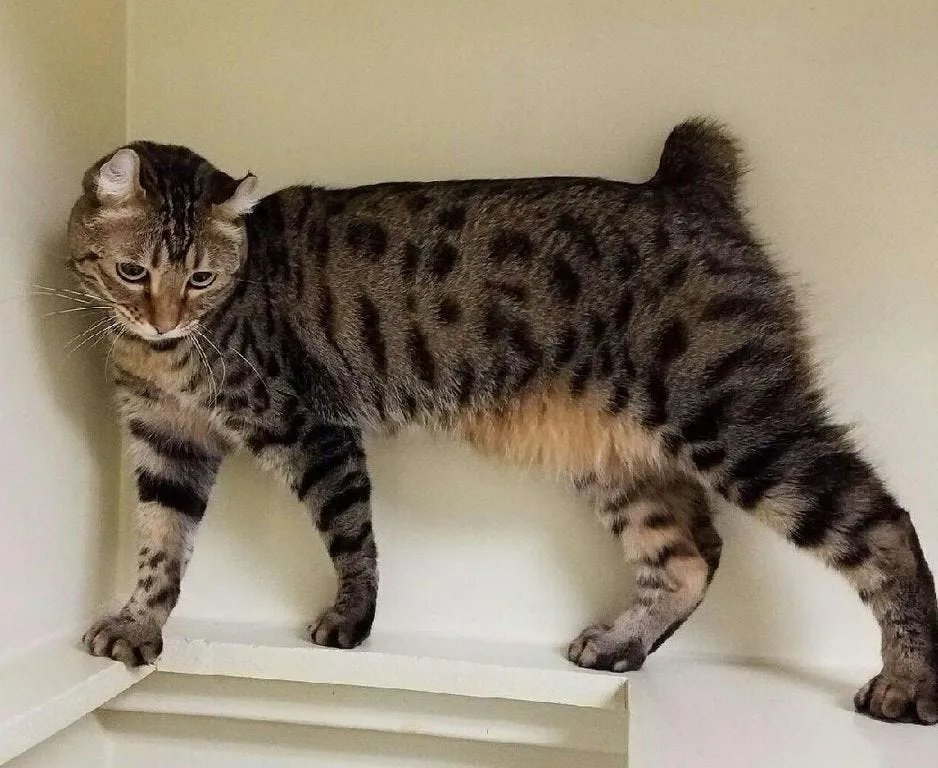 Highlander exotic cat breed
With the Highlander, you get a double dose of exotic appeal. Their spotted or marbled markings distinctly evoke the look of a leopard, while their characteristic bobtail gives them an appearance similar to a lynx or bobcat. Adding to their unique charm are the curled ears inherited from one of their parent breeds, the Jungle Curl. The Highlander is a playful, energetic cat that can reach weights of up to 20 pounds. This is a man-made breed, originating from a cross between the experimental Desert Lynx breed and the Jungle Curl, making it one of the rarer choices for an exotic pet. For those seeking calm cat breeds, the Highlander’s playful nature might be a lively alternative.
Savannah
The Savannah cat often embodies the epitome of exotic cat breeds, being one of the wildest domestic felines available. This highly active and adventurous breed can grow to an impressive 25 pounds. Their strong hunting instincts mean they may not be suitable for households with small pets like fish, hamsters, or birds. However, Savannah cats are remarkably clever and known for their dog-like loyalty to their human companions. This breed is the result of crossing a female Siamese cat with a male African serval, a small wildcat weighing between 20 and 40 pounds. Many U.S. states have specific requirements, often mandating that Savannahs be at least four generations removed from their African serval parentage to be legally owned as pets.
Serengeti
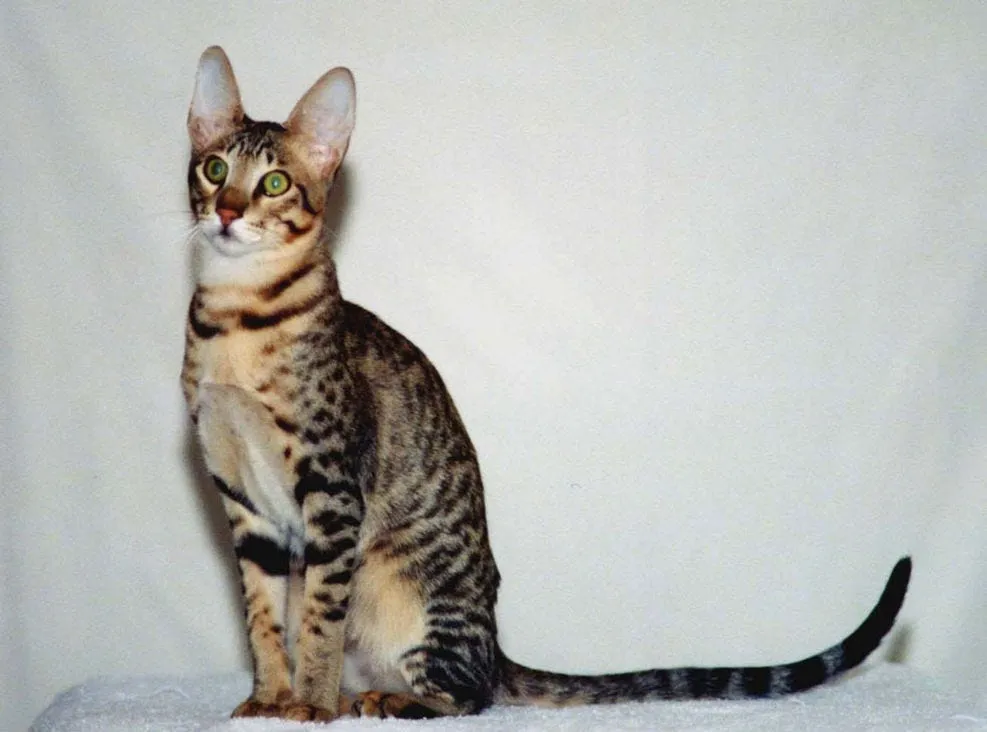 Serengeti exotic cat breed
While speaking of African servals, the Serengeti cat may paradoxically bear a stronger resemblance to the Sub-Saharan wildcat than the Savannah does, despite not possessing any serval blood. This exotic cat breed was developed by crossing a Bengal and an Oriental Shorthair. As a result, the Serengeti is a quite rare cat breed, significantly less common than most domestic varieties. These agile cats are capable of jumping an astounding 7 feet into the air! While they may initially be shy, they quickly adapt to become lovable, extremely playful pets. This breed can weigh up to 15 pounds and is recognized as a preliminary breed by The International Cat Association.
Bombay
The Bombay cat is a stunning homage to the Indian black leopard, presenting the quintessential “house panther” with its sleek, jet-black coat and striking copper eyes. Bombays are highly playful and enjoy learning tricks, often greeting family and visitors alike at the door. The breed was originally developed to resemble a Burmese cat but with a glossy black coat. Though created in the U.S., this exotic cat breed was named after “Bombay,” India, the “land of the black leopard.” Bombay cats can weigh up to 15 pounds and are incredibly people-oriented; if you prefer a pet that isn’t your constant shadow, the Bombay cat might not be the ideal choice for you.
Cats That Resemble Lions
For those who dream of a mini king of the jungle, these breeds offer a regal presence and captivating lion-like features.
Abyssinian
The Abyssinian cat is widely believed to be one of the oldest domesticated cat breeds, potentially originating in ancient Abyssinia (modern-day Ethiopia) around the era of the ancient Egyptians. If you were to spot one subtly moving through your yard, its ticked tabby pattern might easily lead you to mistake it for a mini mountain lion. These cats are known for being very energetic and affectionate, though they are not typically “lap cats.” This is a relatively small cat breed, usually weighing between 7 and 10 pounds. Abyssinians are inherently curious, valuing their independence while also thriving on human attention. They are intelligent and enjoy interactive games with their owners, necessitating engaging puzzle toys and ample climbing opportunities.
Chausie
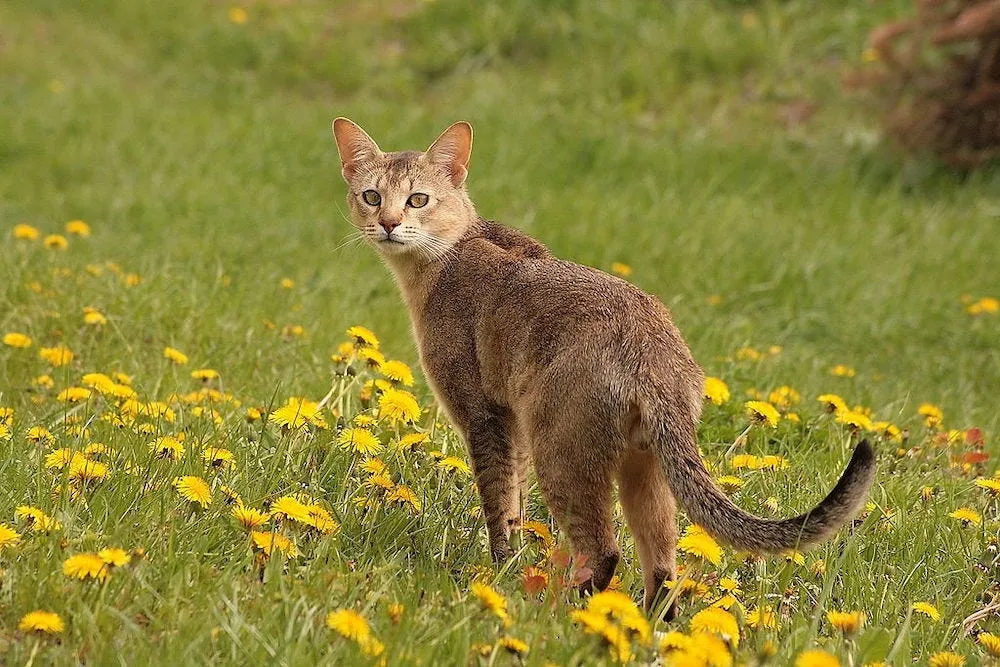 Chausie exotic cat breed
Among cats that evoke the grandeur of lions, the Chausie boasts a compelling claim: these rare cats were purposefully bred from the formidable Jungle Cat, inheriting a proud and active nature reminiscent of their wild ancestors. This ancient parent breed is thought to have been domesticated by the Egyptians and has even been discovered mummified in Egyptian tombs. In fact, the name “Chausie” itself is derived from the Latin name for Jungle Cat, Felis chaus. Chausie cats can grow quite large, sometimes reaching up to 25 pounds—small for a true lion, but certainly substantial enough for a domestic housecat to command attention. This breed enjoys meeting new people, is amenable to leash walking, and can even learn to play fetch. Whether they’re more lion, dog, or an intriguing combination is for you to decide.
Cats That Resemble Bobcats
With their distinctive short tails and rugged charm, these breeds offer a domestic version of the North American bobcat.
American Bobtail
The characteristic short tail of the American Bobtail cat developed naturally, serving as an adaptation for survival in their native environment of the American Southwest. Although this rare cat breed bears a striking resemblance to a wild bobcat, they are profoundly domestic: a devoted family pet that even enjoys playing fetch. This breed takes a considerable amount of time, up to three years, to reach full maturity and can weigh up to 16 pounds. As their origins suggest, they are highly adaptable cats and thrive in a variety of living environments. Their bobtail, far from hindering them, simply adds to their unique charm and distinctive appearance.
Kurilian Bobtail
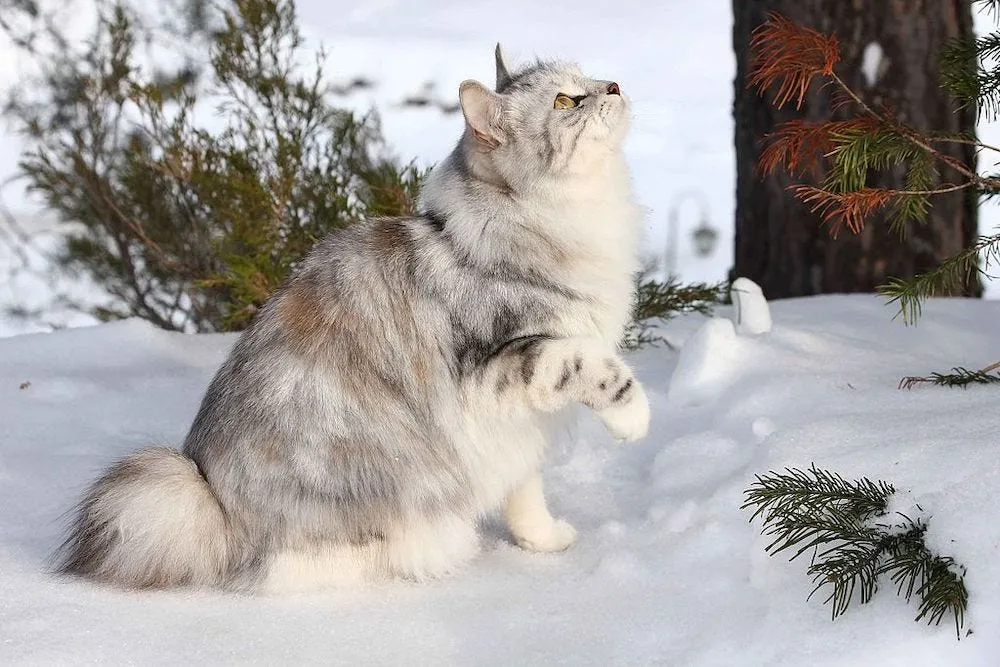 Kurilian Bobtail exotic cat breed
The Kurilian Bobtail is a naturally occurring but relatively uncommon breed, first discovered on Russia’s Sakhalin island and the Kuril archipelago before being introduced to central Russia in the mid-1900s. These cats strikingly resemble a lynx and are particularly known for their adorable “pom-pom” tails. This breed enjoys playing in water, is an excellent mouser, and is also a cuddly lap cat. Easygoing, sociable, and gentle, the Kurilian Bobtail presents an irresistible combination of traits, making them a delightful companion.
Manx
The Manx cat, notably characterized by its lack of a tail, originated and was bred on the Isle of Man, for which the island is renowned. Having begun its existence as a skilled mouser, the breed has retained these exceptional hunting abilities. However, when not on guard, they are affectionate, people-oriented cats. Unfortunately, this tail-free genetic mutation in the Manx breed can lead to severe developmental abnormalities and, in some cases, even be fatal for kittens and cats. If you are considering a Manx as a pet, it is highly advisable to adopt from a rescue group rather than inadvertently supporting inhumane breeding practices. If your exotic cat breed tends to be larger, managing their food intake can be important. Consider dry cat food for weight loss if recommended by your vet.
Pixie-bob
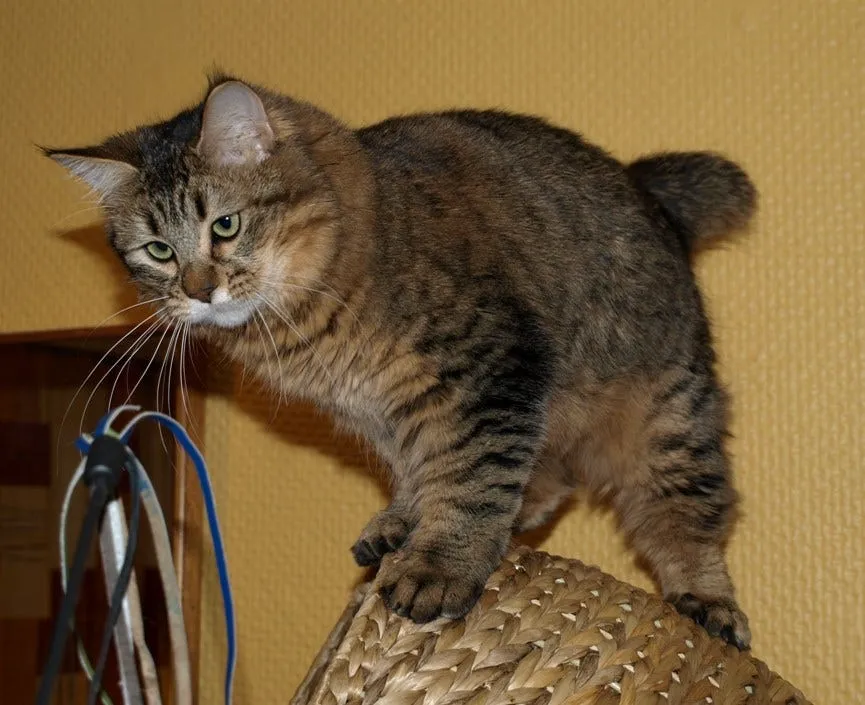 Pixiebob exotic cat breed
Among all the cats that strikingly resemble bobcats, the Pixie-bob has the most intriguing and often conflicting origin stories. While one legend suggests they can trace their roots directly to American bobcats, the breed is, in reality, primarily a domestic cat with a natural tail mutation. This breed was further selectively bred to enhance its resemblance to the wild Coastal Red Bobcat found in the coastal mountains of Washington state. It is notable for being the only breed that accepts polydactyly (cats with extra toes) as a standard trait and is available in two distinct coat lengths.
Conclusion
Embracing an exotic cat breed can be a deeply rewarding experience, offering a unique blend of wild beauty and domestic companionship. From the tiger-striped Toyger to the bobcat-like Pixie-bob, each breed brings its own distinctive personality and needs. Remember, careful consideration of legalities, activity requirements, and specialized care is paramount for these magnificent felines. Providing a stimulating environment, consistent care, and lots of love will ensure these extraordinary companions thrive in your home.
If you’re ready to embark on this adventure, we encourage you to thoroughly research specific breeds and consult with reputable breeders or rescue organizations. Explore further guides on cat care to ensure you are fully prepared for the joy and responsibilities of welcoming an exotic cat into your life.
