
Dreaming of a feline companion that brings a touch of the wild into your home? While adopting a tiger or leopard is out of the question, numerous Exotic Cat breeds offer stunning looks reminiscent of these magnificent creatures, combined with the affectionate nature of a domestic pet. From striking stripes to mesmerizing spots, these breeds can make your home feel like a personal zoo—a safe and cuddly one, of course. However, owning an exotic cat breed involves more than just their captivating appearance; it requires understanding their unique needs regarding legality, activity, and care.
Understanding Exotic Cat Breeds
Before welcoming an exotic feline into your life, it’s crucial to be aware of the specific considerations that come with them. These breeds, often possessing traits from their wilder ancestors, require a different approach to pet ownership compared to common domestic cats.
Legal Considerations
The legality of owning certain exotic cat breeds varies significantly by location. Breeds with a more pronounced wild lineage, such as the Savannah cat, often have specific regulations. For instance, in many parts of the U.S., Savannah cats must be at least four generations removed from their wild African Serval ancestors to be legally kept as pets. Additionally, rental agreements or homeowner association rules may impose restrictions based on breed size or temperament. Thoroughly researching local laws and housing policies is essential before making a commitment to avoid any unexpected legal challenges.
Activity and Stimulation Needs
Exotic cat breeds are typically high-energy and possess keen intellects, a legacy of their wilder ancestry. They thrive on engagement and require ample opportunities for play, exploration, and mental stimulation. Providing a variety of interactive toys, puzzle feeders, and opportunities for climbing and perching is crucial. Breeds like the Bengal and Chausie are known for their active lifestyles and will benefit greatly from engaging activities. Consistent mental engagement through training sessions or puzzle toys can prevent boredom and potential destructive behaviors. Preparing for regular playtime and consistent interaction is key to a happy and well-adjusted exotic cat.
Litter Box Preferences and Cleaning Requirements
Maintaining a clean environment is paramount for exotic cat breeds, and their litter box habits are no exception. Many of these breeds are on the larger side, necessitating a spacious litter box for their comfort. Frequent cleaning is non-negotiable to accommodate their needs and prevent odors. Some exotic cats may also have preferences for specific types of litter, whether it’s unscented or has a particular texture. Due to their size and activity levels, they might use the litter box more frequently, leading to quicker waste accumulation. To simplify daily maintenance and combat litter box odors, a self-cleaning litter box, such as the Litter-Robot 4, can be a highly effective solution, automatically sifting waste after each use and maintaining a fresher environment between deeper cleans. This provides a luxurious and hygienic bathroom experience befitting these special felines.
Cats That Look Like Tigers
Toyger
The Toyger breed, despite its playful name, boasts a striking appearance with distinct orange and black stripes, mimicking a miniature tiger. Developed in the 1980s by crossing a Bengal with a striped Domestic Shorthair, this breed is entirely domestic. Toygers typically weigh up to 15 pounds and are known for their friendly, lovable nature. Their high energy levels also make them amenable to learning tricks, offering a unique interactive experience for owners.
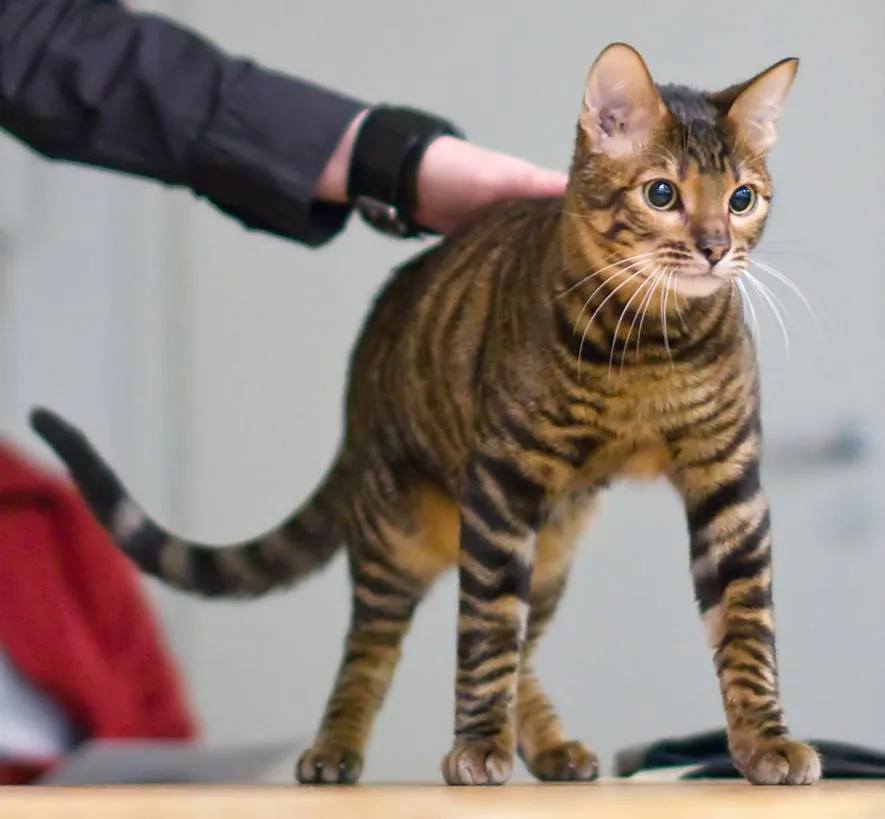 Toyger exotic cat breed
Cats That Look Like Leopards
Bengal
With a lineage tracing back to the Asian Leopard cat and domestic shorthairs, the Bengal cat is a visually stunning breed. They are highly intelligent, enjoy playing in water, can be trained to walk on a leash, and form strong bonds with their human families. Bengals are muscular cats, reaching weights of up to 18 pounds. Their adventurous spirit and need for attention make them an excellent choice for active owners seeking an entertaining and engaging companion.
Ocicat
The Ocicat, developed accidentally in the 1960s during attempts to create a Siamese with Abyssinian point colors, possesses an intriguing spotted coat that can resemble a leopard. Further breeding with American Shorthairs introduced a wider range of coat colors. Weighing up to 15 pounds, Ocicats are known for their devoted and energetic personalities. Despite their wild appearance, they are friendly, outgoing, and eager to be involved in their owner’s daily lives.
Cheetoh
A cross between the Ocicat and the Bengal, the Cheetoh is a muscular and large cat breed with a stalking gait that evokes images of prey. These cats, however, are characterized by their fun-loving, playful, and snuggly demeanor. As one of the rarer breeds, not yet widely recognized by major associations, Cheetohs can weigh over 20 pounds. They are highly trainable and enjoy outdoor walks on a leash.
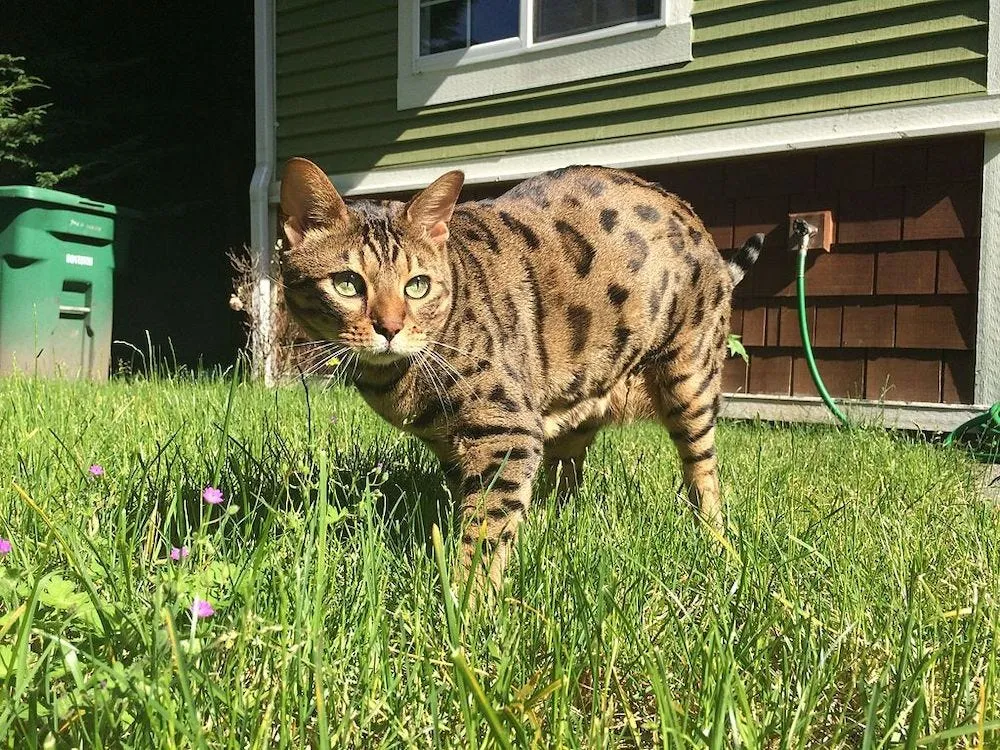 Cheetoh exotic cat breed
Egyptian Mau
The Egyptian Mau stands out among spotted breeds as the only naturally spotted domestic cat, closely resembling a snow leopard. Capable of reaching speeds of up to 30 mph, their ancestors are depicted in ancient Egyptian art, suggesting a lineage stretching back thousands of years. The name “Mau” itself is the Egyptian word for cat. This breed is one of the oldest known domestic cat breeds.
Highlander
The Highlander offers a unique exotic appearance, combining spotted or marbled markings reminiscent of a leopard with a bobtail that evokes a lynx or bobcat. Their distinctive curled ears are inherited from one of their parent breeds, the Jungle Curl. These playful and energetic cats can weigh up to 20 pounds. Originating from a cross between the experimental Desert Lynx breed and the Jungle Curl, Highlanders are a rare and captivating breed.
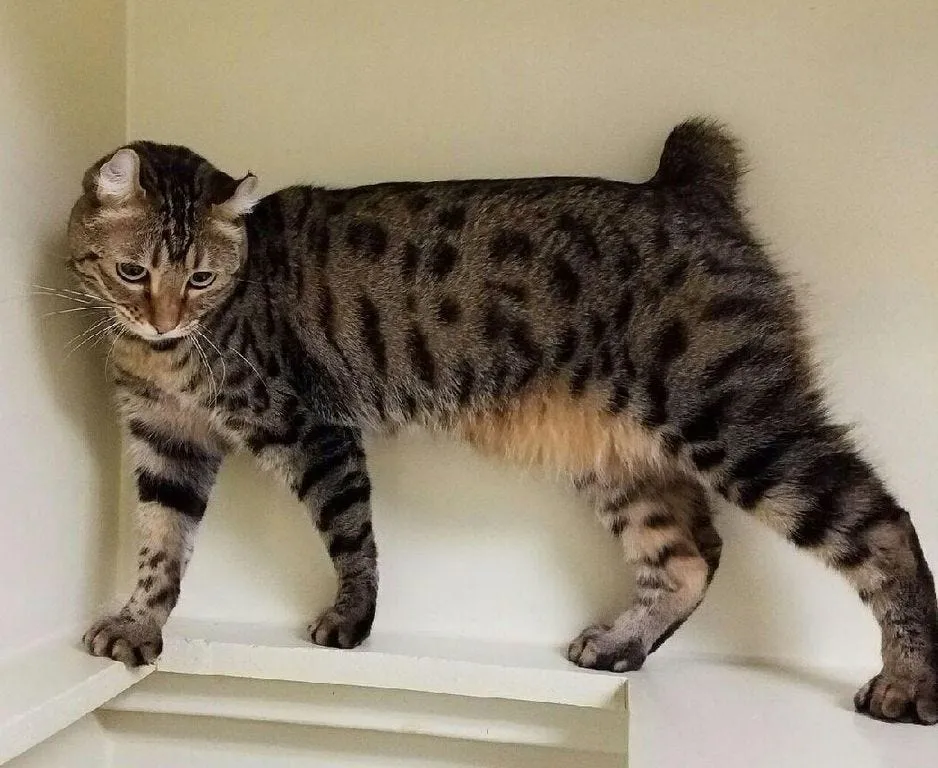 Highlander exotic cat breed
Savannah
Considered one of the wildest exotic cat breeds, the Savannah cat is highly active and adventurous, potentially reaching weights of up to 25 pounds. Their strong hunting instincts mean they may not be suitable for homes with smaller pets like fish or hamsters. However, Savannahs are known for their intelligence and dog-like loyalty to their owners. This breed is the result of crossing a domestic Siamese with a male African Serval. Due to their wild ancestry, many U.S. states have regulations requiring Savannahs to be at least four generations removed from their Serval parentage.
Serengeti
While visually similar to the African Serval, the Serengeti breed does not have Serval blood. Instead, they were developed by crossing a Bengal with an Oriental Shorthair. This has resulted in a rare breed that can jump an impressive 7 feet into the air. Serengetis may initially appear shy but quickly adapt to become lovable and extremely playful pets, weighing up to 15 pounds. They are recognized as a preliminary breed by The International Cat Association.
 Serengeti exotic cat breed
Bombay
The Bombay cat is bred to resemble the Indian black leopard, with a sleek, jet-black coat and striking copper eyes. These cats are playful, enjoy learning tricks, and are known for greeting family and visitors at the door. Developed in the U.S. to capture the look of the Burmese cat with a black coat, the breed is named after Bombay, India. Bombays can weigh up to 15 pounds and are highly people-oriented, forming a close bond with their owners, essentially becoming a constant companion.
Cats That Look Like Lions
Abyssinian
Believed to be one of the oldest domesticated cat breeds, possibly originating in ancient Abyssinia (modern-day Ethiopia), the Abyssinian’s ticked tabby pattern gives it a resemblance to a mini mountain lion. These cats are highly energetic and affectionate but are not typically lap cats. Abyssinians weigh between 7 and 10 pounds, are curious, and enjoy their independence while also thriving on attention. They require stimulating puzzle toys and ample opportunities for climbing.
Chausie
The Chausie, a rare breed descended from the Jungle Cat, possesses a proud and active nature reminiscent of its wild ancestors. The Jungle Cat is believed to have been domesticated by the ancient Egyptians, with mummified remains found in tombs. The breed’s name is derived from the Latin name for the Jungle Cat, Felis chaus. Chausies can grow large, up to 25 pounds, and are known to enjoy meeting new people, walking on leashes, and playing fetch, exhibiting traits often associated with both lions and dogs.
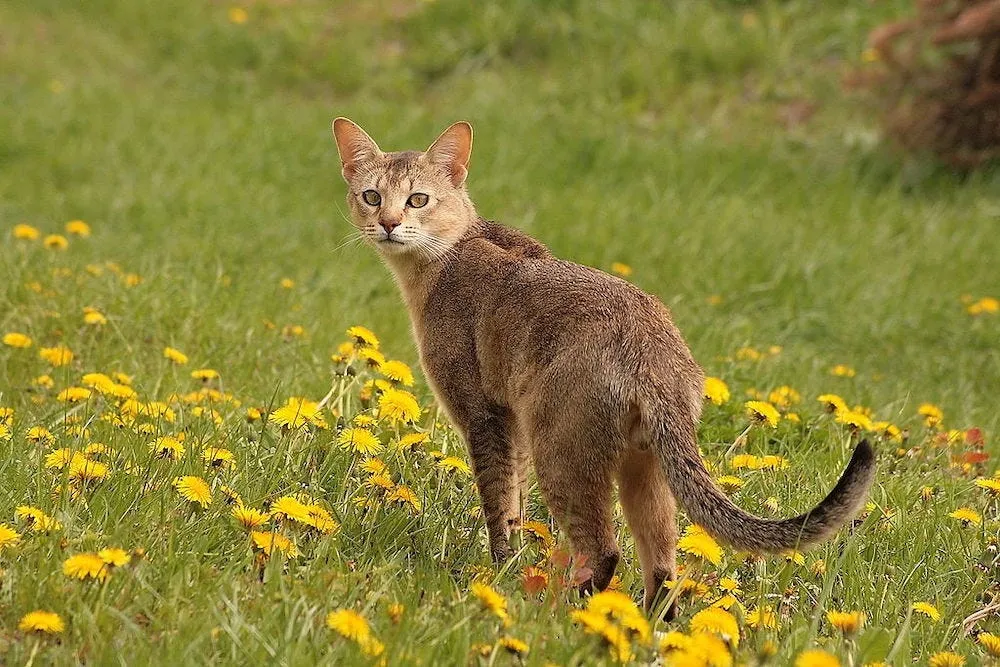 Chausie exotic cat breed
Cats That Look Like Bobcats
American Bobtail
The American Bobtail’s signature short tail is a natural mutation that historically aided survival in its native American Southwest environment. Despite their bobcat-like appearance, they are devoted family pets that are known to play fetch. These rare cats can take up to three years to fully mature and weigh up to 16 pounds. Adaptable to various environments, their bobtail contributes to their unique charm.
Kurilian Bobtail
The Kurilian Bobtail is a natural and uncommon breed originating from Russia’s Sakhalin Island and Kuril archipelago. Resembling a lynx, they are known for their distinctive “pom-pom” tails. These cats enjoy playing in water, are skilled hunters, and make cuddly lap companions. Their easygoing, sociable, and gentle nature makes them an attractive choice for a pet.
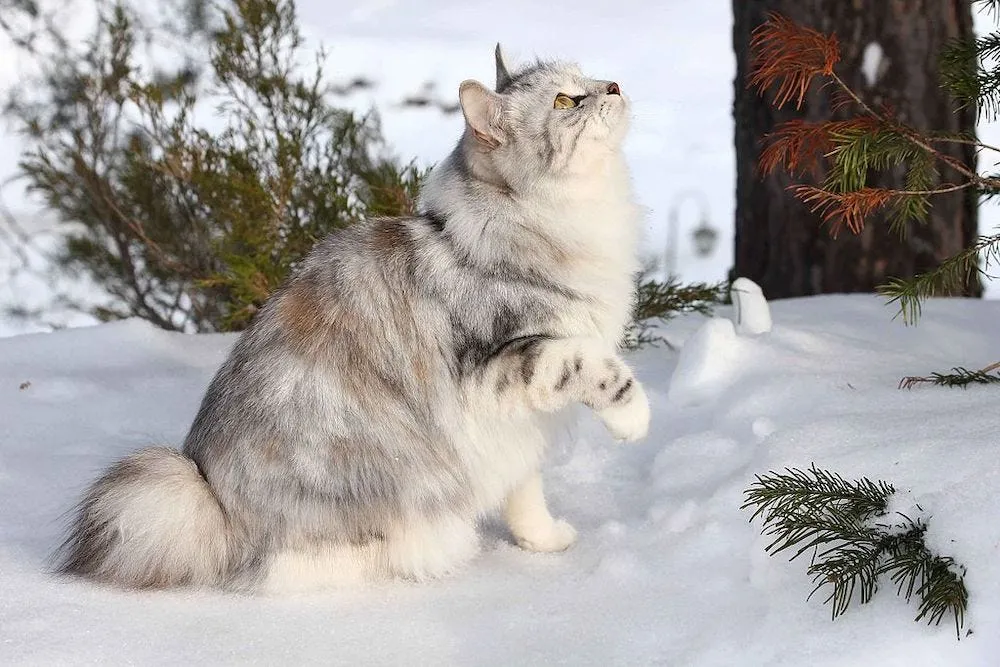 Kurilian Bobtail exotic cat breed
Manx
Originating from the Isle of Man, the naturally tail-free Manx cat was historically bred as a mouser and retains excellent hunting skills. When not on duty, they are affectionate and people-oriented. However, the tail-free mutation can lead to severe developmental abnormalities and even be fatal in kittens and young cats. Prospective owners are advised to adopt from rescue groups to avoid supporting potentially inhumane breeding practices.
Pixie-bob
The Pixie-bob is a breed with conflicting origin stories, with one legend linking them to American bobcats. In reality, they are domestic cats with a tail mutation, further developed to resemble the Coastal Red Bobcat. This breed is unique in its acceptance of polydactyly (extra toes) and is available in two coat lengths.
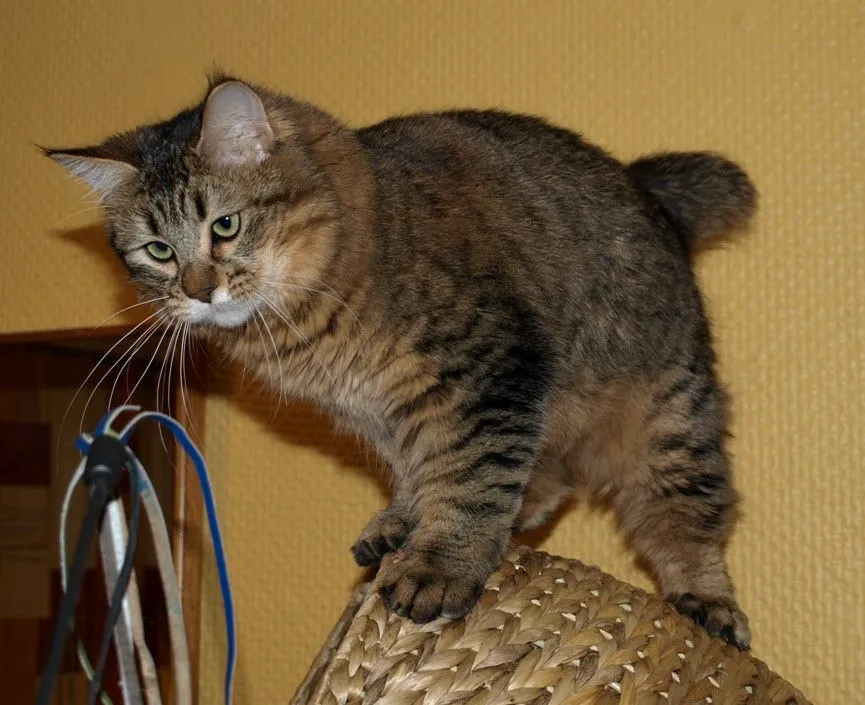 Pixiebob exotic cat breed
If you’re fascinated by exotic cat breeds, consider visiting your local shelter, zoo, or animal sanctuary. Should you decide to welcome an exotic cat breed into your home, ensure you are fully prepared by consulting resources on adopting a cat to understand the responsibilities involved.
Photo credits:
- Toyger: © Heikki Siltala / Wikimedia Commons / CC-BY-SA-3.0
- Cheetoh: © Chris Rue / Wikimedia Commons / CC-BY-SA-4.0
- Highlander: © DigitalDirt / Wikimedia Commons / CC-BY-SA-4.0
- Chausie: © Wilczakrew / Wikimedia Commons / CC-BY-SA-3.0
- Kurilian Bobtail: © TRUE KURILIANS / Wikimedia Commons / CC-BY-SA-4.0
- Pixie-bob: © Donna Cox / Wikimedia Commons / CC-BY-3.0
