
Equestrian Horse Training is more than a discipline; it’s a profound dialogue between two different species. It’s about building a partnership based on mutual respect, clear communication, and a deep understanding of the horse’s nature. Forget the old notions of “breaking” a horse. Modern horsemanship is a sophisticated blend of psychology, biomechanics, and art, aimed at developing a horse that is confident, willing, and physically capable of carrying a rider with grace and ease. This journey transforms a raw, powerful animal into a responsive, athletic partner, ready to excel in any equestrian sphere. Whether you’re just starting or are a seasoned rider, grasping the core principles of training is the key to unlocking a truly exceptional connection with your equine companion.
The Foundation: Understanding the Horse’s Mind
Before you ever think about saddling up, successful equestrian horse training begins on the ground, with an understanding of equine psychology. Horses are prey animals, meaning their instincts are wired for flight and herd dynamics. They don’t learn through dominance or intimidation but through consistency, fairness, and the release of pressure. The International Society for Equitation Science (ISES) outlines several key principles, starting with regarding the horse’s nature and cognitive abilities. This means recognizing they need social interaction, foraging time, and freedom of movement to be mentally balanced. A trainer’s movements should be deliberate and calm, avoiding jerky actions that a horse might perceive as threatening. A successful partnership, much like the one nurtured by a skilled professional like j & s best horse trainer, is built on trust, not fear.
A core concept in modern training is Learning Theory. This is the “how” of teaching your horse. It primarily involves operant conditioning, where the horse learns to associate its actions with consequences. The most common form in riding is negative reinforcement—not to be confused with punishment. It simply means applying pressure (like a leg aid) and then releasing it the instant the horse offers the correct response. This release is the reward. It tells the horse, “Yes, that’s what I wanted.” The timing of this release is everything; it must be immediate to be effective.
Building Blocks: The Importance of Groundwork
All advanced movements under saddle are born from simple, correct responses taught on the ground. Groundwork is where you establish the fundamental language you will use for the rest of your horse’s career. This is where you teach the horse to yield to pressure, to move forward, backward, left, and right from a light signal. You are establishing yourself as a safe and predictable leader.
Key groundwork exercises include:
- Leading: The horse should walk calmly beside you, respecting your space, stopping when you stop, and turning when you turn, without pulling or lagging behind.
- Yielding the Hindquarters and Forequarters: This teaches the horse to move different parts of its body independently in response to pressure. It’s the precursor to leg-yields and lateral movements under saddle.
- Lunging: When done correctly, lunging teaches the horse about rhythm, balance, and how to respond to voice commands, all without the weight of a rider.
- Desensitization: This involves systematically and calmly exposing the horse to potentially scary objects (like tarps, flags, or clippers) in a controlled way, teaching it to look to the handler for confidence instead of reacting with fear.
Under Saddle: The Language of the Aids
Once you have a solid foundation on the ground, the principles translate directly to riding. Your “aids” are the tools you use to communicate with your horse: your legs, seat, hands, and voice. The goal of equestrian horse training is to make these aids as subtle and clear as possible. ISES principles emphasize training easy-to-discriminate signals, meaning a cue for “go forward” should be distinctly different from a cue to “move sideways.”
The Primary Aids Explained
- Legs: Your primary “go” button. Leg pressure is used to create energy, ask for forward movement, and control the horse’s hindquarters.
- Seat and Weight: Your seat is a powerful, yet subtle, tool. Where you place your weight and how you move your hips can influence the horse’s balance, direction, and gait.
- Reins: The reins should not be for pulling or holding the horse up. They are for gentle guidance, regulating speed, and establishing a soft, consistent contact with the horse’s mouth that encourages balance and flexion. The ultimate goal is for the horse to carry itself without needing to be held in position by the reins.
- Voice: Your voice can be used to soothe a nervous horse, to reward a correct response with a kind word, or to add energy with a cluck.
A common mistake is to give conflicting signals simultaneously, like kicking and pulling on the reins at the same time. This is like pressing the gas and the brake in a car. It creates confusion and anxiety for the horse, leading to undesirable behaviors. Each cue should be given one at a time to elicit a single, clear response. To develop a horse’s physique and responsiveness, exploring quarter horse training tips can provide valuable insights into building a strong, athletic partner.
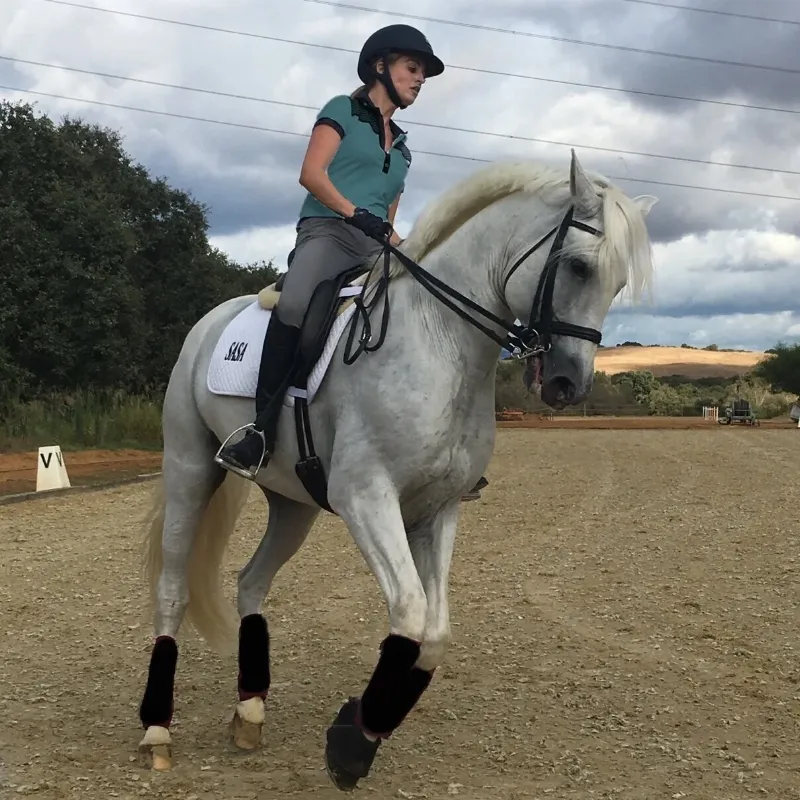 A rider in proper horse trainer shoes and attire, demonstrating balanced equestrian horse training on a beautiful dressage horse.(https://dogcarestory.com/horse-trainer-shoes/). The image should convey balance, partnership, and the beauty of equestrian sport. The lighting is bright and clear, highlighting the horse’s musculature and the rider’s poised form.]
The Principle of “Shaping” Behavior
You can’t expect a horse to perform a perfect piaffe or jump a five-foot fence overnight. Complex movements are taught through “shaping,” which means breaking down the desired outcome into tiny, achievable steps. You reward each small attempt in the right direction. For example, when teaching a horse to lower its head, you might first reward a slight softening of the jaw, then a dip of the poll, and gradually, over many sessions, shape that into a beautiful, collected frame. You always train the horse’s legs first and focus on the head and neck position last. Energy and rhythm come before outline.
This incremental approach builds confidence and prevents the horse from becoming overwhelmed or resentful. It’s a testament to the trainer’s patience and understanding. A great trainer, like the renowned tracey wade horse trainer, understands that rushing the process is the fastest way to create problems.
Achieving Self-Carriage: The Ultimate Goal
A beautifully trained horse exhibits “self-carriage.” This means the horse is responsible for maintaining its own pace, rhythm, direction, and posture without being constantly held or nagged by the rider. The rider gives a cue, the horse responds, and then continues in that manner until a new cue is given. If you have to constantly kick to keep your horse moving or hold tight reins to prevent them from rushing, they are not in self-carriage.
This is the pinnacle of equestrian horse training. It signifies that the horse understands its job and is balanced both mentally and physically. It is light, responsive, and a true pleasure to ride. Achieving this level of training requires consistency, correct application of the aids, and a deep commitment to the horse’s welfare. The visual representation of a training program, often captured in a horse trainer logo, frequently symbolizes this ideal of balance and partnership.
FAQs About Equestrian Horse Training
What is the most important aspect of training a horse?
The most crucial aspect is understanding that training is about building a partnership based on trust and clear communication. Using consistent, fair, and humane methods that align with the horse’s natural instincts and learning processes is paramount for both safety and success.
How long does it take to train a horse?
There is no fixed timeline. It depends on the horse’s age, temperament, past experiences, and the specific goals of the training. A young horse might take two years of consistent work to become a reliable riding partner, while specialized training for a high-level discipline can take many more years. Patience is key.
What is the difference between natural horsemanship and classical training?
While they have different origins, modern training often blends the best of both. Natural horsemanship typically emphasizes understanding horse psychology and using techniques derived from herd behavior, often starting with extensive groundwork. Classical training (like dressage) focuses on a systematic gymnastic development of the horse to improve its strength, balance, and athleticism over many years. Both aim to create a willing, responsive, and light partner.
Can I train my own horse?
While it can be a rewarding experience, it’s also challenging and potentially dangerous without proper knowledge. Beginners should always work under the guidance of a qualified, experienced instructor. A good coach can teach you the correct timing and feel, ensuring the safety and well-being of both you and your horse.
What does “release of pressure” mean in horse training?
The release of pressure is the primary reward in most equestrian training. When you apply a cue (pressure from your leg, for example), the instant the horse responds correctly, you remove that pressure. This immediate release tells the horse it gave the right answer, making it more likely to repeat that response in the future. It is the foundation of creating a light and responsive horse.
In conclusion, the path of equestrian horse training is a lifelong pursuit of knowledge, empathy, and skill. It demands that we become better communicators, more patient teachers, and more astute observers of the incredible animals we work with. By focusing on a foundation of trust, understanding equine psychology, and applying the principles of learning theory correctly, we can build a partnership that is not only successful in the arena but is also a source of immense joy and fulfillment.
