
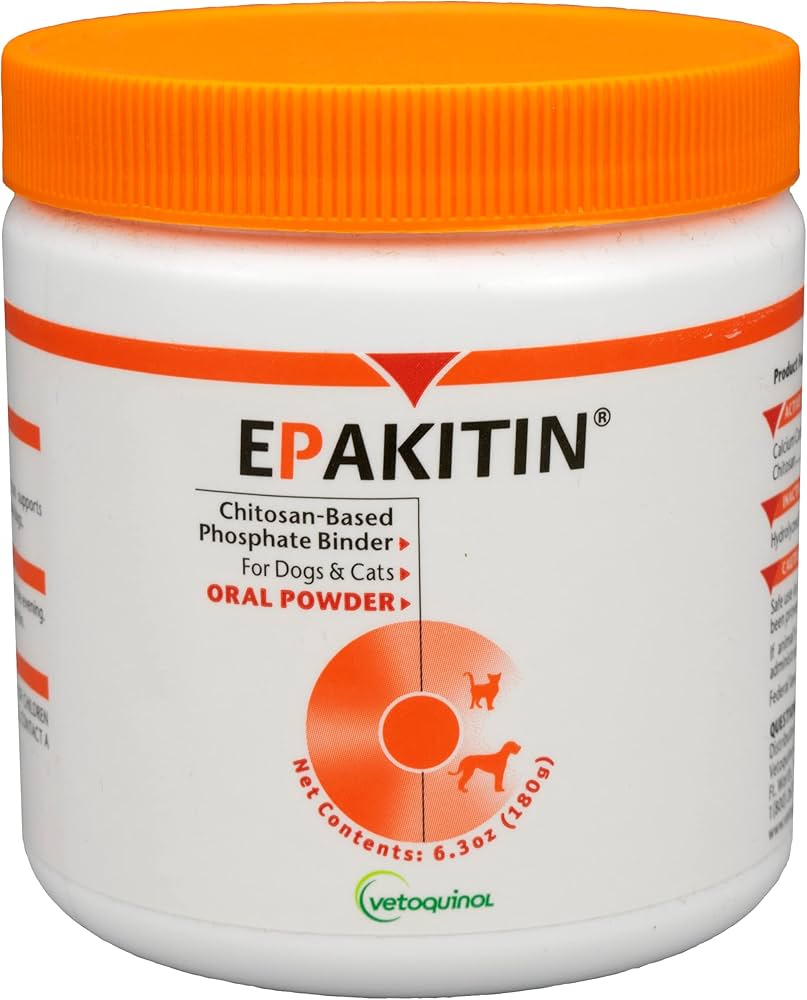
When a cat is diagnosed with chronic kidney disease (CKD), managing their diet becomes a critical aspect of their care. One of the key challenges is controlling phosphorus intake, as elevated levels can exacerbate kidney damage. Epakitin, a powdered phosphorus binding agent, offers a supportive nutritional supplement for cats with CKD, aiming to bind dietary phosphorus and aid in its excretion. This article delves into what Epakitin is, its uses, dosage, and potential side effects, providing valuable insights for cat owners navigating the complexities of kidney disease management.
Understanding Epakitin and Its Role in Kidney Health
Epakitin is classified as an oral phosphate binder and/or calcium supplement, available in a powder form. While it is not FDA-approved in the way a prescription medication might be, it’s a widely used nutraceutical. The supplement contains two primary ingredients: calcium carbonate and chitosan. Calcium carbonate is well-known for its ability to bind to phosphorus, forming calcium phosphate, which is then eliminated from the body through feces. Chitosan, a natural polysaccharide derived from the shells of shrimp and crabs, also possesses phosphorus-binding properties.
In cats with CKD, kidney function is significantly impaired, making it difficult for them to excrete waste products, including phosphorus. High dietary phosphorus intake is a major concern for these cats, as it can accelerate kidney damage. Historically, restricting dietary protein was also a common strategy to reduce the workload on the kidneys. However, excessive protein restriction can lead to muscle mass loss. Dietary protein and phosphorus are interconnected, and specialized commercial diets for kidney disease are formulated to be restricted in both, often leading to improvements in bloodwork values.
However, a significant challenge arises when cats with CKD are reluctant to eat prescription renal diets, which can be a common issue due to their pickiness. This is where phosphate binders like Epakitin become invaluable. By mixing a phosphorus binder into a cat’s regular food, regardless of its formulation, dietary phosphorus can be effectively bound and excreted, thereby sparing the kidneys from further damage and potentially slowing the progression of CKD.
Primary Uses of Epakitin in Feline Care
The primary application of Epakitin in cats is to manage phosphorus levels, particularly in those diagnosed with CKD. Elevated levels of blood urea nitrogen (BUN) and creatinine are common indicators of kidney disease. While blood phosphorus levels may not always be overtly high, the use of a phosphorus binder can still help protect the kidneys from damage and may lead to improvements in creatinine and urea levels.
Furthermore, Epakitin can also play a role in managing calcium levels. The body maintains a delicate balance between calcium and phosphorus. In some cats with kidney disease, calcium levels can become low (hypocalcemia). In such cases, a supplement containing calcium, like Epakitin, can help to restore and maintain healthy calcium levels. It’s crucial to consult with a veterinarian before initiating any new supplement, including Epakitin, to ensure it’s appropriate for your cat’s specific condition.
Potential Side Effects and Monitoring
While Epakitin is generally well-tolerated in cats, it’s essential to be aware of potential side effects and the importance of regular monitoring. In humans, nausea and constipation have been noted with calcium carbonate products, but these side effects are not commonly reported in pets.
The main area of concern revolves around calcium levels. Supplementing with calcium can potentially lead to elevated calcium levels (hypercalcemia), which, although uncommon, can result in serious health complications. Therefore, regular bloodwork checks are vital. The International Renal Interest Society (IRIS) recommends bloodwork monitoring every four to six weeks initially after starting a phosphorus binder. If the cat’s levels remain stable, rechecking every three months is typically advised.
It’s also important to discuss all medications and supplements your cat is currently taking with your veterinarian. Some medications may have their effectiveness reduced when used with a phosphorus binder, while others might increase calcium levels. Overdoses of Epakitin are rare, but if you suspect an overdose or are concerned about elevated calcium levels, contact your veterinarian or a pet poison control center immediately.
Epakitin Dosage and Administration
Epakitin is formulated as a powder and is designed to be mixed into your cat’s food. The recommended dosage, as per the product label, is one level spoonful (equivalent to 1 gram of powder) per 11 pounds (approximately 5 kg) of body weight. This dose should be administered twice daily, mixed with the morning and evening meals. The powder is often most successfully incorporated into wet food, and a measuring spoon is typically included with the product.
For cats that weigh significantly less or more than 11 pounds, it is advisable to consult with your veterinarian to determine the most appropriate dosage. The critical factor for a phosphorus binder’s effectiveness is that it must be administered at the time of a meal. This ensures that it can bind to the phosphorus introduced through the diet. If not given with food, the binder will not be effective.
Conclusion: A Supportive Tool in Kidney Disease Management
Epakitin can serve as an important component in the comprehensive management plan for cats suffering from chronic kidney disease. However, it’s crucial to remember that not all cats with CKD will require Epakitin. Therefore, a thorough discussion with your veterinarian is paramount before introducing this supplement. They can assess your cat’s individual needs, monitor their response to the treatment, and adjust the plan as necessary to ensure the best possible quality of life. Working collaboratively with your vet is key to effectively managing your cat’s kidney disease and supporting their overall health and well-being.
