
Hachiko, a name that resonates deeply within Japanese culture and beyond, is far more than just a dog; he is a national hero, a symbol of unwavering loyalty, and the subject of beloved films and poignant statues. His story, though rooted in a bygone era, continues to capture hearts worldwide, reminding us of the profound bond between humans and their canine companions. This narrative explores the life of Hachiko, his extraordinary devotion to his owner, Professor Hidesaburō Ueno, and the lasting legacy that has cemented his place in history.
The Beginning of a Lifelong Bond
Hachiko’s journey began on November 10, 1923, in Odate City, Japan. He was a purebred Akita, a breed known for its courage and dignity. Professor Hidesaburō Ueno, an agriculture professor at The University of Tokyo, had long desired an Akita, and after a diligent search, he found his perfect companion. The puppy, brought to Tokyo in January 1924, was initially in poor condition but was lovingly nursed back to health by Professor Ueno and his girlfriend, Yae. Professor Ueno named the puppy “Hachi,” meaning “eight” in Japanese, a number considered lucky. From that moment, an inseparable bond formed between the professor and his dog, with Hachi treated as a beloved son.
Hachi would accompany Professor Ueno to the Shibuya Train Station each morning and eagerly await his return each afternoon. This daily ritual became a testament to their deep connection. However, on May 21, 1925, this cherished routine was tragically disrupted. Professor Ueno, who had been at the university, suffered a sudden and fatal cerebral hemorrhage, never to return to the station. Hachi, only a year and four months old, was left waiting in vain.
A Decade of Devotion at Shibuya Station
Following Professor Ueno’s passing, Hachi moved in with a former gardener of the Ueno family. Despite his new home being relatively close to the station, Hachi’s loyalty remained unshaken. For the next ten years, he faithfully returned to Shibuya Train Station every afternoon, precisely when his owner’s train was due. He would sit by the ticket gate, patiently waiting for a reunion that would never happen. Passersby, including station staff and children, sometimes treated him unkindly, but his unwavering vigil continued.
Hachi’s extraordinary story gained national attention in 1932 when a major Japanese newspaper published an article about his steadfast devotion. He became known as “Chūken Hachikō,” meaning “Hachiko – the faithful dog.” His tale touched the hearts of people across Japan and eventually the world, transforming him into a celebrity and a hero. Visitors began to frequent Shibuya Station, bringing him treats and offering him comfort. Hachiko continued his lonely vigil for nine years, nine months, and fifteen days until his death on March 8, 1935, at the age of 11. His profound loyalty and love made him an enduring symbol of devotion.
Monuments and Memories: Hachiko’s Lasting Legacy
Hachiko’s story has been immortalized through various monuments and tributes, ensuring his legacy continues to inspire.
Shibuya Station’s Iconic Statue
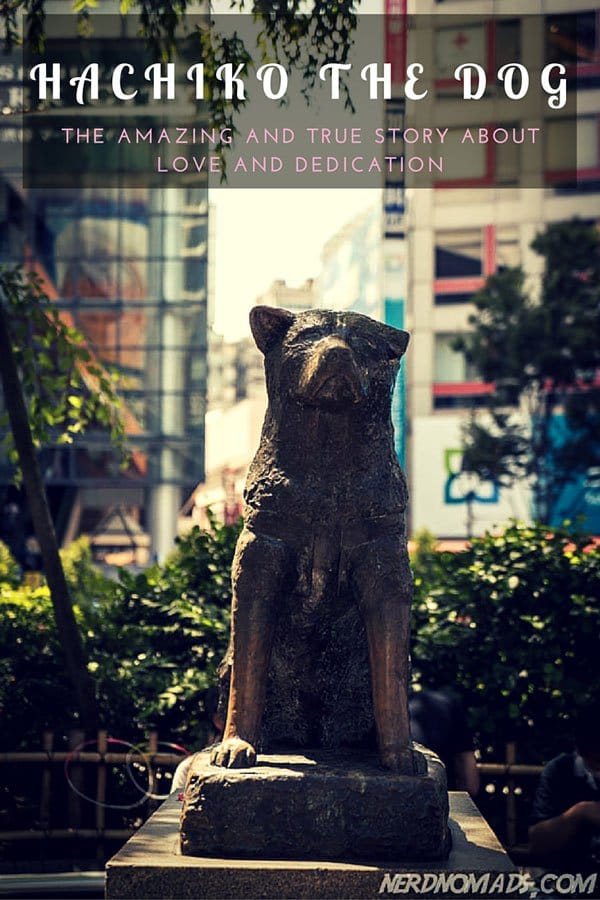
The most famous tribute is the bronze statue of Hachiko erected in front of Shibuya Station in 1934. Unveiled in a ceremony attended by Hachiko himself, the statue has become one of Tokyo’s most recognizable landmarks and a popular meeting spot. While the original statue was melted down during World War II, a replacement, created by the artist’s son, was erected in 1948. The exit leading from Shibuya Station is fittingly named “Hachikō-guchi,” meaning “The Hachikō Entrance/Exit.”
Artistic Homages and Memorials
Beyond the Shibuya statue, Shibuya Station also features a beautiful mosaic artwork titled “Hachiko Family” by Ryutaro Kitahara, depicting Hachiko with his parents and siblings. At the University of Tokyo, a touching bronze statue portrays Hachiko joyfully reuniting with Professor Ueno, a heartfelt tribute located near where the professor worked and died. This statue is accompanied by a small museum displaying artifacts related to Hachiko and Professor Ueno, including Hachiko’s autopsy report. Hachiko’s ashes were interred next to his beloved owner’s grave at Aoyama Cemetery, marked by a monument commemorating their bond.
Preserved for Posterity
Hachiko’s physical remains have also been preserved. His fur was meticulously stuffed and is now on display at the National Museum of Nature and Science in Ueno, Tokyo, allowing visitors to see the loyal Akita up close.
Hachiko Beyond Japan
Hachiko’s story has transcended national borders, inspiring films and recognition worldwide. Hollywood produced the film “Hachi: A Dog’s Tale” in 2009, bringing his narrative to a global audience. A statue of Hachiko also stands in Woonsocket Depot Square, Rhode Island, USA, where the American film was shot.
A Lasting Symbol of Canine Devotion
The story of Hachiko serves as a powerful reminder of the depth of canine loyalty and the unbreakable bonds that can form between humans and animals. His enduring legacy, marked by statues, museums, and countless retellings, continues to inspire awe and affection, solidifying his place as one of history’s most beloved and devoted canine companions. The Hachiko story teaches us about love, loss, and the extraordinary capacity for devotion that lies within the animal kingdom.
