
Walking your dog should be a joy, but for many, it’s a source of stress. You see another dog, a person, or even a squirrel in the distance, and you immediately tense up, anticipating the pulling, lunging, and barking. What if you could transform this stressful encounter into a productive training moment? That’s the power of Engage Disengage Dog Training, a simple yet profoundly effective game that teaches your dog to see their triggers and voluntarily turn their focus back to you.
This approach isn’t about distraction or avoidance; it’s about building your dog’s confidence and changing their emotional response from anxious or overly excited to calm and focused. For a deeper dive into modifying underlying emotional states, it’s helpful to understand concepts like behavior adjustment training for dogs, which shares similar principles of empowering the dog. By playing this game, you create a predictable pattern that helps your dog navigate the world with less stress and more confidence.
What is Engage Disengage Dog Training?
At its core, engage disengage dog training is a focused pattern game that teaches your dog a simple, powerful sequence: look at something in the environment (engage), and then look back at you (disengage). The goal is to reward the moment the dog chooses to disengage from the trigger, reinforcing their decision to check in with you.
Think of it as building a new superpower for your dog. Instead of their brain shouting “Threat! React!” when they see another dog, it starts to think, “Oh, there’s a dog. I’ll look at it, then look back at my human for a delicious treat.” It fundamentally rewrites their reaction by creating a positive association with the very things that used to cause them stress.
The “Engage” Phase
This is simply the moment your dog notices a trigger. The trigger could be anything your dog finds particularly interesting or concerning:
- Other dogs
- Strangers
- Children playing
- Cars or bicycles
- Squirrels or cats
In this phase, we are simply acknowledging that our dog has seen something. We aren’t asking them to do anything yet, just to notice.
The “Disengage” Phase
This is the magic moment. After looking at the trigger, the dog voluntarily turns its head and reorients its focus back to you, the handler. This is the choice we want to heavily reinforce. This choice to disengage is a massive step for a reactive or easily distracted dog, and it’s the foundation of building better focus and self-control.
Why This Game is a Game-Changer for Your Dog
The beauty of the engage-disengage game lies in its simplicity and its profound impact on your dog’s behavior and your relationship. It’s more than just a party trick; it’s a foundational skill for any dog living in a busy human world.
- Builds Confidence: It teaches your dog that they can see their triggers without needing to react. This predictability builds immense confidence.
- Reduces Reactivity: By creating a positive emotional response to triggers, you are actively counter-conditioning the fear, anxiety, or frustration that fuels reactivity.
- Strengthens Your Bond: The game positions you as a source of safety and reward in the presence of scary things. Your dog learns that checking in with you is the best possible choice they can make.
- Improves Focus: It trains your dog’s brain to maintain focus on you, even when the environment is filled with distractions.
- It’s Empowering: Unlike methods that rely on force or correction, this game gives your dog a choice. Empowering a dog to make good choices is the key to lasting behavior change.
Getting Started: What You’ll Need
You don’t need a lot of fancy equipment to start playing. The most important ingredient is patience.
- High-Value Treats: This is non-negotiable. You need something your dog absolutely loves and doesn’t get at any other time. Think small pieces of chicken, cheese, or freeze-dried liver. Kibble won’t cut it.
- A Clicker (Optional): A clicker can be a powerful tool for precisely marking the moment your dog disengages, but a verbal marker like a sharp “Yes!” works just as well.
- A Standard Leash: A 6-foot leash is perfect. Avoid retractable leashes, as they don’t provide the control needed for this training.
- A Controlled Environment: Start somewhere your dog can see a trigger from a great distance, like a quiet park or a large field.
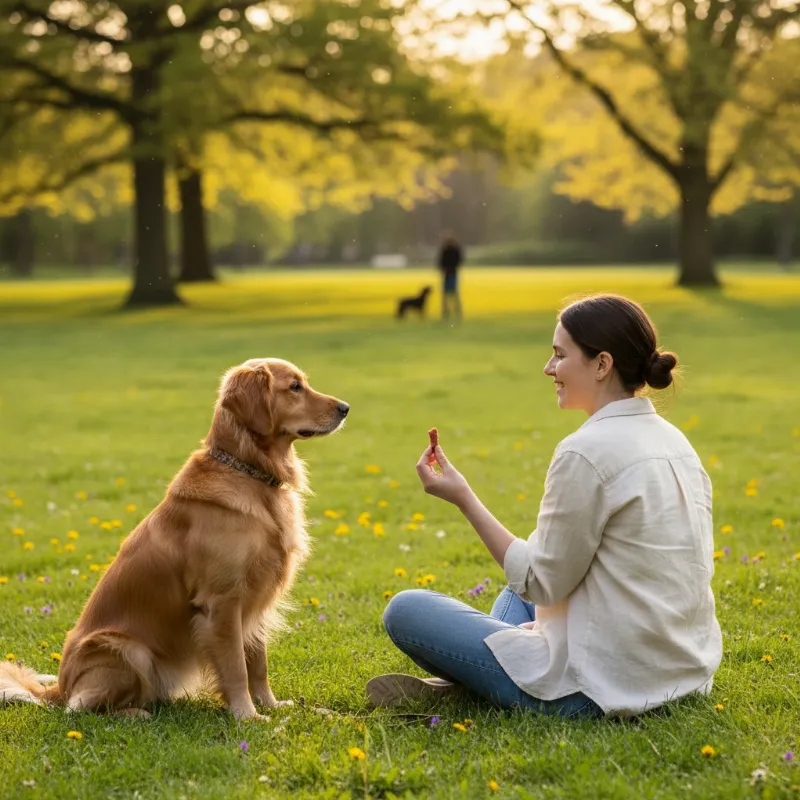 A golden retriever sitting calmly on the grass next to its owner, looking at another dog in the far distance, demonstrating the first step of engage disengage dog training.
How to Teach Engage Disengage Dog Training: A Step-by-Step Guide
Success with this game is all about setting your dog up to win. That means starting slowly and celebrating small victories.
Step 1: Find the Right Distance (Stay Sub-Threshold)
The single most important concept in this training is “threshold.” Your dog’s threshold is the distance from a trigger at which they notice it but are not yet reacting. If your dog is barking, lunging, or stiffening, you are over threshold, and learning cannot happen. Your job is to find the “sweet spot” where your dog can see the trigger but remain calm and relaxed. This might be 50 feet, 100 feet, or even the length of a football field.
Step 2: Mark the “Engage”
Position yourself at that sub-threshold distance. The moment your dog looks at the trigger, use your verbal marker (“Yes!”) or click your clicker. Your timing here should be precise: mark the exact second their eyes lock onto the trigger.
Step 3: Reward the “Disengage”
As soon as you mark the “engage,” your dog will likely turn their head toward you, wondering why you made that sound. This is the disengagement! The moment they look at you, deliver the high-value treat. You can toss it on the ground near you to encourage sniffing (a calming activity) or deliver it right to their mouth.
Step 4: Practice and Repeat (Rinse and Repeat)
Let the dog look at the trigger again. The moment they do, mark it (“Yes!”). When they turn back to you, reward them. Repeat this pattern 5-10 times in a single session. The rhythm should be:
- Dog looks at trigger.
- You say “Yes!”
- Dog looks back at you.
- You deliver a fantastic treat.
Step 5: Gradually Decrease the Distance
Over many sessions, as your dog becomes a pro at the game from a distance, you can start to gradually decrease the distance to the trigger by a few feet. If at any point your dog starts to react, you’ve moved too quickly. Simply increase the distance again to a point where they can be successful and continue practicing there before trying to move closer again.
Engage Disengage vs. Look at That (LAT)
You may have heard of another similar game called “Look at That” or LAT. The two are very similar and work on the same principles of counter-conditioning. The main difference is often in the timing of the marker.
- Engage-Disengage: You typically mark the moment the dog looks at the trigger. This builds an association that seeing the trigger predicts a reward.
- Look at That (LAT): You often wait for the dog to look at the trigger and then look away on their own before marking and rewarding.
Both methods are highly effective. For many dogs, starting with the engage-disengage model is easier because it quickly teaches them the pattern of the game.
Common Challenges and How to Solve Them
Training is never a straight line. Here are some common bumps in the road and how to navigate them.
“My dog sees the trigger but won’t look back at me.”
This is the most common issue, and the answer is almost always the same: you are too close to the trigger. Your dog’s brain is too preoccupied with the trigger to think about you or your treats. The solution is simple: create more distance. Back up until you find that sub-threshold sweet spot where your dog can succeed.
“My dog immediately starts barking and lunging.”
If this happens, you are significantly over threshold. Learning is impossible when the dog is in such a high state of arousal. Immediately turn and calmly walk your dog away from the situation. Don’t try to “work through it.” The training session is over for now. Your next session needs to start at a much, much greater distance from the trigger.
“Am I just teaching my dog to stare at other dogs?”
This is a valid concern, but it’s not what’s happening. You are not rewarding the staring; you are rewarding the checking in. The game changes the underlying emotion. The trigger stops being a scary thing and instead becomes a predictor of a wonderful treat from you. This new, positive emotional state is what prevents the reactivity. As Dr. Emily Carter, a certified animal behaviorist, states:
“The Engage-Disengage game is a brilliant application of classical counter-conditioning. We are pairing the appearance of a trigger with a high-value reward, effectively changing the dog’s conditioned emotional response from fear or arousal to pleasant anticipation. It’s not about the trigger itself, but the positive outcome the dog learns to associate with it.”
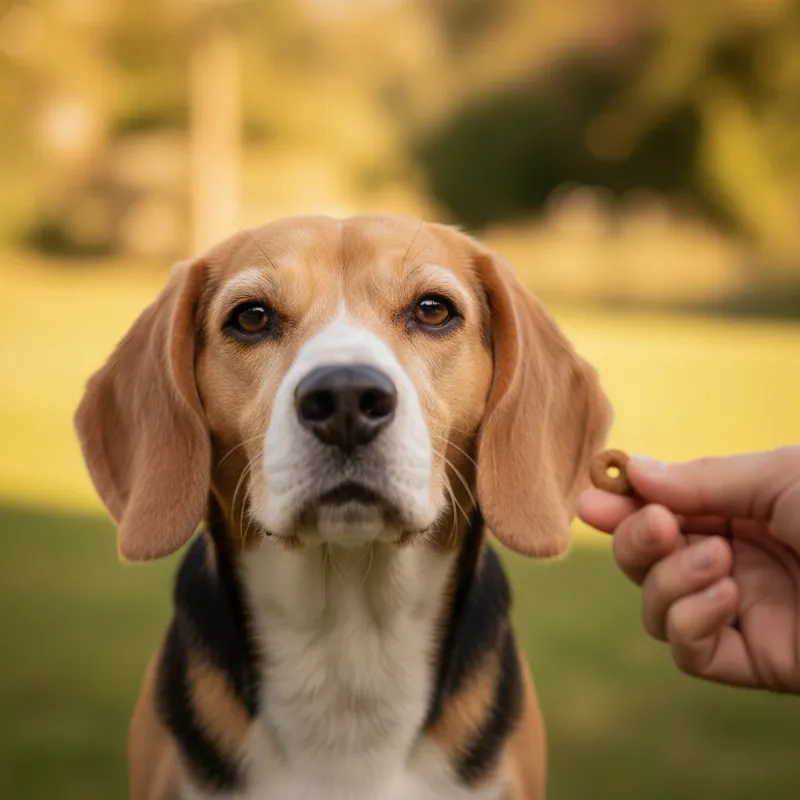 A happy beagle looking up at its owner with an expectant expression, having just turned away from a distraction, perfectly illustrating the disengage part of the training.
Pro Tips for Success
To get the most out of your engage disengage dog training sessions, keep these tips in mind.
- Use the Best Treats: Seriously, don’t skimp. This is the time for the smelliest, tastiest treats imaginable.
- Keep Sessions Short: Your dog’s brain is working hard. Keep training sessions to just a few minutes at a time. It’s better to have five 2-minute sessions throughout a walk than one grueling 10-minute session.
- End on a High Note: Always try to end your session while your dog is still successful and having fun. This builds their enthusiasm for the next training session.
- Be a Team: Your energy matters. Stay calm, positive, and patient. Your dog will feed off your confidence. This is one of the most effective dog training games for group classes and can be practiced with others at a safe distance.
Frequently Asked Questions (FAQ)
How long does it take to see results?
It varies greatly depending on the dog, the severity of their reactivity, and your consistency. Some people see a noticeable difference in a few sessions. For others, it may take weeks or months of consistent practice. The key is to celebrate small improvements and not rush the process.
Can I use engage disengage dog training for any trigger?
Yes! The game can be adapted for almost any trigger, whether it’s dogs, people, skateboards, or plastic bags. The principle remains the same: find a sub-threshold distance and reward your dog for checking in with you.
What if I don’t use a clicker?
That’s perfectly fine! A clear, consistent verbal marker like “Yes!” or “Good!” works just as well. The important thing is that the word is used only to mark the desired behavior and is always followed by a treat.
Can I use this for my dog’s food aggression?
While this game teaches valuable focus skills, resource guarding and food aggression are complex behaviors that often require a more specific and nuanced approach. For issues like this, it’s best to consult resources dedicated to food aggression dog training or seek help from a professional.
When should I consult a professional dog trainer?
If you are struggling to make progress, if your dog’s reactivity is severe, or if you feel unsafe, it is always a good idea to seek help from a certified, force-free professional dog trainer or veterinary behaviorist. They can provide a customized plan and hands-on guidance.
A New Chapter in Your Dog Walking Story
Engage disengage dog training is more than a technique; it’s a way to communicate with your dog in a language they understand. It builds a bridge of trust and shows them that you are their partner in navigating a sometimes overwhelming world. By patiently teaching this game, you are not just managing a behavior problem—you are giving your dog the gift of confidence and transforming your stressful walks into moments of connection and teamwork. So grab your best treats, find a quiet spot, and start your new story today.
